
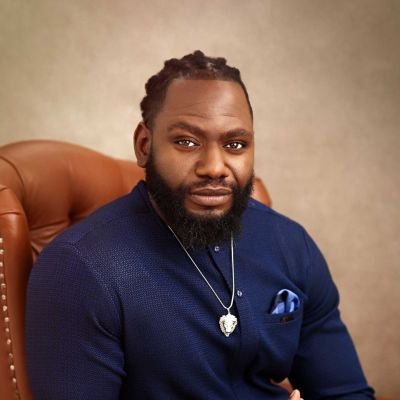
When Jimmy Odukoya succeeded his late father, Pastor Taiwo Odukoya, as Senior Pastor of The Fountain of Life Church, many expected continuity. What they got instead was controversy, and a debate that has refused to die down. A viral post now circulating on Facebook and X has reignited that debate, putting into words what many worshippers have whispered in private and what many others have furiously defended in public. The post, shared by Stephen Emele on November 19, 2026, lists what its author calls five absurd things you will notice if you worship at Fountain of Life Church with Jimmy Odukoya as pastor. It is not a theological paper. It is not a church report. It is a social media indictment, and that is exactly why it has exploded, because it captures a deeper conflict in Nigerian Christianity between reverence and relevance, between tradition and a new generation, and between the office of a pastor and the personality of a celebrity.
The first issue raised is that he never joins the service at the start, but only walks in to preach. On the surface, this may sound like a small matter of punctuality, but in the Nigerian Pentecostal context, it carries heavy meaning. The pastor is supposed to be the chief worshipper, present for praise, for prayer, for the opening, for the atmosphere that prepares the congregation for the word. To arrive only for the sermon is, in the eyes of critics, to treat the church like a concert where the star artiste appears only for his own set, while others do the warm-up. It creates the impression that he sees himself as above the congregation, as someone for whom the rules of early arrival, of waiting, of worshipping together, do not apply. Critics argue that this is a form of spiritual arrogance, because in a church where members are told to come early, to be punctual, to honour God with their time, the pastor arriving late or arriving only to preach looks like a double standard. Defenders, however, interpret it very differently. They say many senior pastors across the world do not sit through the entire service because of preparation, counselling, administrative duties, and the weight of leading a large ministry. They argue that judging a pastor by his arrival time is petty and legalistic, and that what matters is the quality of the word he delivers, not the minute he walks in. But the criticism persists because of perception, and in leadership, perception matters. If members feel that the pastor does not share in the worship they are asked to share in, a quiet distance begins to grow between the pulpit and the pew, and that distance, over time, can become distrust.
The second issue is even more symbolic, and it is the image that has most damaged him in the eyes of his critics. He is said to move with heavy orderlies, with one person carrying his Bible and another carrying his iPad. This is not presented as a security matter, but as a picture of royalty rather than servanthood. In the Nigerian church, the pastor carrying his own Bible was once a sign of humility, of a man carrying his own tool of labour, of a shepherd who does not consider himself too big to carry the word he preaches. The image of an entourage carrying it for him evokes a king, a celebrity, a man who has become untouchable. Critics interpret this as the clearest evidence that Odukoya has imported celebrity culture into the church, where the pastor is no longer a servant but a star, where protocol has replaced pastoral closeness. They point to Jesus washing the feet of his disciples as the ultimate model of leadership, and they ask how a man who cannot carry his own Bible can claim to follow that example. Supporters, on the other hand, say this is a deliberate exaggeration of normal church protocol. They argue that in a large church, with security concerns, crowd control, and the pressure of managing thousands of people, having aides is normal, and that many prominent pastors have protocol teams. They say the post is framing ordinary organisation as arrogance. But even neutral observers note the optics problem, because when a pastor in a country where members trek to church, where ushers struggle to manage crowds, where people sacrifice to be present, appears flanked by men carrying his personal items, it creates a wall. The pastor becomes distant. The flock cannot reach the shepherd. And in a church, distance is dangerous, because the pastor is supposed to be accessible, approachable, and present, not shielded by layers of protocol.
The third issue is that he turns the pulpit into football banter, even praying for Manchester United to win. For critics, this is where the matter crosses from style to sacrilege. The pulpit, they argue, is not a sports bar, not a comedy club, not a stage for jokes. It is an altar, a sacred place where people bring real problems — sickness, debt, broken marriages, unemployment, depression, family crises — and to use that altar to pray for a football club, even as a joke, trivialises prayer and reduces the altar to entertainment. It suggests to them that the pastor does not understand the weight of the office he occupies, that he has confused relatability with irreverence, and that he is more interested in getting a laugh than in getting a breakthrough for his members. Defenders see it completely differently, and this is where the generational divide becomes clearest. They say this is exactly why young people love him, because he is relatable, because he speaks their language, because he breaks the stiffness of traditional preaching that drove many young Nigerians out of church. A joke about Manchester United, they say, is not a doctrine, it is a bridge, a way to connect with a generation that has left the church because it felt boring, judgmental, and disconnected from their daily life. This is the core collision at the heart of the controversy: two generations of Christianity colliding over what the pulpit is for. The older generation wants reverence, solemnity, and a clear separation between the sacred and the secular. The younger generation wants relevance, authenticity, and a pastor who feels human. But the investigative question that remains is deeper than a joke about football. Where is the line? When does relatability become irreverence? When a pastor makes the pulpit feel like a comedy show, does he lose the authority to speak on sin, repentance, and holiness? And if the pulpit can be used for anything, what makes it sacred?
The fourth issue is that he talks for as long as he likes, with no respect for time. This complaint is not unique to Odukoya, because long sermons are a long-standing Nigerian church problem, but critics say his case is different because it is presented as a mark of power, as if he cannot be timed, cannot be controlled, cannot be corrected. Members complain of services that stretch for hours, of children getting hungry, of workers missing their Sunday rest, of transport becoming impossible, of the whole day being swallowed by a single service. They say the pastor’s disregard for time is disregard for people’s lives, that he thinks the anointing means he can waste the time of others, and that this is a form of pastoral inconsideration disguised as spirituality. Supporters counter that true worship cannot be timed, that if God is moving, you do not cut Him off because of a clock, and they accuse critics of being consumer Christians who want a forty-five-minute service and then brunch. Yet church growth experts have long warned that time indiscipline is one of the biggest reasons young professionals leave church, especially in Lagos, where traffic alone can take three hours. A pastor who preaches without end is not just anointed, he is inconsiderate, because he is asking people who have jobs, families, and responsibilities to sacrifice their entire day without warning or apology. The question here is not whether a sermon can be long, but whether length is a sign of the Spirit or a sign of lack of preparation. A prepared preacher, critics argue, knows what to say, says it clearly, and stops. An unprepared preacher rambles, repeats himself, and confuses length with depth. And when a pastor does this week after week, it stops looking like anointing and starts looking like indiscipline.
The fifth issue is the most visual and the most divisive of all, and it is the one that has generated the most emotional reactions. He is accused of flaunting earrings, tattoos, and dreadlocks while preaching. For critics, the look is not just fashion, it is a statement. They argue that a pastor should be set apart, that his appearance should reflect holiness, modesty, and separation from worldly culture. Dreadlocks, tattoos, and earrings, in their reading, belong to secular celebrity culture, not the altar. They cite scripture on modesty, on not conforming to the world, on being an example to the flock. They ask a pointed question: what will the young boys in the church copy? Will they copy the Bible, or will they copy the tattoos? Will they copy the character, or will they copy the earrings? For them, the pastor’s body is a message, and the message Odukoya is sending is that the church is no different from the world. For defenders, this is pure prejudice and cultural hypocrisy. They point out that dreadlocks are African, that tattoos do not determine anointing, that earrings do not cancel calling. They argue that Nigerian Christianity has confused Western suit-and-tie culture with holiness, and that God looks at the heart, not the hair. They say Jesus did not wear a suit, that the early apostles did not dress like corporate executives, and that to judge a man by his hair is to miss the entire gospel. This is where the debate becomes about more than Odukoya. It becomes about who gets to define holiness in twenty-first-century Nigeria. Is holiness in the hair, or in the heart? Is it in the earring, or in the character? Is it in the tattoo, or in the truth of the message? If a pastor’s appearance distracts from his message, is the problem with the pastor, or with the congregation’s mindset? These are not easy questions, and they explain why this particular criticism has provoked such anger on both sides, because it touches on identity, culture, race, and the long history of African Christianity trying to define itself outside Western norms.
Beneath all five allegations is a sixth, unspoken one, and it is the one nobody wants to ask directly: was he supposed to be pastor at all? The viral post accuses Odukoya of lying about succession, and many commenters picked up on this, questioning whether church leadership should be inherited like a family business. In Nigerian Pentecostalism, the passing of a church from father to son is common but deeply controversial. Critics call it dynastic, a form of spiritual monarchy where the pulpit is treated as family property. Supporters call it divine, arguing that God can call a son to continue a father’s work, and that Taiwo Odukoya trained and ordained his son, and that the church’s board affirmed the succession. Odukoya’s critics argue that his style proves he was not prepared for the office, that he inherited a pulpit he did not earn, and that his controversies are evidence of that unpreparedness. His supporters argue that the church has not collapsed, that it still draws crowds, that it still has loyal members who swear by his leadership, and that this fact alone complicates the narrative of total failure. The truth is that Fountain of Life has survived the transition, but survival is not the same as unity, and the fact that the succession is still being debated years later suggests that the church has not fully healed from the transition, and that many members are still struggling to accept a new kind of leadership after the loss of a deeply loved founder.
The reactions trailing these allegations show a church divided, and a country divided along generational and cultural lines. The critics say he is unfit, undisciplined, and more celebrity than shepherd, that he has brought shame to his father’s legacy, and that if you are uncomfortable, you should leave the church, and many say they already have. The defenders say this is jealousy and religious policing, that young people are returning to church because of him, that holiness is not in hair or clothes, and that no pastor is perfect, and critics should pray instead of posting. The neutrals say both sides have a point, that style can change but substance must not, and that the church needs to have an internal conversation, not a social media trial. What is striking is the emotional charge. People are not debating doctrine calmly. They are insulting each other, invoking politics, comparing pastors, and turning a church matter into a culture war. The comment thread under the post is a perfect mirror of Nigerian Christianity today, where every question about leadership becomes a question about identity, where every criticism becomes a personal attack, and where every defence becomes a blind loyalty.
None of the five allegations has been proven by an official church investigation. They are observations, perceptions, and social media testimonies, not findings of fact. But that does not make them meaningless, because in leadership, perception is a form of reality. If a significant number of members perceive their pastor as distant, undisciplined, and more focused on image than on shepherding, that perception itself becomes a pastoral crisis, even if every detail is exaggerated. Jimmy Odukoya faces a choice that every successor faces. He can dismiss all criticism as jealousy and continue as he is, trusting that his core followers will stay. Or he can listen to the discomfort behind the mockery and ask a harder question: am I building a church, or am I building a brand? The Fountain of Life Church was built on the reputation of Taiwo Odukoya as a teacher, a father, and a man of deep conviction. Whether Jimmy Odukoya will be remembered as the son who continued that legacy, or the son who turned it into a spectacle, will not be decided by a viral post. It will be decided by what happens on that pulpit, Sunday after Sunday, when the cameras are off and the orderlies are gone. And for now, Nigeria is watching, and arguing.