
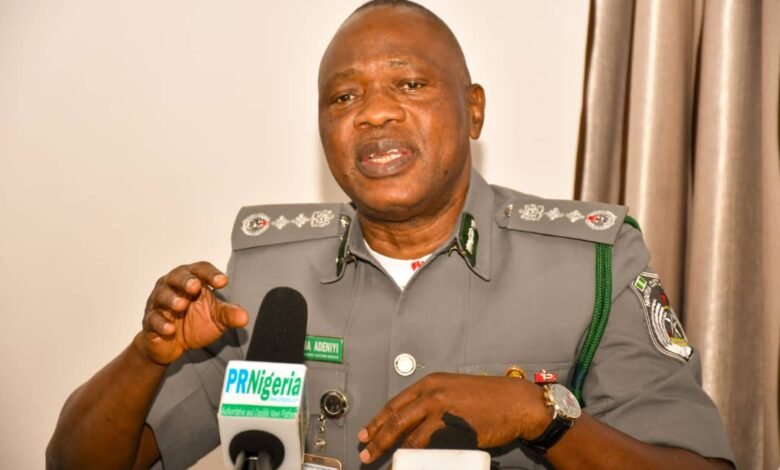
On paper, the Nigeria Customs Service is given a clear architecture of mandates, and those mandates are the only fair standard by which to judge Bashir Adewale Adeniyi. It is the state’s fiscal gatekeeper, tasked with generating revenue through duties and levies. It is a security agency, charged with suppressing smuggling, intercepting contraband like arms and drugs, and patrolling land, sea, and air borders. It is a trade facilitator, meant to simplify procedures, license agents, and make legitimate commerce faster and cheaper. It is an economic institution, required to produce accurate data for national planning and enforce tariffs and international trade agreements strictly. Layered on this are mandates of collaboration with other agencies, protection of local industry from unfair trade, inspection of cargo and baggage, regulation of vessels and aircraft, and deployment of technology to secure entry points. Taken together, those mandates position Customs not just as a tax collector but as a front-line institution in economic stability, national security, and trade integrity. Judged by those mandates, not by press releases, not by revenue headlines, not by international titles, the Adeniyi era has failed.
The failure begins with the fiscal mandate, which Adeniyi claims as his greatest success. The Service celebrates ₦6.1 trillion in 2024, a 74% jump, as proof of reform. Judged by the mandate itself, the figure collapses. Customs duties are assessed on import value converted to naira. The official exchange rate moved from around ₦460 in June 2023 to over ₦1,500 by mid-2024. That means the same container that attracted ₦4.6 million in duty in 2023 would attract ₦15 million in 2024 without any change in volume, commodity, or enforcement. The Service itself reported lower import volumes for the year, confirming it collected more money while processing fewer goods. Government rate reviews, new levies on vehicles, and a widened excisable goods list each automatically inflated collections. With headline inflation above 30% through 2024, the nominal value of all imports rose, so duties pegged to value climbed by default. In real terms, ₦6.1 trillion in 2024 buys roughly what ₦3.8 trillion bought in 2022. The fiscal mandate is not to collect more naira because naira is worth less. It is to widen compliance, reduce leakage, and capture revenue that would otherwise be lost to under-declaration and smuggling. On that test, Adeniyi has offered no published evidence of leakage reduction, no audited seizure-to-trade ratio, no clearance time collapse. He has offered a nominal triumph that photographs well on a WhatsApp press platform and plays well in WCO circles, where he was elected Chairperson of the World Customs Organisation Council in 2025, but does not survive basic economic context.
Judged by the security mandate, the failure is even starker. The mandate is to suppress smuggling and intercept contraband. Under Adeniyi, according to reports, the borders have remained liquid. At Seme, a section of the international border fence was allegedly broken and replaced with an iron gate that served as a conduit for thousands of vehicles, foreign rice, and other contraband moving into Nigeria from Benin Republic. The illegal route allegedly operated for days before being sealed with concrete blocks. The former Seme Controller, Comptroller Wale Adenuga, was later redeployed to Abuja. The Service said it had not been fully briefed. The gap between official statements and the scale of the alleged operation raises the same question that runs through this tenure: is redeployment being used to manage optics rather than enforce consequences? The EFCC probe into the $79,150 cash seizure at Murtala Muhammed International Airport, where two men were arrested by the NDLEA in collaboration with Customs, shows the same breakdown at air borders. One case shows how physical infrastructure can be subverted. The other shows how cash can be moved through passenger routes when detection fails. Both depend on gaps in supervision and the assumption that breaches will not be investigated beyond low-level arrests. A security agency that cannot secure its own fence cannot claim to secure the nation.
Judged by the trade facilitation mandate, the verdict is damning. The mandate is to simplify procedures and make legitimate commerce faster. Yet truckers and agents still report 14 to 21 day dwell times, 18 to 21 days to clear cargo, 475% above the global average, with over 70% of that delay blamed on transactional bottlenecks. Not one scanner works at Tin Can, Apapa, Onne, or PTML, according to officers and industry sources, so officers default to random physical checks. Officers admit they check three or four steel doors out of twenty and sign off the rest, or declare they have examined all once the right gift is discussed. At land borders, there is virtually no examination. Bureaucracy and manual paperwork still dominate despite years of reform, because paper creates touchpoints and touchpoints create rents. The inspection regime is a case study in engineered shambles. Customs staff say they even pay out of pocket for labour to unstuff containers marked for inspection, a design flaw that guarantees under-examination and over-negotiation. Perishables rot, factories wait, demurrage piles up, and Nigerian exports lose price advantage before they leave the quay. B’Odogwu may have digitized the paperwork, but it has not dismantled the human choke points that create delays, breed extortion, and keep legitimate trade expensive. If the mandate is facilitation, Adeniyi has facilitated delay.
Judged by the mandate of integrity and institutional discipline, the tenure collapses into a litany of controversies that a reformer would have used to clean house, but which Adeniyi, critics argue, managed as a former spokesman would: contain the story, redeploy, retire, move on. In his first year, roughly ₦12 billion was allegedly traced to secret accounts of top operatives, according to reports. The fraud was uncovered not by internal audits, but by external sting operations. In October 2023, DSS operatives posing as importers allegedly contacted Musa Ibrahim Jalo, then Area Comptroller of Federal Operations Unit Zone B, Kaduna. Jalo reportedly demanded ₦20 million, which was paid into an account belonging to his personal assistant, Umaru Tafarki. Both were arrested and handed to the EFCC. Investigators allegedly found about ₦4 billion in accounts linked to Jalo, plus $31,200 and ₦500,000 cash at arrest, and ₦126 million traced to Tafarki. Jalo was forced into compulsory retirement. Two months later, in December 2023, the EFCC arrested Kayode Kolade, Comptroller of FOU Zone C, Port Harcourt, after allegedly tracing ₦9.5 billion to ₦11 billion to his hidden accounts. He spent Christmas in detention, was released on ₦1 billion administrative bail, and, according to whistleblowers, was handed back to Customs leadership. Unlike Jalo, Kolade was reportedly reinstated to his post, where he later decorated promoted officers. The list widened: ₦950 million allegedly traced to Nurudeen Musa, ₦120 million to Hamisu Ibrahim, ₦85 million to Madugu Saleh, and ₦84 million to Mohammed Rabiu. Partial refunds were reported. Despite the sums traced, none of the officers were suspended or prosecuted as of the time of reporting, according to those reports. When two similarly indicted officers are treated differently, one retired, one reinstated, the Service teaches every officer below them that accountability is negotiable, that proximity to power matters more than the offence. That is how a system reproduces itself. Added to this was a separate allegation that Adeniyi approved waivers on over 500 luxury vehicles imported for National Assembly members. That allegation, if true, would raise questions about fiscal discipline and selective enforcement. Even as an allegation, it fits the pattern: a Service that is strict with Tokunbo drivers on the highway, but flexible with the powerful at the port.
That street-level pattern is confirmed by the Owema case in Ondo State, where a Customs officer allegedly took ₦100,000 in cash to release a Tokunbo car driver flagged for a ₦2 million underpayment. The deal was stopped only because the incident was reported to the National PRO, after which the Ondo/Ekiti Comptroller fished out the officer and returned the bribe. Few victims are that lucky. The case reveals the real economy of Customs: officers on roadblocks understand the underpayment game at the ports, where valuation fraud is routine, and they know Tokunbo vehicles are the easiest targets. Drivers and officers already speak the same language of settlement, because both sides feed off a system where under-declared duty at entry becomes extortion rent on the road. This is not trade facilitation. This is a parallel tax regime where every actor has a cut and every procedure is a tollgate. Undercover work by Fisayo Soyombo and Premium Times showed just how liquid the borders are: for the right bribe, a vehicle can move from Abuja to Lagos and back past multiple checkpoints, and virtually any contraband can be smuggled in. Sources describe a multi-layered kickback chain that runs from checkpoint OCs up to controllers, then to ACGs, DCGs, and onward, with each level taking a share of bribes collected from smugglers on rice, vehicles, and other goods. At examination bays, with no functional scanners, physical inspection is pay-to-play. Representatives from NPF, NCS, SSS, NAFDAC, NPA, NDLEA, and NAQS reportedly collect ₦1,000 each just for looking. The releasing officer sits as gatekeeper-in-chief: by declaring goods undervalued, he can nullify every prior payment and name a new, inflated figure, then offer to take a lesser fraction personally to release the cargo. Containers are conveniently put on red alert to trigger demurrage and inspection charges, creating leverage for bribes. Gate officials sell queue-jumping for ₦20,000 a truck. Everyone extracts rent from time, and time is what the process is designed to waste.
Judged by the mandate of equitable, merit-based personnel management, the Adeniyi era now faces its most formal test. The Federal Character Commission has filed criminal charges against the Nigeria Customs Service and Adeniyi before the Federal High Court in Abuja over alleged violations of the Federal Character Commission Act during the Service’s 2025/2026 recruitment exercise. The FCC alleges four linked failures: failure to provide requested recruitment documents, including nominal rolls, despite a formal request dated March 25, 2026; failure to submit relevant stages of the recruitment process for monitoring; disregard of a directive issued on October 23, 2026, to suspend certain recruitment and training activities pending review; and failure to provide clear recruitment criteria and eligibility guidelines. These allegations remain to be established before the court, and Adeniyi is entitled to defend himself. But their interpretation is devastating. A nominal roll is the basic record that shows who was recruited, from which state, into which cadre, and on what basis. Without it, no outside body can verify whether vacancies were shared fairly, whether the advertised number of slots matches the number of people actually taken, or whether any state or zone was over-represented or under-represented. When an agency that claims to have digitized its operations cannot or will not produce its own recruitment records to its statutory monitor, it creates a presumption of opacity. Monitoring is not a courtesy visit. It is the mechanism by which the federal character principle is enforced in real time, at the point where shortlists are drawn, interviews are conducted, and final selections are made. If monitoring is blocked at those stages, the FCC can only arrive after the fact, when appointments have already been made, training has started, and reversal becomes politically and administratively costly. A suspension directive is meant to freeze the process so that errors, if any, can be corrected before they harden into vested rights and irreversible postings. If an agency proceeds despite such a directive, it signals that it considers itself beyond the oversight of the body created by law to check it. It also raises a practical question: if the process continued while under review, what happens to those already recruited and already in training if the court later finds the process was flawed? Criteria are the rules of the game. They tell an applicant from Sokoto, Enugu, Lagos or Borno what qualification is needed, what age limit applies, what physical standard is required, and how merit and state quota interact. Without published, consistent criteria, recruitment becomes discretionary. Selection can be justified after the fact, standards can shift to fit preferred candidates, and unsuccessful applicants have no basis on which to challenge the outcome. When the rules are not clear, the phrase “who you know” does not need to replace merit openly, because merit itself has never been defined openly. Taken together, these four issues do not, on their own, prove that the 2025/2026 recruitment was rigged, sectional, or nepotistic. What they do prove is that the transparency mechanisms that would have allowed the public to verify fairness were allegedly not allowed to function. Under Dikko, recruitment was branded ethnic cleansing after 2015 promotions allegedly skewed heavily to the North-West. Under Ali, it was criticized as opaque despite formal processes. Under Adeniyi, critics say the Service simply swapped regional favouritism for cronyism, with “cabal-based” appointments and a one-year service extension granted to select officers, seen as denying qualified seniors like DCG B.U. Nwafor their due. The FCC case suggests that the method has changed, but the outcome has not: exams are theatre, and the real test is access.
This is why the expectation that Adeniyi would make a difference was misplaced from the start, and why critics who said so have been proved right. When he was appointed in June 2023, the hope was that an insider who knew the system would fix it. The reality is that he was not a core officer for the larger part of his service. From June 2003 to January 2017, he was National Public Relations Officer. For most of his career, his job was to manage perception: to explain seizures, defend policies, and frame the Service’s image amid recurring scandals over revenue leakages, smuggling, and opaque personnel practices. He moved to core operational roles only in 2017, first as Deputy Commandant of the Command and Staff College, then as Controller of MMIA Command in 2019, before becoming Comptroller-General in 2023. Morality and capability operate on different planes. Morality concerns the orientation of the will toward ends deemed right or wrong, while capability concerns the power to translate any end into effect through skill, judgment, and control of means. His celebrated 2020 seizure of over $8.07 million in cash at MMIA was presented as proof of personal integrity. It was, at best, proof of one honest act in one command. It did not confer the knowledge of systems, the foresight to anticipate second-order consequences, or the organizational craft to coordinate complex processes. A man who spent 14 years telling the story of Customs learned how to tell a better story. He did not learn how to break the network that produced the story. When he became CG, he did what he knew how to do: he built a better narrative machine, a dedicated WhatsApp platform pushing press releases straight to reporters in real time, a digital newsroom linking headquarters, area commands, and journalists registered as “Media Friends of the Nigerian Customs Service,” a system that ensures the Service’s version of events lands first, everywhere, every time. The allegation that seized vehicles were distributed to select top journalists to grease favourable coverage, a claim Customs has not publicly addressed, fits this logic perfectly. If true, it would mean the narrative machine was not just a communications strategy. It was a continuation of the old economy of settlement, applied to the press. If false, it still reveals the depth of distrust: even the Service’s media success is read as evidence of capture, not reform.
A man who spent 20 years as the Service’s spokesman learned that the institution survives by managing perception, not by confronting power. He learned that senior officers accused of breaches are shuffled rather than sanctioned. He learned that recruitment is decided by board influence and selective information flow. He learned that the playbook for every CG is the same: capacity building, housing estates and buses, salary hikes, record revenue figures, and ICT rollouts. He learned that the script changes faster than the system. When he became CG, he followed the script, but with better production values. “Customs Cares” CSR. “Operation Whirlwind” seizures. B’Odogwu. National Single Window. AfCFTA implementation. WCO chairmanship. Tenure extended to 2026. Each is real as a project. None has dismantled the incentive structure that makes Customs profitable for those inside it: scanners stay broken because manual devanning creates labour fees and inspection bribes; policy changes arrive suddenly because unpredictability increases the value of facilitation; documents stay paper-based because opacity allows undervaluation; containers are put on red alert to trigger demurrage and create leverage for bribes; gate officials sell queue-jumping. An outsider might have been ignorant, but he might have been willing to break the hierarchy. An insider who is also a former PRO knows that breaking the hierarchy means breaking the very network that made his rise possible. That is the insider’s trap. He is helpless not because he lacks power, but because his power depends on the same cabal, the same controllers, the same ACGs and DCGs, the same checkpoint OCs, whose rents he would have to abolish to reform the Service.
Under Adeniyi, the first Comptroller-General from Southern Nigeria since the Service’s creation, nothing has changed as such. Like a snake gliding across a rock, he has passed over the Service leaving a miserable trace. The name on the door changed. The culture at the gate endured. The FCC case, the ₦12 billion allegations, the Seme gate, the Owema ₦100,000, the dead scanners, the 18 to 21 day clearance times, the ₦6.1 trillion mirage, these are not isolated incidents. They are a litany. Each one, on its own, could be explained away as an allegation, a legacy problem, a work in progress. Together, they prove the critics right: a man who was not a core officer for the larger part of his service, and who spent his formative years defending a controversial system, could not be expected to bring strategic change to it. He could only rebrand it. Until investigations move beyond redeployments and isolated detentions to address the command culture that allows such gates and cash movements to exist, until merit, transparent posting rules, and published recruitment and promotion metrics replace the whisper network, until scanners work and discretion is removed from valuation and release, Customs will keep celebrating reforms while the same old trademarks, corruption, inefficiency, and nepotism, define its gate. Adeniyi was supposed to be the difference. Judged by the mandates he inherited, he has become the proof that in Customs, the system does not change its men. It changes them.