Nigeria’s Economic Hardship, Insecurity and the Silence Around Governance Failure

Nigeria’s public debate has no shortage of voices, and the conditions it describes directly affect company costs. Unreliable power, rising input prices, delayed supplies, impassable roads and insecurity on trade routes together determine whether a factory runs, whether a trader can hold stock, and whether a delivery date can be promised.
Buy Maps
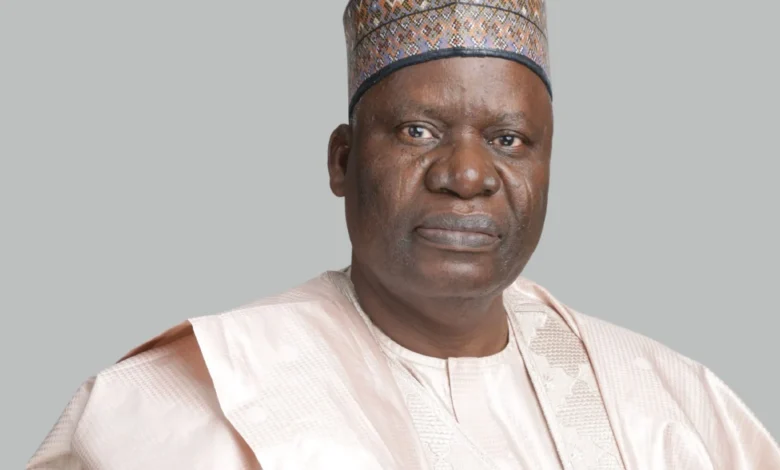
Suleyman A. Ndanusa builds his argument through a single evening in which a hotel generator cuts out, and follows it across a businessman weighing a factory closure, a trader whose freezer begins to thaw, a manufacturer with orders he cannot fill, an investor whose private cushions do not detach him from the country, and an official costing a list of competing public demands.
His case is that these burdens are shared but fall unequally, that money diverted from roads, schools, clinics and security is paid for in longer journeys, missing medicine and understaffed classrooms, and that political appeals to ethnicity and religion operate as a diversion which makes common problems harder to name and failures harder to attribute.
He holds leaders to account through action rather than speech, and argues that citizens have obligations of their own: refusing bribery that benefits them, checking claims before spreading them, and judging candidates on record rather than on identity.
The Evening the Generator Stopped
Read Economics
At 8:17 on a Tuesday evening, the generator outside a hotel stopped. The sudden quiet caught a businessman halfway through explaining why his company might have to close a factory. For a moment, nobody spoke.
Then, across the city, a trader lifted her baby from a hot room, a factory owner looked again at his mounting costs, and a family listened for news of a road they were afraid to travel. Nigeria has no shortage of voices. The harder question is whether they can be heard through the noise, and whether anyone with the power to act is listening.
The businessman’s guests nodded with the grave attention people give to bad news when the air conditioning has also stopped. Across town, the trader’s fan had gone still, and the small freezer in her shop was beginning to thaw. She had raised her prices that morning and apologised to customers who could no longer afford what they had bought the week before. She disliked being the face of the increase. The wholesaler, the transport fare, the fuel for the generator, each had sent its own bill ahead of it.
The Factory, the Investor and the Official
At the factory, the machines had already fallen quiet. Orders waited in the office, workers waited at the gate, and the owner studied a spreadsheet that offered no line for national exhaustion. The business had customers and people willing to work. It also had costly power, delayed supplies, a loan to repay, and a road that turned delivery times into a form of fortune-telling. A factory can be privately owned and still depend on public things. It can be well managed and still be cornered by conditions no manager can fix alone.
Read Daily News
In a house with a large inverter and a second car, a wealthy investor read the same news on his phone. Money gave him cushions, among them private school, private clinic, another source of power, and a ticket out if he chose to use it. It did not make the country irrelevant. His investments were here; his staff were here; his parents, friends, and memories were here. Privilege could soften the blow, but it could not persuade every problem to remain on the other side of the gate.
At a government building, an official reviewed a list of urgent demands, among them safer streets, working schools, reliable electricity, passable roads, jobs, and hospitals that could keep their promises. Beside every need sat a cost. Beside some costs sat a question about the quality of the estimate. Beside some contracts sat a familiar name. Budgets are choices, and postponing a choice is also a choice, though the person paying for the delay rarely sits in the meeting.
What Stolen Public Money Actually Costs
When public money meant for roads, schools, clinics, or security disappears into private hands, the loss is measured in more than money. It shows up in the journey that takes twice as long, the medicine a family cannot find, the classroom without enough teachers, and the community left to protect itself.
Corruption wears down trust each time people must pay extra to receive what should already be provided, or watch public promises disappear without explanation. In time, citizens stop asking whether a service will improve and start asking who they must know, what they must pay, or whether there is any point asking at all.
Buy Maps
A Country That Talks Without Being Heard
By morning, Nigeria was talking again. The radio carried a speech about renewal. A caller spoke about food prices and school fees; the presenter thanked him and moved to the next call. At the market, traders called out prices over the horns. In an office, managers discussed cutting costs while workers waited outside to hear whether their wages would arrive. At a public meeting, people chose their words carefully. The minutes would preserve what was said, not what everyone understood and nobody dared to say.
When Identity Becomes a Diversion
Politics adds its own noise. Too often, public attention is pulled away from the condition of people’s lives and towards arguments over who belongs, whose faith deserves respect, or which community should be blamed. Ethnicity and religion matter deeply to people; they carry family, memory, language, worship, and belonging.
The danger comes when political actors turn those loyalties into tools, inflaming suspicion, sharpening old grievances, and asking people to defend a group while those in power avoid questions about security, public money, jobs, schools, and services.
The people who do this know that a frightened or divided public is less able to demand answers together. A dispute over identity can fill the air for days while a failed policy receives little scrutiny. A rumour can travel farther than the truth and leave neighbours looking at one another with fear.
When people are urged to see every problem as an attack by another ethnic or religious group, shared troubles become harder to name, and common solutions become harder to build. Our differences are real; they should not be made into weapons that keep citizens from seeing who has failed them.
Fear Narrows the Country
Market trends analysis
Insecurity makes that division more dangerous. A farmer may hesitate to return to a field; a trader may close before dusk; a family may change its plans because a journey feels unsafe. People learn to weigh distance against danger and to listen for rumours before setting out. Each attack leaves grief behind, but it also narrows the freedoms that make a country feel like a shared home.
When people cannot count on protection, fear shapes where they work, how they travel, and whom they trust.
Shared Burdens, Unequal Weight
The burdens are shared, but they are not equal. A family without savings feels a price rise before a boardroom does. A small business has fewer ways to wait out a bad season than a conglomerate. A leader has authority that a trader does not, and with it comes greater responsibility for choices that reach far beyond the meeting room.
Workers need firms that can keep operating; firms need infrastructure and predictable rules; government needs a productive economy and public trust; families need all of them to work well enough that ordinary life does not become a daily emergency.
What Citizens Owe
Citizens also have responsibilities. We cannot demand honest government while treating bribery as harmless when it benefits us, excuse violence when it comes from our own side, or spread claims we have not taken the time to check. We can refuse to let a politician’s ethnic or religious appeal decide who deserves our support. We can ask what a candidate has done, how public money was spent, and what happened to promises made.
We can report wrongdoing where it is safe to do so, protect peaceful debate, and resist the easy invitation to turn a neighbour into an enemy. These actions do not erase the greater duty of leaders, but they help determine what leaders can get away with.
How Trust Wears Thin
When people see corruption go unpunished, insecurity spread, and politics turn inward, trust wears thin. Some withdraw from public life. Others look for protection through private networks or force. Grievances harden when peaceful complaints bring no answer. Greater chaos is not inevitable, but the road towards it becomes easier to travel each time institutions fail to protect people, treat them fairly, or give them a credible way to seek redress. The longer those failures continue, the harder it becomes to persuade citizens that patience and lawful action can make a difference.
None of this makes Nigeria one story, or its people one kind of person. The country is too large and varied for that. Its problems differ from place to place and fall with different weight on different shoulders. Yet many people recognise the same weary arithmetic of one more expense, one more delay, one more journey made in fear, and one more plan built around what should have worked.
Buy Maps
The Questions Inside the Silence
When the generator stopped that Tuesday, the silence did not mean peace. It gathered the questions already spoken and the ones swallowed for later, about how long households can keep absorbing costs, how long businesses can improvise around broken systems, how long people can live with fear and still trust that someone is responsible for their safety, and what leaders must change and citizens must insist on seeing changed. No single person in the hotel, the market, the factory, or the government building could answer for the whole country.
By dawn, generators were rumbling where fuel could be found. The factory might try again. The trader would open her shop. The official would return to the list. The radio would begin its arguments. Nigeria would speak, as it always does. The work is to make that speech count, to protect people, account for public money, reject the use of identity as a diversion, and make politics answer to daily life.
Leaders must earn trust through action, and citizens must defend the common ground on which trust depends. That is how talk can become understanding, and understanding become change people can see in their lives.
Nigeria presents real worries on many levels and in many ways. People speak without being heard, and the silence inside the noise is itself the warning.
ABOUT THE AUTHOR:
Suleyman A. Ndanusa, PhD, OON, is an economist, lawyer, strategic studies scholar, and public policy thinker and practitioner with extensive experience in financial markets, regulation, governance, national security, and development.