
What does it take to win the coming election, and who among them has a better chance when he is judged by his strengths, weaknesses, opportunities and threats, and by his capability to deploy his strengths, to neutralise his weaknesses and threats, and to exploit his opportunities? That is the only question that matters on January 16, 2027, when Nigeria chooses who will occupy Aso Rock. You do not need a textbook to feel the answer. You feel it in your gut the moment each name is mentioned. Strength is what makes you believe a man can do the job, and whether he can deploy it when it counts. Weakness is what makes you doubt him even when you want to believe, and whether he can neutralise it before it kills him. Opportunity is the opening you sense when the moment shifts in his favour, and whether he can exploit it. Threat is the fear you feel that the moment will close against him, and whether he can survive it. The three names that dominate the race, Bola Tinubu of the APC with Kashim Shettima, Atiku Abubakar of the ADC with Rotimi Amaechi, and Peter Obi of the NDC with Rabiu Musa Kwankwaso, must therefore be judged not by slogans, but by who can best turn SWOT into victory, measured by the same hard indices that decide whether an economy works, whether people live better, and whether a society holds together. Those indices are growth and recovery, inflation, budget deficit and spending, taxes and private investment, education and human capital, health care, welfare and jobs and social division, trade and competitiveness, and leadership measured by trust and change. When you test each man against those indices, and when you add the critical question of reforms, privatisation, and the sixteen billion dollars wasted on electricity, the choice becomes sharper, and more urgent, than a contest of popularity.
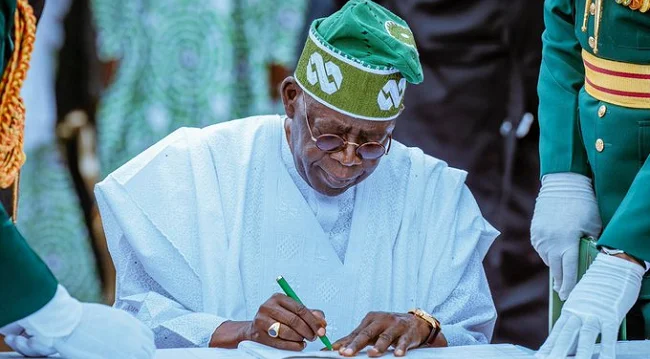
Start with growth and recovery, because that is what every voter feels first. When you hear Tinubu, your instinct says power. You feel the weight of a man who owns the room because he owns the structure. That is his strength. He holds the power of incumbency, substantial financial resources, and strong regional support bases in the South-West and parts of the North. His campaign features an organised, multi-tiered structure backed by state governors and specialised mobilisation groups. One report claimed 31 APC governors had declared support for his re-election. His camp talks about macroeconomic stabilisation, projected GDP growth of 4.2 percent, and the naira stabilising at ₦1,400 to ₦1,500 per dollar by 2026, with global naira tradability offered as proof that reform is beginning to work. His supporters say no president since 1999 has done as much, pointing to many strategic roads he has built across the country . But in the same breath, his critics say are going to eat the roads .
They criticise bim for the high inflation, rising food and school costs, and high petrol prices, reaching up to N1,470 per litre in some areas, have fueled public dissatisfaction with his administration’s economic record since May 2023. Recovery feels slow, like a recovery that is only one third as strong as it should be. Prices are still high, and voters do not eat exchange rates. His opportunity on growth is division. A divided opposition with multiple candidates, including Atiku Abubakar, Peter Obi, Sandy Onor of the PDP, and Seyi Makinde, could split anti-incumbent votes across regions. If Atiku and Obi stay split, Tinubu does not need to be loved, he only needs to be first. His united South-West, with Oyebanji, Fayose, Adebayo, Fayemi, and Segun Oni now aligned behind him, and the APC asking for 90 percent in Ekiti, tells your gut that the machine is closing ranks. His path relies on using state structures and divided opposition votes to secure key states in the South-West, North-West, and North-Central. His threat is the one you feel in your chest when youths gather. Opposition groups are framing the election as a referendum on living standards since May 2023, and potential alliances among opposition parties, such as the G100 coalition talks, aim to unite behind a single challenger. If turnout jumps from 29 percent in 2023 toward a projected 40 percent in 2027, driven by a surge of first-time voters, mostly youths, the machine may not be enough, because those voters do not judge growth by GDP figures, they judge it by whether they have a job and whether food is affordable.
For his admirers, the Federal Government’s current development story is no longer a promise, it is a ledger of concrete, classrooms, and credit, and it asks voters to judge Tinubu by the structure that is finally turning into delivery. On roads, the administration points to 40 completed projects and 5,400 km under active construction, anchored by four legacy corridors, the 750 km Lagos-Calabar Coastal Highway with Section 1 of 47.47 km from Victoria Island to Eleko complete and over 100 km of the Lagos stretch open to traffic, the 1,068 km Sokoto-Badagry Superhighway from the North-West to the South-West, the 477 km Trans-Saharan Highway through Calabar, Ebonyi, Kogi, Benue, Nasarawa and the Federal Capital Territory, and the 422 km Akwanga-Jos-Bauchi-Gombe Expressway across the North-Central and North-East, alongside specific federal approvals for the replacement of the Carter Bridge in Lagos, the Abuja-Kano dual carriageway, the Suleja-Minna dual carriageway, the Abuja-Lokoja-Benin corridor, the East-West Road dualization, the Enugu-Onitsha Expressway, the Ibadan-Ife-Ilesa Road, the Kano-Kongolam Road, and in Ekiti the Ado-Ikere-Akure Road. On education, the 26-point Renewed Hope Education Scorecard claims over 1.5 million students have benefited from NELFUND with more than ₦282 billion disbursed as of June 2026, plus free technical education through 50 new TVET centres across 30 states, BESDA, Girl-Child, Almajiri and school feeding programmes, 10,000 new teachers, a new ASUU agreement, a Student Venture Capital Grant, and digital and solar expansion on campuses. On the economy, the State House on October 30, 2026 cited real GDP growth of 4.43 percent in Q2 2026, headline inflation easing to 14.63 percent in September 2026 even as food inflation stayed elevated at 19.59 percent, and gross external reserves rising to 55.1 billion dollars in October 2026, while RMB on November 17, 2026 upgraded Nigeria from 18th to 11th in Africa for investment attractiveness and PwC on August 21, 2026 projected 4.2 percent growth for 2026, with government estimates that corridors like Lagos-Calabar could cut logistics costs by 15 to 20 percent and add up to 2 percent to GDP over time. Critically, his admirers argue that this is not scattered patchwork, but a national skeleton, concrete pavement instead of asphalt that washes away, and corridors designed to connect agricultural hubs to ports and regional markets, together with Kano-Kaduna rail, Lagos seaport modernisation, grid upgrades, hospital rehabilitation, the Renewed Hope Infrastructure Fund, and the Renewed Hope Ward Development Plan across all 8,809 wards. Yet the critical question remains, is a road a reform if it moves food cheaper, or a monument if households still bleed, and does a loan for a student matter if that student graduates into darkness and joblessness.
When you hear Atiku, your instinct says experience, and then immediately says again. You feel a man who has been here before, and that is both his comfort and his curse. He brings decades of national political experience, strong coalition-building capacity, and established regional support in the North-East and North-West. Pairing with former Rivers State Governor Rotimi Amaechi adds southern political reach and administrative experience to his ticket. That is his strength on growth, he can point to a record of managing a large, diverse federation and to a consistent argument for devolution, privatisation, and a leaner federal government that lets the private sector lead. But your gut also says tired. Running for the presidency for the sixth time, Atiku faces voter perceptions of representing an older political generation. At 79, he is the oldest candidate on the INEC list. In 2023, he polled 6,984,520 votes, against 8,794,726 for Tinubu and 6,101,533 for Obi. His campaign has also trailed behind the APC and NDC in early grassroots mobilisation, and he has lost some key political allies. You feel his weakness most sharply in his own home. Of the five governors Adamawa has had since 1999, not one is standing with him, including Fintiri, Haruna, Ngilari, Nyako, and Jibrilla. Your instinct asks, if you cannot hold your own house, how do you hold the country. His opportunity is hardship itself. Widespread economic hardship gives Atiku’s campaign a strong message to rally dissatisfied voters against the ruling APC. Ongoing negotiations among six opposition parties offer a chance to negotiate a broader united front. His threat, however, is not only political, it is legal and existential. On November 5, 2026, a Federal High Court in Abuja nullified the Senator David Mark-led ADC leadership and invalidated Atiku’s presidential nomination, creating severe legal uncertainty that requires a successful appeal. Furthermore, the defection of Peter Obi and Rabiu Kwankwaso to the NDC weakened the original opposition coalition. His chances therefore depend heavily on overturning the court ruling against his candidacy and resolving opposition fragmentation. Even if he wins the appeal, he must still answer the instinctive question, if you have been rejected five times, what has changed. His position in one sentence is experience that has become fatigue, and a legal cloud that makes fatigue feel like finality.
When you hear Obi, your instinct says hope, and then says fear. You feel hope because he is not the system. He commands strong grassroots enthusiasm, high voter appeal among youths, and regional dominance in the South-East and South-South. In 2023, he shocked the country with 6,101,533 votes, winning Lagos and Abuja, without governors, without a traditional machine, with a youth-driven Obidient movement. At 65, he is the youngest of the three. His record in Anambra, leaving money in the coffers, investing in education and health, still feels clean to many. His pairing with Kwankwaso brings Kano and the North-West, the piece he lacked. That is his strength on growth, he speaks the language of production over consumption, of cutting waste, tracking numbers, and rewarding productivity, and voters who have watched consumption economies fail feel that instinctively. But your gut also says, can trust win an election. His weakness is consistency and structure. Critics and political observers have questioned Obi’s consistency following policy shifts, such as his changing stance on petrol subsidy removal. His campaign also faces challenges in translating organic rally enthusiasm into formal nationwide election-day logistics and party discipline. In 2023, his movement had passion but not enough agents in many polling units, and that memory still haunts him. His opportunity is demographic and institutional at once. A growing electorate of roughly 10 million newly registered voters aged 18 to 34 aligns closely with Obi’s demographic strengths, within a wider surge of first-time voters that could push turnout toward 40 percent. Recent defections of 17 House of Representatives members from the ADC to the NDC also expand his institutional footprint. His threat is vote-splitting. Vote-splitting remains a major hurdle, as both Atiku Abubakar and other southern candidates compete for anti-APC voters. Additionally, friction and public attacks between the ADC and NDC campaign camps complicate efforts to form a single opposition front. His position in one sentence is trust without structure, and his electoral influence depends on whether the Obi-Kwankwaso ticket can merge southern youth momentum with northern populist appeal, and turn rally crowds into certified votes.
Put the three together and the surveys tell you why instinct and numbers do not always agree, and why that disagreement matters. According to a voter sentiment survey by SBM Intelligence published on June 25, 2026, Peter Obi recorded a net favorability score of plus 58.3, whereas Bola Tinubu recorded a score of minus 58.5. That is a gap of more than 116 points in feeling, and it tells you that Tinubu leads on structure while Obi leads on trust. According to state-by-state projections cited in a report by The Guardian on October 19, 2026, and regional breakdowns aired by Arise TV on October 19, 2026, the northern states remain heavily contested across Tinubu, Atiku, and the Obi-Kwankwaso ticket, with Atiku projected to lead in Bauchi, Adamawa, and Yobe, and Tinubu maintaining advantages in states like Borno, Kogi, and Kwara. According to a separate survey shared on Instagram on October 11, 2026, Bola Tinubu led in 20 states and the FCT, holding a 1.54 percentage point lead over Obi, while Peter Obi and Atiku Abubakar each led in 8 states. Read together, the surveys say Tinubu can win on plurality and spread, Obi can win on momentum and favourability, and Atiku can win only if the map narrows to a two-way race and his legal cloud clears. A November forecast that put Tinubu first, Obi second, and Atiku third, with APC 13 states, NDC 13 states, and ADC 11 states, reflects the same balance. No candidate has all three qualities that win, structure, trust, and experience. Tinubu has structure but not love. Atiku has experience but not freshness. Obi has trust but not machine.
Test them next on the indices that will decide whether structure, experience, or trust becomes governance. On inflation, Tinubu’s strength is stabilisation, a naira holding around ₦1,400 to ₦1,500, lower capital costs, and lower risk premiums, but his weakness is that stability at the top has not become relief at the bottom, and his threat is that voters will judge inflation not by the rate of increase, but by the level of suffering. Atiku’s strength is the promise of discipline without the current shock, but his weakness is no recent federal record, only promises. Obi’s strength is prudence from Anambra, but his weakness is that prudence alone does not create jobs, and his threat is that discipline can look like austerity. On budget deficit and spending, Tinubu has a plan and a machine, but debt has grown without visible relief. Atiku promises to cut the cost of government and privatise waste, but his past is associated with patronage. Obi left money behind in Anambra, but running a state is not running a federation. On taxes and private investment, Tinubu has a clear market-led theory, remove subsidies, float the naira, cut taxes for small business, but new levies have felt like more burden. Atiku has business credibility, but his tax ideas can be painted as anti-business. Obi is the candidate of production, but has not spelled out a detailed tax plan. On education, Tinubu can point to NELFUND, TVET, and an end to ASUU strikes, but school performance still lags. Atiku can point to devolution, but has not owned education. Obi can point to Anambra, but Anambra is not Nigeria. On health, Tinubu offers vouchers and choice, Atiku offers universal coverage, Obi offers managed competition against providers and drug suppliers, but none has fully costed coverage. On welfare, jobs, and social division, Tinubu argues the market will create jobs, Atiku argues for welfare limited with work incentives, Obi argues for the marginalised youth, but all three face the same fact, the very rich have become richer while everyone else has gained virtually nothing. On trade, Tinubu is free-trade, Atiku is negotiator, Obi is production-first, but all must answer, will this create a factory in Kano, Aba, or Lagos, or destroy one. On leadership, Tinubu is experience and steadiness but risks being seen as spent, Atiku is survival but risks being seen as old system, Obi is new and energetic but risks being seen as untested.
That is why the question of reforms, and especially privatisation and electricity, cannot be left as background. It is the decisive factor that separates reform that breaks from the past from reform that repeats it. Tinubu’s reforms since May 2023, subsidy removal, foreign exchange unification, and naira tradability, were meant to break from the past, to stop the state from paying for consumption, to make prices honest, and to free money for investment. In principle, your instinct understands that logic. In practice, voters ask a harder question, if reform means we pay N1,470 for petrol, pay more for food and school fees, and still sit in darkness, what has reform reformed. That question leads directly to the privatisation saga and the sixteen billion dollars wasted on electricity, the wound that every candidate must now address, and that Tinubu, as incumbent, must own. The privatisation saga is the story of a reform that was sold as liberation and delivered as capture. In 2013, the power sector was unbundled and sold, generation companies and distribution companies were handed to private owners, with the promise that private capital, private discipline, and competition would end darkness. More than a decade later, generation remains far below demand, transmission remains a bottleneck, and distribution companies, the DISCOs, collect revenue without delivering power, without metering homes, and without investing in networks. About sixteen billion dollars, in loans, interventions, bailouts, and budgetary support, has been poured into a sector that still cannot give Nigerians reliable light. The money did not buy power, it bought time for owners who had no technical capacity, no capital depth, and no incentive to invest because they could pass losses to consumers through estimated billing and to the state through bailouts. That is the definition of a failed privatisation, private profit, public loss, and a regulator too weak to enforce performance contracts. Your instinct feels it every evening when the generator starts, when the inverter dies, when a small business closes because it cannot afford diesel, when a student reads by torchlight. Electricity is not an abstract index. It is growth, because no factory can compete without power. It is inflation, because diesel and petrol add cost to every loaf of bread. It is education, because children cannot learn in darkness. It is health, because hospitals cannot run without light. It is jobs, because the informal sector lives or dies on power.
The critical reforms needed to break from the past must therefore start where the past failed most visibly, in electricity, and then extend to the whole economy. First, privatisation must be re-privatised on performance, not on connections. Contracts for DISCOs and GENCOs that have failed to meet metering, loss reduction, and investment targets must be revoked, re-auctioned to technically competent operators, or placed under credible receivership with a sunset clause. No more bailouts without equity, no more loans without metering. Second, metering must become a right, not a favour. Every home must be metered within a fixed deadline, estimated billing must be outlawed, and the cost of meters must be recovered through transparent tariffs, not through extortion. Third, transmission must be treated as a national security asset, unbundled from politics, funded by a ring-fenced infrastructure fund, and opened to private concessionaires who are paid for uptime, not for contracts. Fourth, generation must be diversified and decentralised, with state governments empowered under the Electricity Act to build mini-grids, solar, and embedded generation, and with industrial clusters allowed to generate and sell directly to factories. Fifth, the tariff must be honest and targeted. The poor must be protected through lifeline tariffs and direct cash transfers, but the rich must pay cost-reflective tariffs, and the state must stop using electricity as a patronage tool. Sixth, the sixteen billion dollars must be audited, publicly. Nigerians deserve to know who got the loans, what was delivered, and who should be prosecuted if money was diverted. Without an audit, every new reform will be met with the same instinctive distrust that haunts Tinubu, that reform is a code for theft. Those electricity reforms are the template for the wider reforms each candidate must be judged on. On budget deficit, the reform is pay-as-you-go discipline and public audit of every bailout. On taxes, it is a simple, low, predictable code with incentives tied to jobs created, not connections. On education, it is early-childhood programmes, teacher testing, national testing in maths and science, apprenticeships, and a trust that lets anyone pay for education out of future earnings. On health, it is managed competition that forces providers, insurers, and drug suppliers to compete on price and quality. On welfare, it is welfare limited to two years, then work, with an expanded earned-income credit so work pays more than poverty. On trade, it is production first.
When you put all the indices together, and when you put electricity at the centre, the decisive factors for winning become clear, and so does who has the better capability to deploy strengths, neutralise weaknesses and threats, and exploit opportunities. The first decisive factor is fragmentation versus unity. If Atiku and Obi stay split, Tinubu wins on plurality, even without love, because his machine can harvest 13 states and the FCT while the opposition divides the rest, and that is Tinubu’s greatest capability, he can deploy structure to exploit division. If the G100 talks or the six-party negotiations produce one challenger, the arithmetic flips, and Tinubu’s minus 58.5 favourability becomes fatal, because he has not yet neutralised his core weakness, distance from the pocket. The second decisive factor is legality. Atiku’s entire candidacy hinges on winning his Court of Appeal challenge against the November 5, 2026 judgment. If he loses, his 11 projected states collapse into Obi’s column, and the race becomes Tinubu versus Obi. If he wins, he remains a spoiler who could still deny Obi victory, which helps Tinubu. Atiku therefore has the weakest capability to neutralise his own threat, his fate is in a courtroom, not in his campaign. The third decisive factor is turnout and structure. If turnout stays near 29 percent, structure wins, and Tinubu’s governors, agents, and ward structures deliver. If turnout surges toward 40 percent, driven by roughly 10 million newly registered voters aged 18 to 34, momentum wins, and Obi’s youth base and Kwankwaso’s Kano machine become decisive, but only if Obi converts rally crowds and 17 defecting House members into polling-unit agents, which is his test of whether trust can become structure. The fourth decisive factor is the economy as lived experience, not as GDP. If food inflation falls from 19.59 percent and petrol relief arrives before January, Tinubu can claim patience worked. If it does not, the referendum on living standards punishes him, no matter how many roads are named. The fifth decisive factor is credibility on electricity and privatisation. The candidate who credibly promises to audit the sixteen billion, revoke failed DISCOs, meter every home, and end estimated billing will own the most emotional issue in Nigeria, because every voter knows darkness.
On balance, Tinubu stands a better chance to win, but not by dominance, by default and by deployment. He is the only one of the three who can already deploy his main strength on election day, incumbency, governors, spread across 20 states and the FCT in one survey, named roads and NELFUND to show for reform, and an opposition that is still fighting itself in court and in public. He can neutralise his weakness on love by exploiting the opposition’s weakness on unity, he does not need to be loved if he is first. Obi is the only candidate who can beat him, because he leads on trust, on favourability by 116 points, on youth, and on momentum, and because the Obi-Kwankwaso ticket solves his northern weakness, but his capability to neutralise his structural weakness is still unproven, he must turn hope into agents, rallies into votes, and favourability into certified results. Atiku is the kingmaker who could become king only if the court saves him and the opposition unites behind experience, but his fatigue, his age, his home-state isolation, and his inability to neutralise his legal threat make that path the narrowest, and his capability to exploit hardship is undermined by the fact that hardship also benefits Obi more. In the end, you do not choose by analysis on paper. You choose by instinct, tested by reform, and by capability. Do you trust power to finish what it started, even if it hurts, and to finally fix electricity by auditing the sixteen billion dollars, revoking failed DISCO contracts, and metering every home? Do you trust experience to correct what power broke, even if it has failed before, and to privatise properly this time, with performance, not patronage? Do you trust hope to build what it has never built, even if it has no machine, and to turn prudence into power, production, and light? On January 16, 2027, that choice will be made by voters, not by governors, not by former governors like Segun Oni who have aligned with Tinubu, and not by social media. And with millions of new voters, the voters may be younger, angrier, and less predictable than any instinct about Tinubu, Atiku, or Obi can fully capture. Nigeria 2027 is not just a time to choose a man. It is a time to choose whether reform will finally break from the past, or whether the past, in the form of darkness, debt, and wasted billions, will choose for us.