RESOURCING STRATEGIES AND THE DELIVERY OF DEMOCRATIC DIVIDENDS UNDER PRESIDENT BOLA TINUBU

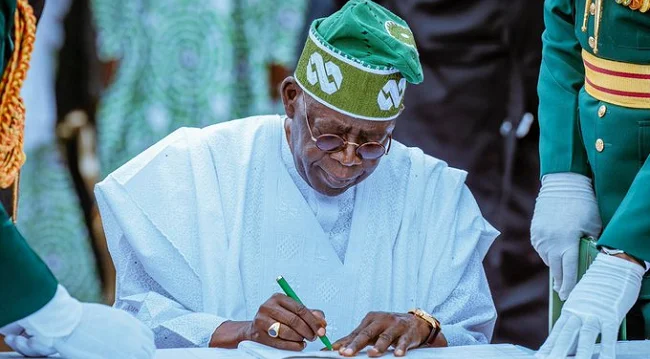
Resourcing is the engine of democracy, because a government can have the best manifesto, the best intentions and the best plans, but without money, without a strategy to raise it, allocate it, and push it to where citizens live, those plans remain promises on paper. Under President Bola Ahmed Tinubu, resourcing has been deliberately positioned as a critical success factor in delivering democratic dividends, and the strategy of the administration has been built around one central idea, which is to free up trapped resources, expand the fiscal space, and push more money closer to the people, to states and local governments, while using federal funds, loans and partnerships to build the big infrastructure that no single state can build alone. This is how that strategy has worked, what resources have been provided, what roles each tier of government has played, and what impact is being felt across the country.
When Tinubu took office on May 29, 2023, his first major decision was the removal of fuel subsidy, and the Presidency has since argued that Nigeria was borrowing about $7.5 billion annually to finance fuel subsidies, and that ending that borrowing freed up funds for development. The logic was simple, that subsidy was consumption, that it benefited mainly those who could afford fuel, importers, and smugglers, and that removing it would convert consumption spending into investment spending. The second pillar was foreign exchange unification, and by ending multiple exchange rates, the government argued it stopped round-tripping, improved transparency, and increased the naira value of oil receipts going into the Federation Account. The third pillar was tax reform, where the administration reduced the Federal Government’s share of Value Added Tax from 15 per cent to 10 per cent, while states now receive 55 per cent and local governments 35 per cent, and the aim was fiscal decentralisation, to give subnationals more predictable revenue to plan with. Together, these reforms expanded Nigeria’s fiscal space, with non-oil revenue projected to reach about N33 trillion, and states that previously received an average of N6 billion monthly now said to collect between N40 billion and N50 billion. The argument of the administration is that these painful reforms were not ends in themselves, but means to create the resources needed for development, and that without them, Nigeria would have continued to borrow to consume, rather than to build.
The most direct resourcing strategy has been the massive increase in Federation Account Allocation Committee disbursements, and this is where the impact of the reforms is most visible. Between 2023 and 2024, federal allocations to state governments increased by about 62 per cent, while allocations to local governments rose by 47 per cent, and the Minister of Finance, Wale Edun, said allocations to the 36 states increased from N3.8 trillion to N7.1 trillion under Tinubu’s administration. Another assessment puts gross revenue shared through FAAC at N9.23 trillion in 2021 rising to N35.81 trillion in 2025, a 288 per cent rise, with FAAC reaching N31.46 trillion in the first nine months of 2026 alone. President Tinubu himself told APC governors that allocations to states had tripled, a claim that has become the administration’s central defence, that no governor can now claim lack of funds. The increase is not just a statistic, it is a structural change in Nigerian federalism, because it means states and local governments now have more money in their hands than at any time in recent history, and the question is no longer whether money is available, but whether it is being used well. The administration has consistently used this point to shift accountability downward, arguing that the Federal Government has done its part by creating the fiscal space, and that the states must now do theirs by delivering results.
Beyond FAAC, the Federal Government has also provided direct intervention funds to states, and between March 2024 and August 2025, it released a total of N2.45 trillion to the 36 states and the FCT to support infrastructure and security projects. According to presidential aide Daniel Bwala, the funds were deployed to rehabilitate roads and bridges, improve schools and healthcare facilities, and strengthen security operations across communities nationwide, particularly in areas where intervention was most urgently needed. An Infrastructure Support Fund for States was also established early in the administration to help states invest in critical areas that create an enabling environment for businesses. The Federal Government has also used its own budget as a resourcing tool for national infrastructure, and the re-enacted 2025 budget allocated N16.76 trillion to capital expenditure, including N5.8 trillion for road networks and bridge repairs, N2.1 trillion for energy and power, N3.5 trillion for defence and security, and N1.8 trillion for agriculture and food security. Key legacy projects resourced through this include the Lagos-Calabar Coastal Highway, the Sokoto-Badagry Superhighway, the Trans-Sahara Superhighway, electricity grid upgrades and the modernisation of key commercial ports in Lagos. The administration also proposed a $21.7 billion borrowing plan, described as a five-year investment programme, of which $10.6 billion is earmarked for transport, $3.3 billion for state government projects and $1.45 billion for the FCT, and Tinubu has defended borrowing on the grounds that the real question is not how much we borrow, but what we build, what value we create and what future we leave behind.
Resourcing has not been only about roads and bridges, it has also been about people, and the administration has created and expanded dedicated funds for social investment and human capital. The Student Loans Fund, NELFUND, has disbursed N372.6 billion to more than 1.5 million students, opening access to higher education for families who would otherwise have been unable to afford it. Cash transfers of over N600 billion have been distributed to 10 million households, with plans to expand to 15 million vulnerable households, as a direct cushion against the pain of subsidy removal. Single-digit interest loans have been provided to more than 800,000 micro, small and medium enterprises through the Bank of Industry, to keep small businesses alive and create jobs. The Basic Health Care Provision Fund has been redesigned to channel funding directly to over 8,000 Primary Health Care centres across the country, bypassing bottlenecks that had previously starved primary health care of funds. The National Agriculture Development Fund has received N100 billion to boost food security, alongside Special Agro-Industrial Processing Zones, fertiliser support and mechanisation programmes, while the Renewed Hope Cities and Estates Programme is targeted to deliver 100,000 houses nationwide. In the power sector, a $750 million facility through the Rural Electrification Agency is designed to catalyse $1.1 billion in private investment for 1,120 isolated mini-grids and 250 interconnected mini-grids, to bring electricity to rural communities that have lived in darkness for decades. These funds show that the resourcing strategy is not just about sharing money, but about targeting it to specific sectors where democratic dividends are most felt, education, health, food, housing, and jobs.
Tinubu’s resourcing model is built on cooperative federalism, the idea that Abuja cannot deliver dividends alone, and that each tier of government has a distinct but complementary role. The Federal Government sets the macro-economic framework, creates the fiscal space through reforms, disburses FAAC, provides intervention funds, and executes national projects that cut across states, such as highways, rail, gas pipelines like the AKK, the power grid, and ports. It has also created five new regional development commissions, for the North-West, North-Central, South-East, South-South and South-West, to complement the North-East Commission, to support infrastructure, humanitarian relief and economic empowerment at the regional level. State governments are the main delivery tier, and Tinubu has consistently called on state governors to spend the increased allocation they now receive to deliver tangible dividends. States are expected to pay salaries and implement the new minimum wage of N70,000 to N100,000 in many states, to build and maintain state roads, schools, hospitals and water projects, to invest in agriculture, power which is now on the Concurrent List, and security, and to counterpart-fund federal projects in their states. The impact varies from state to state, but examples show what is possible when states use the increased resources well. Kaduna State, for example, increased its agriculture budget from N1.48 billion in 2023 to N23.4 billion in 2024 and N74 billion in 2025, using increased FAAC to multiply federal agricultural programmes. Imo State used increased allocations to revive its teaching hospital, build a heart transplant centre, a 2,000-bed infectious disease centre, Imo Digital City, and the Orlu-Akokwa-Uga road linking Imo and Anambra. These examples are used by the administration to argue that increased FAAC, when properly applied, can transform a state.
Local governments are the grassroots tier, the closest to the people, and they are responsible for primary health centres, primary education support, rural roads, markets, sanitation and community infrastructure. Tinubu’s administration pushed for local government financial autonomy, secured through a landmark Supreme Court judgment, and Lagos Governor Babajide Sanwo-Olu noted that this autonomy, plus increased FAAC, means no local government chairman has justification to complain about lack of funds. In Oyo State, monthly allocations to the 33 local governments reportedly rose from an average of N1.8 billion under Alao-Akala and N2.4 billion under Ajimobi to an average of N26 billion under the current dispensation. The Renewed Hope Ward Development Project was also designed as a bottom-up approach, to take resources directly to wards, so that development is not just planned in Abuja or in state capitals, but felt in villages and neighbourhoods. At the unveiling of the Renewed Hope National Development Plan 2026-2030, Tinubu told governors that states and local governments now receive increased and more predictable FAAC allocations, improving their capacity to pay salaries, invest in infrastructure, and deliver social services, and he stressed that the plan’s success will depend largely on effective implementation at the state and local government levels, a clear statement that resourcing without subnational delivery is incomplete.
The impacts of these strategies are both positive and challenging, and they reveal the complexity of delivering democratic dividends in a country as large and diverse as Nigeria. On the positive side, there is fiscal liquidity, because the Presidency says the reforms ended $7.5 billion yearly subsidy borrowing and lifted FAAC by 60 per cent, and previously, 21 states were coming to Abuja for salaries, but now states are paying. There is infrastructure delivery, with federal highways, state roads, hospitals, digital cities and rural electrification projects cited as evidence of increased investment. There is human capital development, with student loans, cash transfers and MSME loans expanding access to education, social protection and business capital. There is state capacity, with the Minister of Budget, Abubakar Bagudu, saying total net statutory revenue and VAT allocation to states and LGs more than doubled from N458.81 billion to N991.81 billion between May 2023 and June 2025. There is also private sector confidence, with GDP growth above 3 per cent for three successive quarters and improved investor confidence cited by the administration. But there are also serious challenges and criticisms, and these cannot be ignored. Critics, including the opposition ADC, argue that improved allocations to governors are not reflecting in Nigerians’ lives, and analysts have questioned why additional revenue has not translated into better infrastructure and living conditions. Capital budget execution has been weak, with only 32.28 per cent of the 2024 capital budget disbursed by June 2025, and 70 per cent of 2025 capital votes rolled over to 2026. Debt servicing remains a major burden, with the Federal Government spending N27.2 trillion on debt servicing in 2024-2025, exceeding capital expenditure by N3.9 trillion, raising questions about sustainability. And the cost of living remains high, because subsidy removal and FX reforms created short-term pain, inflation, high transport and food costs, even as fiscal space expanded. These challenges show that resourcing is necessary but not sufficient, because money alone does not build roads, it must be spent transparently, efficiently, and accountably.
In the end, Tinubu’s resourcing strategy has changed the structure of Nigerian federal finance. It has moved money from subsidy to FAAC, from the centre to states and local governments, from consumption to capital projects, and from ad-hoc interventions to structured funds for education, health, agriculture and infrastructure. The Federal Government has provided the resources, states and local governments have been given the fiscal space and the constitutional responsibility to deliver, and the framework for cooperative federalism has been strengthened. The ultimate test of this strategy is not how much FAAC has increased, or how many trillions have been budgeted, but whether a citizen in Kaduna, Imo, Oyo, Lagos or Borno can see it in a working road, a functioning primary health centre, a school that works, a job, and a lower cost of living. As Tinubu himself has framed it, the Renewed Hope Agenda is a national compact, the promise that the sacrifices of Nigerians will lead to a stronger, fairer and more prosperous nation. Resourcing has provided the means, and delivery at all tiers will determine whether that promise becomes a democratic dividend.