When The Church Becomes A Family Business: The Fountain Of Life Crisis And The Battle For The Throne

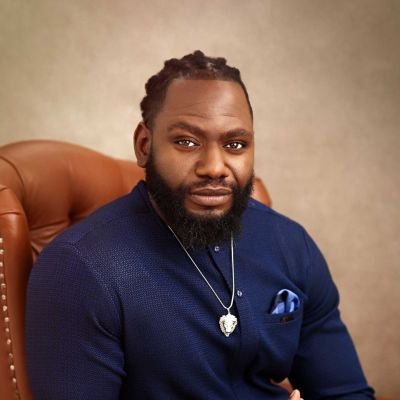
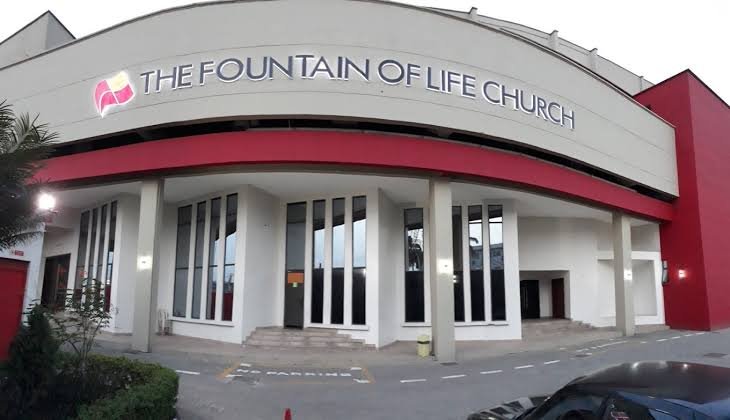
On Wednesday, November 18, Pastor Jimmy Odukoya stood before about 300 workers of the church he inherited from his father, the late Pastor Taiwo Odukoya, and told his side of a story that has now spilled from the boardroom into the media. What he revealed, intentionally or not, was a damning portrait of the modern Nigerian mega-church: an institution that speaks the language of the Spirit but operates with the logic of a family company fighting over shares, chairmanship, and control.
At the centre of the crisis is a video. Recorded in 2021, just before Pastor Taiwo Odukoya went in for surgery in the United States, the video captured the dying wish of a father unsure if he would survive. In it, he reportedly instructed that the church be handed over to Pastor Kunle Areogun after his demise. Jimmy says he was the one who recorded it. He says his uncle, John Odukoya, was aware. He says that after the surgery succeeded, his father told him to delete it because it was no longer valid.
He did not delete it. He kept it. And now his sisters, he alleges, have released it.
That single admission tells us everything about how succession is handled in these churches. It is not handled by constitution, by congregational discernment, or by a transparent process of calling. It is handled by a video on a son’s phone. A father’s last wish becomes a legal document. A private family recording becomes a public weapon. The church, which belongs to thousands of members who give, serve, and pray, is reduced to an inheritance to be kept, deleted, or leaked depending on who holds the phone.
Jimmy’s account of what followed is even more revealing. Trouble started, he said, one year after he assumed office. The board wanted him to step down as chairman of the Board of Trustees and remain only as Senior Pastor. He refused. He sensed, in his words, that the board wanted to control him.
His sisters, he claims, were in league with the board. His sister Tolu, he alleges, approached him and asked that he step down so she could become chairman. Bishop Mike Okonkwo intervened and pleaded with him to step down as BOT chair. He still did not budge. Pastor Enoch Adeboye, the most respected voice in Nigerian Pentecostalism, also intervened. Adeboye told him, according to Jimmy, that he had been called to preach the gospel and not to be chairman of the board, warning that if they did not resolve their disagreement, “it will not be goodbye, it will be bye-bye.”
Read that warning carefully. Adeboye was not just mediating a family quarrel. He was naming the central disease: the confusion of spiritual calling with corporate control. To be Senior Pastor is a spiritual office. To be Chairman of the Board of Trustees is a governance office. In a healthy church, the two are separate for a reason. The pastor preaches. The board governs, holds assets in trust, ensures accountability, and protects the congregation from the pastor himself if necessary. When one man insists on holding both, he is no longer a shepherd. He is a sole proprietor.
Jimmy’s refusal to let go of the chairmanship is the clearest evidence that this is not about ministry. It is about power. If his calling was to preach, as Adeboye reminded him, why fight so hard to remain chairman? Why see a governance check as an attempt to “control” him? Why interpret a board’s demand for separation of powers as persecution? The answer is uncomfortable but obvious: in many Nigerian churches, the chairmanship is where the real power lies. It is where bank accounts are controlled, where land is signed, where contracts are awarded, where the church’s vast assets are directed. The pulpit gives influence. The board gives ownership.
The financial allegations that followed only deepen that interpretation. Jimmy says he was accused of embezzling church funds and threatened with the EFCC. A specific allegation was made about N250 million donated by an individual to the church. Jimmy says the money is still intact, that the project it was meant for was delayed by the bad economy and rising costs, and that he had restricted access to church funds.
But note the language: “I had restricted access to church funds.” Who is “I” in a church? In a spiritual entity, funds belong to the body. Access is governed by policy, by finance committee, by trustees. In a family business, funds are restricted by the owner. Jimmy’s own defence betrays the model he is operating: he, not the board, decides who touches the money. And when he says that if there was a financial crime, those in accounts would also be culpable, he is not invoking accountability. He is invoking mutual protection, the classic language of a family firm closing ranks.
His sisters’ alleged roles complete the family-business picture. One sister, according to Jimmy, wants to be chairman. The other is aligned with the board. The BOT, consisting of Pastor Kunle Areogun and Pastor Rotimi Okpaise, made a seven-point demand. Jimmy acceded to four and refused three. He then asked the entire BOT to resign, including his elder sister, but pleaded that she would be reabsorbed because the church needed to start on a clean slate.
This is not church governance. This is a boardroom coup and counter-coup. This is a family deciding who gets to sit on the board of the family company, who gets to be reabsorbed, who gets to be sacked. The congregation, the 300 workers who sat listening, the thousands who worship on Sundays, are reduced to spectators. They are not stakeholders in a spiritual entity. They are staff in a family enterprise, applauding as the heir addresses them.
Jimmy’s spiritual justifications for holding on make the picture even more troubling. He says he fasted and prayed and gave God two options: speak in a dream or send a stranger. His late father then appeared to him in a dream and told him not to succumb, that they would throw dirt on him but he would overcome. Soon after, a pastor he met told him that if he did not sack the BOT, they would continue to give him problems.
This is the most dangerous fusion of all: using private spiritual experience to legitimise corporate control. A dream becomes a board resolution. A prophetic word from a stranger becomes a governance strategy. When a leader can claim that God told him in a dream not to step down as chairman, no board, no constitution, no pastor, not even Adeboye, can argue with him. God has spoken. And conveniently, God has spoken in favour of the son keeping power.
That is how family business masquerades as spiritual entity. The language is spiritual. The structure is corporate. The outcome is dynastic.
And the irony is that the man at the centre of the succession video, Pastor Kunle Areogun, reportedly does not even want the throne. Jimmy says his father approached Areogun about taking over after his demise, but Areogun declined, saying he was only called to support Taiwo Odukoya, and if the father was no longer there, he too would not be there. That was what prompted Areogun to resign from the BOT when asked.
Think about that. The supposed heir apparent declined. The father’s chosen successor said no. And yet the church is still fighting over the succession video. Why? Because in a family business, succession is not about who is called. It is about who controls the brand, the building, the name, the assets. Areogun may have walked away from the pulpit, but the board he sat on still represents a check on the family’s control. And that check is what Jimmy is fighting.
The Fountain of Life crisis is therefore not unique. It is symptomatic. Across Nigeria, churches founded by charismatic men have become dynasties. The founder dies, the wife takes over, or the son takes over, or the daughter fights the son for takeover. Boards are filled with family members, loyalists, and friends. Constitutions, where they exist, are vague on succession. Members are told to pray, not to ask questions. Audited accounts are rarely published. Assets are held in the name of trustees who are themselves family.
The result is a church that looks like a spiritual entity on Sunday and behaves like a family business on Monday. On Sunday, the pastor preaches sacrifice, humility, and servant leadership. On Monday, he fights to remain chairman, restricts access to funds, sacks the board, and claims a dream as divine mandate to hold power.
Adeboye’s warning, “it will not be goodbye, it will be bye-bye,” was prophetic in the truest sense. He was not threatening Jimmy. He was describing what happens when a church becomes a family business. The Spirit leaves. The people leave. The credibility leaves. What remains is a building, a name, and a family fighting over an empty throne.
Jimmy told his workers that since he assumed leadership, attendance has increased and the church can boast of landmark achievements. He acknowledged that having a huge congregation is not an indication of being right with God. He is right on both counts. Growth is not godliness. A crowded auditorium is not proof of divine approval. A church can grow while its soul is being sold, because Nigerians are hungry for hope, for community, for miracles, and they will fill any building that promises them.
The real question the workers should have asked that night, and the question every member of Fountain of Life must now ask, is simple: Who owns this church?
If the answer is the Odukoya family, then let it be registered as such, let it be taxed as such, let it be run openly as a family business, and let members decide if they want to be customers of that business.
But if the answer is God, and if the church is truly a spiritual entity held in trust for the congregation and the kingdom, then no son, no daughter, no sister, no board chairman should be able to claim it as inheritance, to keep a succession video as leverage, to restrict funds as personal property, or to sack a board because God told him in a dream.
Until Nigerian churches answer that question honestly, with constitutions, with independent boards, with published accounts, with separation of pulpit and boardroom, and with succession that is not dynastic, the Fountain of Life crisis will repeat itself, in different churches, with different families, with the same sad script.
The church was never meant to be a family business. When it becomes one, it ceases to be a church.