There was a time when mentioning NNPCL meant talking about the commanding height of Nigeria’s oil economy. It was the custodian of upstream assets, the operator of refineries, and the institution Nigerians were told would guarantee energy security. That image has collapsed. For decades the company was a refining giant in name only. Port Harcourt, Warri and Kaduna were announced, budgeted for, and re-announced, yet they remained largely dead. While the state managed scarcity and defended subsidies as social policy, the real business of refining was abandoned. Importation became the default, and a class of beneficiaries grew rich from a system designed to stay broken, because a working refinery would have ended the rents.
The consequence of that failure is now visible. NNPCL has been reduced to a middleman and retailer of finished products from a private refinery. The Dangote Refinery, with 650,000 barrels per day capacity, now sets the tone for domestic supply. NNPCL lifts, distributes, and sells. A company with all the sovereign backing, all the historical assets, and all the public funding now negotiates offtake terms like any other marketer. From owner of infrastructure to buyer in someone else’s market. From policy driver to price taker. That is diminution, and it is complete. The root of it was leadership without foresight. In an industry where decisions take years to yield results, NNPCL invested in explanations instead of solutions. It delayed deregulation, clung to subsidies, and pretended another budget line would revive plants that had not worked in decades. There was no plan to make government refineries competitive, no timeline to replace imports with domestic refining, and no strategy for when private refining arrived. When deregulation came, the company had no cost advantage, no efficient plants, and no logistics edge. So it defaulted to trading.
Corruption compounded the problem. It was not a side issue. It was the operating system. Refinery rehabilitation contracts came and went with nothing to show. Subsidies, waivers, and swap deals created powerful interests who needed dysfunction to continue. Even after the Petroleum Industry Act and the conversion to a limited liability company, the culture did not change. The name changed. The incentives did not. The third failure was the inability to manage strategic change. While Dangote was building, NNPCL was meeting. There was no push for new refineries, no scaled modular program, and no pivot into gas or petrochemicals. When subsidies were finally removed, there was no preparation and no honest communication. Trust collapsed. Now the company is left to buy product, sell it, and absorb public anger when prices move. That is retailer work, not the work of a national oil company. And the risk is clear. An amorphous relationship with Dangote, negotiated in rooms instead of open markets, is where transparency dies. If it is not structured, Nigeria will simply trade subsidy bedlam for offtake bedlam.
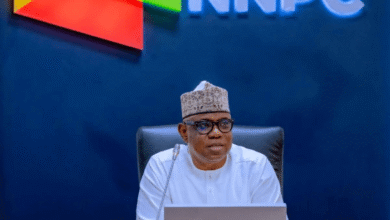
It is against that background that President Bola Ahmed Tinubu appointed Engr. Bashir Bayo Ojulari as Group Chief Executive Officer on April 2, 2025, succeeding Mele Kyari. Ojulari came in with experience as a petroleum engineer and former Managing Director of Shell Nigeria Exploration and Production Company. In less than two years the tone around NNPC Ltd has shifted, and so have the numbers. The company posted a historic ₦2.28 trillion profit after tax in the first half of 2026. For an institution that struggled with losses and opaque reporting, that figure signals an attempt to treat commercial discipline as the core mandate.
The clearest break is on refineries. Ojulari’s administration has conceded that direct state operation failed. Under the new Refinery Operations Reset, NNPC is reducing its equity in the state refineries to between 10% and 40% and inviting IOCs and private operators to take majority ownership and management. The model is NLNG: government as shareholder, private sector as operator. The implication is significant. If private capital comes in and the plants run, Nigeria could finally get domestic refining that cuts imports, creates jobs, and eases pressure on foreign exchange. If the deals stall or politics re-enters, the plants will remain a liability and the public will see this as another false start.
Alongside that is a push to redefine NNPC’s future around gas. The Nigeria Gas Master Plan 2026 aims to move Nigeria from a gas-potential country to an execution-focused global gas hub, with a target of 12 billion cubic feet per day by 2030. The goal is to use gas for industrialization, stable power, jobs, and investment. This is a strategic pivot away from over-dependence on crude. Domestically it means feedstock for industry. Internationally it positions Nigeria for the energy transition where gas is a bridge fuel. But the test is execution. Master plans are easy. Pipelines and processing plants require capital and coordination.
Production and investment targets are the third pillar. NNPC is aiming for over 2 million barrels per day by 2027 and 3 mbpd by 2030. To get there it is chasing $30 billion in investments by 2027, scaling to $60 billion by 2030 for deepwater and pipeline rehabilitation. That ambition is backed by a fourth pillar: governance and transparency. Monthly financial and operational reporting has resumed after breaking down in 2021. Joint-venture cash calls are now paid promptly. Delays there were a major reason partners withheld investment. The company is also aligning with Executive Order 9 for digital trade and automated compliance. The message to investors is that the rules are predictable and payments will be on time. In a capital-intensive industry, that predictability is what unlocks money.
The fifth area is security and supply. NNPC has deepened collaboration with host communities and security agencies in the Niger Delta. Assets like the Soku Pipeline have been optimized, with reported near-100% availability for crude transport. Theft and vandalism have long dragged down production. If availability holds, the production targets become more realistic.
Taken together, Ojulari’s initiatives represent a fundamental repositioning. The old NNPCL functioned as a bureaucracy that sold oil. The new NNPC Ltd is trying to function as a company that serves national interest through commercial performance. Fiscally, that should mean higher profits and more transparent remittances. Economically, it should mean more gas for industry and more oil to fund the budget. Politically, it requires convincing Nigerians that a smaller footprint in refineries is not surrender but strategy.
Yet the miserable strategic position described earlier has not been fully reversed. NNPCL is still dependent on Dangote for finished product while it tries to restructure its own refineries. The relationship remains nebulous until contracts, pricing, and volumes are made public and rules-based. The gas plan is ambitious but still at the launch stage. The $30-$60 billion investment target will be tested by oil price volatility and investor confidence. And transparency must be sustained beyond one strong profit period.
The real test is practical. Can the refinery equity deals close and can private operators turn the plants around? Can the Gas Master Plan move from paper to steel? Can investment targets be met? Can reporting and cash-call discipline hold?
If yes, April 2025 will be remembered as the turning point when NNPC stopped being managed as a problem and started being run as an asset. If no, then ₦2.28 trillion in H1 2026 will be just another good quarter in a long history of missed chances.
For now the direction is clear: less direct operation, more partnership; less opacity, more reporting; less bureaucracy, more business. Whether that direction holds will decide if NNPCL escapes its miserable fate as a finished-product middleman, or simply manages the decline more professionally.