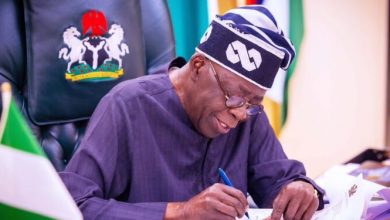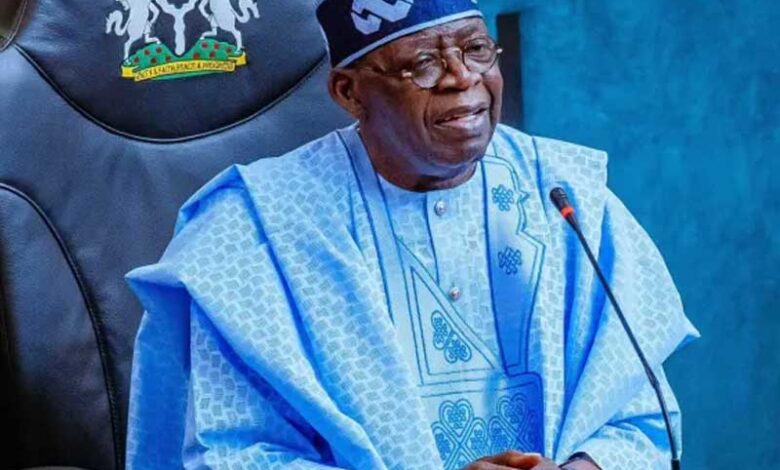
President Bola Tinubu’s 66th Independence Day address on October 1, 2026 was designed to mark a change in narrative. If his first two Independence speeches were about justifying difficult surgery, the removal of fuel subsidy that consumed over N4 trillion annually, the unification of exchange rates that ended a dual economy where a few bought dollars at N400 and sold at N750, and the halting of Ways and Means financing that turned the Central Bank into a source of consumption funding, this third address was about declaring that the surgery has worked and that the country must now move from stabilisation to shared prosperity. The President chose to anchor that promise on the things ordinary Nigerians feel daily, the cost of living, food production, jobs, industrial revival and opportunity. In that sense the speech is different from past Independence addresses. Under Jonathan the focus was on GDP rebasing and the transformation agenda, under Buhari after 2015 it was on anti-corruption rhetoric and insurgency while still keeping the expensive subsidy regime, and under Tinubu himself in 2023 and 2024 the tone was largely defensive, asking for patience and understanding. This time the tone was confident, presenting economic reform not as an ongoing pain but as a foundation that should now produce visible relief. The argument deserves recognition, as economist Suleyman Ndanusa notes, because the fiscal headroom is real, Federation Account distributions that averaged less than N900 billion in 2022 now consistently exceed N1.6 trillion monthly, giving states and the 774 local governments, especially after the Supreme Court affirmation of direct financial autonomy in July 2024, resources they never had before.
But an Independence Day address is more than an account of economic policy, it is the one moment each year when a President takes stock of the whole country, its anxieties as well as its ambitions, and read in that light the speech leaves important gaps. The most striking is security. The President thanked the Armed Forces and security services for their sacrifice, which is appropriate, but he offered no account of the threat itself or how the government’s response is changing. Families worried about insurgency in the North East, banditry and kidnapping in the North West and North Central, communal violence in parts of the Middle Belt, and the safety of farms and highways needed more than gratitude. They needed to hear how communities will be protected, how ungoverned forests will be secured, what role state policing, forest guards and technology will play, and how progress will be measured beyond body counts. This omission is directly linked to the President’s own economic promise, because you cannot promise greater agricultural production without guaranteeing that farmers can safely reach and work their land. A tractor is useful, but a safe journey to the farm is essential. Without security, the entire food production and cost of living agenda collapses.
A second major issue is the silence on corruption and the quality of public governance. These are not side issues in a journey to prosperity, they are central to it. Corruption drains money intended for roads, schools, hospitals and security, and weak oversight leaves even well-designed programmes stranded between announcement and delivery. Nigerians have endured two years of reform that asked households to absorb difficult choices, higher petrol prices, higher transport costs, exchange rate adjustments. Confidence in that sacrifice grows when citizens see that discipline applies to public office as well as to the household. They needed to hear how public funds will be protected, how procurement will be made transparent, how the new infrastructure funds and increased FAAC disbursements will be audited, and how officials who misuse resources will be held accountable. Without that assurance, even the best policy meets the familiar Nigerian obstacle course between approval and implementation, and reform fatigue sets in.
Related to that is the question of governance and delivery management. The address set out worthy ambitions, jobs, industry, food, but gave few measurable commitments, timelines or institutional clarity. It did not explain how federal, state and local governments will coordinate to deliver basic education, primary healthcare, security and social protection, at a time when all three tiers now have unprecedented resources. Prosperity cannot be delivered by declaration alone, it needs capable institutions, dependable public services, honest reporting and consequences when delivery falls short. Similarly, national cohesion deserved more than a call to move forward together. Unity is strengthened when leaders acknowledge the divisions, mistrust and sense of exclusion that can weaken the national bond. A country is not united simply because its people share a flag, they must also feel that they share a future, with fairness among regions, equal citizenship and confidence in the institutions that hold the federation together. The speech missed that opportunity.
The final set of issues concerns youth, jobs and the limits of credit. The President spoke warmly of young people and opportunity and referenced education loans and consumer credit as tools for empowerment. Those tools are relevant, yet credit is not a substitute for adequate schooling, productive jobs or rising real incomes. A loan can help someone acquire an asset, it cannot by itself create the dependable work needed to repay it. Health, education, housing and the pressures facing low-income families also deserved a fuller place in a speech about prosperity. At its core, stabilisation is a foundation, not the finished house. For many households hardship remains immediate. The promised new age will become credible only when people can see food and transport becoming more affordable, real incomes improving, public services working, and assistance reaching those who need it.
That is why Ndanusa’s proposal for a public scorecard is the most important takeaway from his review. If the central promise is that reform should now lead to prosperity shared across the country, government should set out clear targets, timelines and regular progress reports covering security, household welfare, jobs, public services and integrity of public spending. Nigerians do not expect one Independence Day address to solve every national problem. They do expect it to show that their most urgent concerns have been heard and that government knows how it will answer them. The economic chart may be moving in the right direction, but until the family table, the farm and the neighbourhood confirm it, the promise remains incomplete.