For fifty years, Nigeria’s oil story had a shameful punchline that every Nigerian understood. Africa’s largest crude producer could not refine its own fuel. It pumped crude to Europe, Europe refined it into petrol, diesel and jet fuel, and sold it back to Nigeria at a premium. The environmental cost, the gas flares and thick black smoke that Collins Nweke remembers so vividly from his teenage holidays near the oilfields of Omoku in Rivers State, was borne at home, while the value of conversion, logistics, trading and blending was captured abroad. That long contradiction is what makes the second quarter of 2026 so significant.
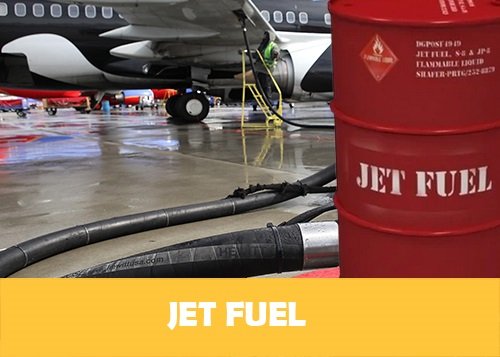
As conflict disrupted Middle Eastern energy exports, Europe lost approximately one-quarter of its normal supply of middle distillates, which are diesel and aviation fuel. Inventories in Northwest Europe, particularly around the Amsterdam-Rotterdam-Antwerp hub that is the centre of world petroleum storage and trading, tightened sharply and buyers scrambled for alternatives. Market data tracked by Kpler and reported in September 2026 showed where part of the answer came from. Europe imported about 80,000 barrels per day of jet fuel from Nigeria’s Dangote refinery during that quarter, enough to cover about 13 percent of the entire supply shortfall. For a brief period during the summer, Dangote was Europe’s largest individual refinery supplier of aviation fuel, and Nigeria as a country ranked behind only the United States among supplier nations. A refinery that was conceived principally to end Nigeria’s humiliating dependence on imported refined products had suddenly become relevant to European aviation and energy security, and that reversal changes the language of Africa-Europe economic relations.
The domestic transformation that enabled this export surge is equally dramatic. Nigeria’s petrol imports have reportedly fallen from around 400,000 barrels per day in 2024 to about 83,000 barrels per day in 2026. The same asset that cut petrol imports is now pushing out cargoes of Jet A1, diesel and gasoil to European and African markets. In economic terms, this is industrial conversion replacing raw extraction. When Nigeria exports crude, it exports a commodity. When it exports jet fuel, it exports operating income, technical employment, industrial capability, freight and insurance demand, and strategic relevance. That is the principle that Nweke insists must be multiplied across the economy, from cocoa to branded chocolate, from raw gas to power and petrochemicals, from minerals to manufacturing chains.
But the commercial opening was born in crisis, and crisis-driven demand is not guaranteed demand, which is the central warning in Nweke’s analysis. Nigeria’s jet fuel did not win European market share in normal competitive conditions. It won it because Middle Eastern refineries were disrupted, shipping routes were unsafe, margins rose, and Dangote happened to be operational and well-positioned geographically to respond. When those traditional supply routes recover, Nigerian product will have to compete head-to-head against entrenched refiners in the Middle East, Asia, the United States and Europe itself. Buyers will not buy out of solidarity. They will judge on price, on strict Jet A-1 specifications like DEF STAN 91-91, on shipping time, on consistency of supply, on contractual performance, on storage and inspection quality, and increasingly on regulatory compliance around emissions and carbon accounting. Therefore the present moment must be treated not as a permanent victory but as a commercial audition. The goal is to convert emergency cargoes into durable customer relationships, and that requires operational credibility that goes far beyond one refinery. It requires reliable ports in Lagos, transparent and predictable rules for crude supply to refiners, credible downstream regulation, and the ability to meet different seasonal and environmental fuel specifications at short notice.
The geography of that credibility leads directly to Belgium, which sits at the centre of the opportunity. The ARA region is one of the world’s most important centres for refining, blending, storage and commodity trading, and Antwerp’s terminals and pipelines connect maritime cargoes to the entire European market. Until very recently the commercial question was how European fuel could reach Nigerian consumers. Now the question is reversed, how Nigerian fuel can enter, be stored, blended, inspected, traded and distributed within the European system. That opens possibilities for storage contracts, for shipping and onward distribution, for Belgian engineering companies to support maintenance, emissions management, water treatment and efficiency at the refinery. However, as Nweke argues, Europe should not reduce this to an opportunity to sell more services to one successful Nigerian enterprise. A mature partnership would help build a wider Nigerian industrial ecosystem around the refinery, local suppliers, welders, laboratories, logistics operators, manufacturers and training institutions capable of participating in the value chain. If Europe continues to frame Africa mainly through development cooperation and migration management while talking about strategic autonomy and energy security for itself, it is missing the point. A country that can relieve part of a European fuel shortage is not an aid recipient. It is a contributor to Europe’s economic security, and international relationships should respond to that demonstrated capability by identifying sectors where African countries can become genuine resilience partners, including energy, critical minerals, agricultural processing, pharmaceuticals, digital services and maritime logistics.
Nigeria, for its part, must manage this new leverage with care, because strategic relevance also brings responsibilities and exposes a painful domestic paradox. While Nigerian jet fuel keeps European planes in the air, Nigerian airlines are being grounded by its price at home. Current market checks show Jet A1 now costs about N2,000 to N2,130 per litre in Lagos and Abuja and up to N2,230 per litre in Kano, Enugu and Port Harcourt. Local carriers face severe operating costs, foreign exchange challenges and frequent fuel-related delays that strand passengers. This is happening despite massive domestic production capacity because the fuel is priced against international market parities rather than at a preferential local rate. Dangote is a commercial enterprise. If European buyers pay more, cargoes logically flow to Antwerp rather than to Murtala Muhammed Airport. Nigeria has therefore achieved refining sovereignty but not price sovereignty. It has solved availability but not affordability, and that explains why massive domestic production has not translated into cheaper flights for Nigerians.
The way forward therefore has two tracks that must run together. Domestically, Nigeria must not confuse the success of one privately controlled refinery with functioning institutions and competitive markets. It needs transparent rules for crude supply, adequate strategic fuel reserves, credible regulation that prevents monopoly abuse, and conditions that allow additional refiners and service companies to invest. It must also use its present petroleum strength to prepare for an energy system that will gradually become less carbon-intensive, particularly in aviation where conventional jet fuel will remain essential for years but Europe is introducing increasingly demanding sustainable aviation fuel mandates, emissions requirements, certification and traceable carbon data. The future opportunity is not simply to sell more fossil-based jet fuel but to build capability in renewable feedstocks, synthetic fuels and cleaner refinery operations.
Internationally, the rise of Nigerian jet fuel sits inside a larger warning about the world trading system. The World Trade Organisation in its 2026 report estimates that fragmentation of the world into geopolitically aligned blocs could reduce global exports by 18.6 percent by 2050, with poorer economies suffering the greatest relative losses. Nigeria’s new position demonstrates the value of strong bilateral corridors like Nigeria-Belgium and Nigeria-EU, but it also demonstrates why multilateral rules remain essential. Many African economies do not yet have the scale to negotiate with major blocs from a position of strength and depend on rules that limit discrimination and preserve market access beyond preferred alliances. Africa should therefore pursue deeper corridors without abandoning multilateralism.
In the end, a single cargo of Nigerian aviation fuel arriving in Europe reveals more than any diplomatic declaration. It proves that resources create leverage only after they have been converted into capabilities that other economies value. For once, when Europe confronted a strategic supply gap, Nigeria was not watching from the margins. It had a product Europe needed and the industrial capacity to supply it. The task now is to ensure that this moment is not remembered merely as a profitable consequence of crisis. It should become evidence that a more reciprocal Africa-Europe economic relationship is both possible and necessary, and that the value created in Lagos should not only power flights in Brussels but also make flights affordable in Lagos itself.