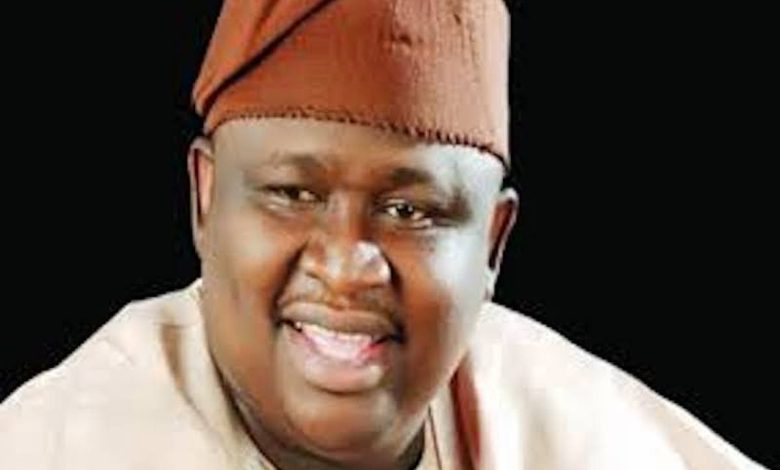
Senator Solomon Adeola, the All Progressives Congress governorship candidate for Ogun State, has come under fresh attack over his state of origin, with allegations resurfacing that he is an indigene of Ekiti State rather than Ogun. The claims were made during separate interviews on Channels Television by Hon. Abayomi Hunye, a suspended member of the APC from Tube in Ipokia Local Government Area, and Ambassador Folake Marcus-Bello of the Peoples Democratic Party. According to a press statement released by Adeola’s media office on Monday, both individuals made the assertions without presenting any evidence, and the interviews have since been widely circulated across other media platforms.
In what his camp described as a pattern of political sabotage, Senator Adeola has dismissed the allegations as libelous and baseless. He said he watched the broadcasts “in utter disbelief” as persons he barely knows made “assertive and outrageous lies” about his background. He specifically faulted Hunye for being unable to name the town in Ekiti when asked for details during the interview, and accused Marcus-Bello of going further to fabricate information about the burial locations of his parents, suggesting she spoke with an authority she did not possess. For the senator, the remarks were not mere political banter but a deliberate attempt to malign his person and family in the public space.
The controversy is not new to Ogun politics. The same “Ekiti origin” narrative was deployed against Adeola during the 2023 National Assembly elections as a tool to prevent his emergence as the senator representing Ogun West Senatorial District. That effort failed as voters in the district gave him a landslide victory. His media adviser, Chief Kayode Odunaro, noted in the statement that the resurrection of the claim at this time is directly linked to Adeola’s growing political profile ahead of the 2027 governorship election. The statement argued that the attack is part of a calculated effort to derail what it described as his “seemingly unstoppable move to a victorious outing” in the Ogun governorship race. In a state with a diverse ethnic composition, questions of indigeneity have historically been used to test the eligibility and acceptability of candidates, and the timing of this latest allegation, about 18 months to the polls, fits that pattern.
Rather than respond only through the media, Senator Adeola has chosen a legal route. He has given Hunye and Marcus-Bello 24 hours to publicly present evidence to support their claim about his state of origin. The ultimatum, contained in the statement signed by his media adviser, warns that failure to do so will attract lawsuits for libel over the false statements made on national television. The decision to threaten litigation shifts the conversation from political rhetoric to legal accountability. It places the burden of proof on the accusers and signals that the Adeola campaign intends to confront what it considers defamatory attacks head-on, instead of allowing them to fester in the public domain.
Beyond the immediate personalities involved, the episode raises broader questions about political discourse in Ogun State as the 2027 elections approach. With Adeola now the APC standard-bearer, he is likely to remain a prime target for opposition narratives aimed at questioning his legitimacy and connection to the state. The response from his camp suggests that the campaign will treat such attacks as both a political and legal matter, and will seek to frame them as distractions from issues of governance and development.
For now, the public awaits whether the 24-hour deadline will produce any evidence from the accusers or the lawsuits threatened by the senator. What is clear, however, is that the allegation has reopened a debate that many thought had been settled at the ballot in 2023, and it underscores how identity and origin remain potent weapons in Nigeria’s electoral battles. As the governorship race gathers momentum, the Adeola camp has made it clear it will not allow questions of origin to go unchallenged.