
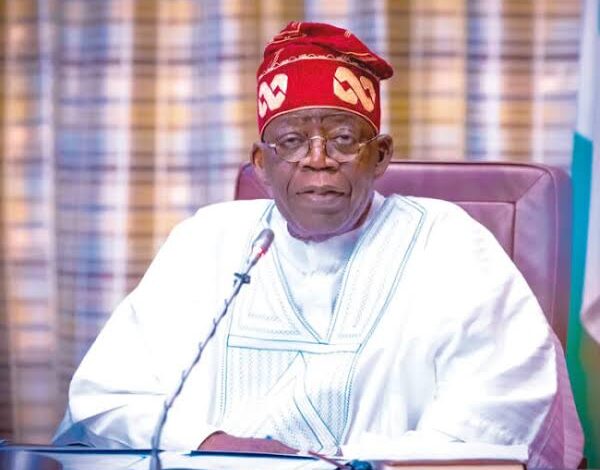
The hatred directed at President Bola Ahmed Tinubu is not ordinary political opposition, it is an industry built on the interruption of entitlement. For more than a decade, Nigeria ran a distributive economy where prosperity was measured not by what we produced but by what we could share and subsidize. Fuel subsidy consumed over N4 trillion annually, foreign exchange arbitrage created a dual economy where a connected few bought dollars at N400 and sold at N750, and Ways and Means financing turned the Central Bank into a lending house for consumption. Tinubu’s core idea was to reverse that logic and move Nigeria from consumption to production, and his strategy has been consistent from day one. Remove the leakages first, restore fiscal truth, then use the savings to fund the productive base.
That strategy is visible in three interlinked moves. First, the removal of fuel subsidy and unification of the exchange rate, painful as they are, have restored fiscal space. Federation Account distributions that averaged less than N900 billion in 2022 now run above N1.6 trillion monthly, giving states and local governments the largest inflow in their history. Second, rather than allow that inflow to be consumed, the administration is channelling it into what it calls foundational investments, the Renewed Hope Infrastructure Fund, the Lagos-Calabar Coastal Highway and Sokoto-Badagry superhighways as trade corridors, the CNG transition to cut transport costs, the student loan scheme and consumer credit corporation to rebuild human capital and domestic demand. Third, the institutional re-engineering, financial autonomy for the 774 local governments affirmed by the Supreme Court in July 2024, the tax reforms led by Taiwo Oyedele to shift the revenue base from oil to non-oil, and digitization of revenue and identity systems through NIN-BVN linkage and e-procurement, all designed to bypass traditional gatekeepers and force money to the grassroots. The idea is a decentralized federation where federal creates the architecture and sub-nationals deliver the last mile.
What has the opposition offered as an alternative to this? That is where the hatred exposes itself as intellectual bankruptcy. One faction says it would have retained subsidy but better managed it. Yet Nigeria tried better management for 15 years and lost an estimated $10 billion to opaque swaps and theft in the last years alone. Retaining subsidy means retaining the fiscal bleeding that pushed external reserves to $33 billion and inflation to over 22 percent before the reforms. The viability of that alternative is zero because the money to sustain it no longer exists. Another faction says it would have floated the naira gradually. But a gradual float while still owing $7 billion in FX forwards and with multiple windows is not a policy, it is a continuation of arbitrage. It is not viable because investors do not invest in a gradual corruption. A third group offers no economic model at all, only a return to large palliative sharing, cash transfers without funding sources, price controls without production. All of these alternatives collapse on one test, where will the money come from?
Because they cannot answer that question, hatred becomes the program. Doctored covers of foreign magazines, daily obituaries on social media, magnification of every hardship without context, and a silent prayer that reforms fail so their grievance can succeed. This is not opposition, it is blackmail of the state, hoping the pain of surgery will make the patient kill the surgeon.
That is why it will fail to abort a second term. First, voters have lived through the old model and know its price. They know cheap fuel on paper meant endless queues and smuggling to neighbouring countries in reality, and a cheap dollar officially meant no dollar for manufacturers in reality. Second, the decentralization of money has decentralized the electoral argument. A voter in Kaduna where Governor Uba Sani is translating historic FAAC receipts into rural roads, schools and security consolidation does not need a social media narrative from Abuja to tell him whether Renewed Hope is reaching him. When local governments now receive direct allocation, the old story that nothing is happening dies at the ward level. Third, elections are won by organization, not outrage. The opposition has mastered digital smear but has no polling unit presence, no ward mobilization, no continuous community engagement, while the Renewed Hope grassroots structures are already embedding in communities.
Hatred can trend, but it cannot govern. It has no budget, no infrastructure plan, no monetary policy, no alternative to fund the national budget. Nigerians will ultimately make a choice in 2027 between a difficult but coherent path of economic sovereignty and industrial continuity, and an empty vessel of resentment that loves power more than it loves the country.