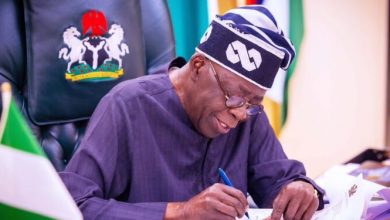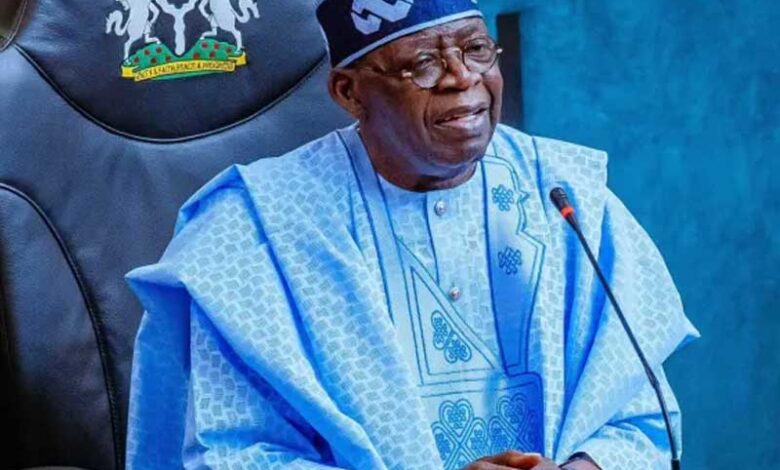
President Bola Ahmed Tinubu faces deep public unpopularity heading into the January election cycle, yet could still retain power, and that contradiction is at the heart of the recent analysis by The Economist. The unpopularity is rooted in economic hardship. On taking office in 2023, Tinubu removed fuel subsidy and unified the naira. While economists described the moves as necessary to fix long-term distortions, the immediate impact on households was brutal. Fuel prices more than tripled, transport fares surged, and because food in Nigeria moves by road, food prices exploded. The weak naira made everything from medicine to diesel more expensive. Government data now shows headline inflation moderating for three consecutive months to 15.39% in August 2026 and external reserves rising to $55.25 billion, but that macro improvement has not yet become micro relief. Wages did not keep pace, purchasing power collapsed, and voters are caught in the painful lag between reform and result. Tinubu is asking for a second term to finish what he started, but he is asking an exhausted population to be patient for longer.
That economic pain is compounded by a security crisis that makes the government feel absent. Kidnapping for ransom, bandit attacks in the North-West, farmer-herder clashes in the Middle Belt and insurgent violence in the North-East continue to constrain farming, travel and schooling. In states like Zamfara, Katsina, Benue and Borno, insecurity is not a headline but a daily calculation of whether to go to market. Against this backdrop, the image of the President returning on September 29th from a month-long working holiday in Paris, after extending his stay, reinforces an opposition narrative of distance and detachment. Where the state cannot guarantee basic safety, arguments about reserves and reforms lose political weight.
Yet an unpopular president can still win because the opposition remains divided. No single challenger has consolidated the three blocs that historically produce victory in Nigeria: the northern establishment, the South-West, and the youth and urban protest vote. Instead, multiple contenders are splitting the anti-incumbency vote, each convinced he can win alone. In a first-past-the-post system that requires plurality and geographic spread, a united 45% defeats a divided 55%. Dislike for Tinubu is widely shared, but votes are not pooled. Without a coalition, a joint ticket, or even a common voter mobilization strategy, anger does not translate into a winning number.
That fragmentation is reinforced by deep political cynicism and the enduring role of religion and elite alliances. Cynicism in Nigeria is not just apathy, it is a rational belief that all politicians are the same and voting changes nothing. This depresses turnout most among young, urban voters who are hardest hit by the cost of living but least attached to party machines, while the incumbent with an established patronage structure can still mobilize his base. At the same time, religious considerations, regional balancing and traditional institutions continue to shape voting more than manifestos. The 2023 Muslim-Muslim ticket created a new alignment, and questions of who protects faith interests, who controls federal appointments, and who respects local power structures still influence decisions in the North and South-West. Tinubu’s political machinery understands and navigates this micro-politics far better than an opposition campaigning primarily on discontent.
Finally there is the incumbency argument of continuity. Proponents such as the Renewed Hope Project 2027 argue that cutting Tinubu’s tenure short after one term would abort structural reforms mid-way and return Nigeria to a cycle of policy reversals. This message resonates with investors, business elites and even some voters who fear that a new government will bring back fuel subsidies and multiple exchange rates. Tinubu’s pitch is therefore not that Nigerians are better off today than in 2023, but that they will be worse off if reform stops now. Combined with the advantages of incumbency – control of party structure, ability to time palliatives and infrastructure commissions, and federal patronage – it provides a powerful argument for staying the course. The result is the paradox The Economist captures: a president who is disliked may be re-elected not because he is loved, but because his opponents have not made the alternative credible, united and worth turning out for.