Wema Bank: Behind Its Agusto & Co. May 2026 Upgrade and What Comes Next


Agusto & Co.’s decision in May 2026 to lift Wema Bank’s rating to an “A” is really a confirmation of work that’s already been done, not a bet on the future. For three years running the bank has been moving up the rating ladder, and each step followed real improvements in how the bank runs its business. The most obvious change is in the bank’s financial strength. Nigeria’s Central Bank said every national bank must have at least 200 billion naira of its own capital to stay in business, and Wema didn’t just scrape past that line. It raised so much new money from its owners that it now sits about a third above the minimum. In plain terms, the bank has a bigger safety cushion than the rules require, which means it can lend more, absorb losses if things go wrong, and still stay healthy. That cushion also explains why the bank’s assets jumped to over 5.7 trillion naira and its loan book grew by nearly half in one year without breaking any safety rules.
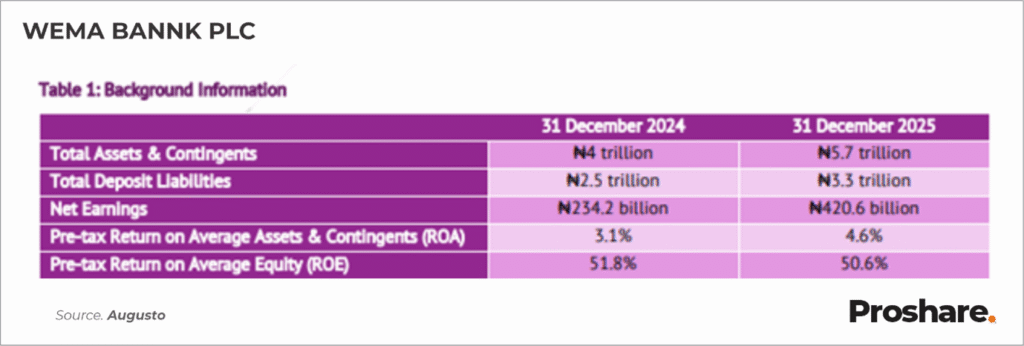
The second piece of the story is how Wema gets its money. A lot of banks struggle when interest rates are high because the money they borrow becomes expensive. Wema has avoided the worst of that because most of the cash it holds comes from ordinary people and small businesses who keep money in everyday checking and savings accounts. Those accounts don’t pay much interest, so they are cheap for the bank. Wema built this advantage through its digital platform, ALAT, and through decades of working directly with retail customers. The result is that more than eight out of every ten naira it holds in deposits costs the bank very little. That low-cost money helped Wema grow its income sharply last year. Profits more than doubled, and the bank actually became more efficient, spending less of each naira earned on running costs. When you adjust for inflation, the bank is now making real returns for its shareholders, which is something few Nigerian businesses can say right now.
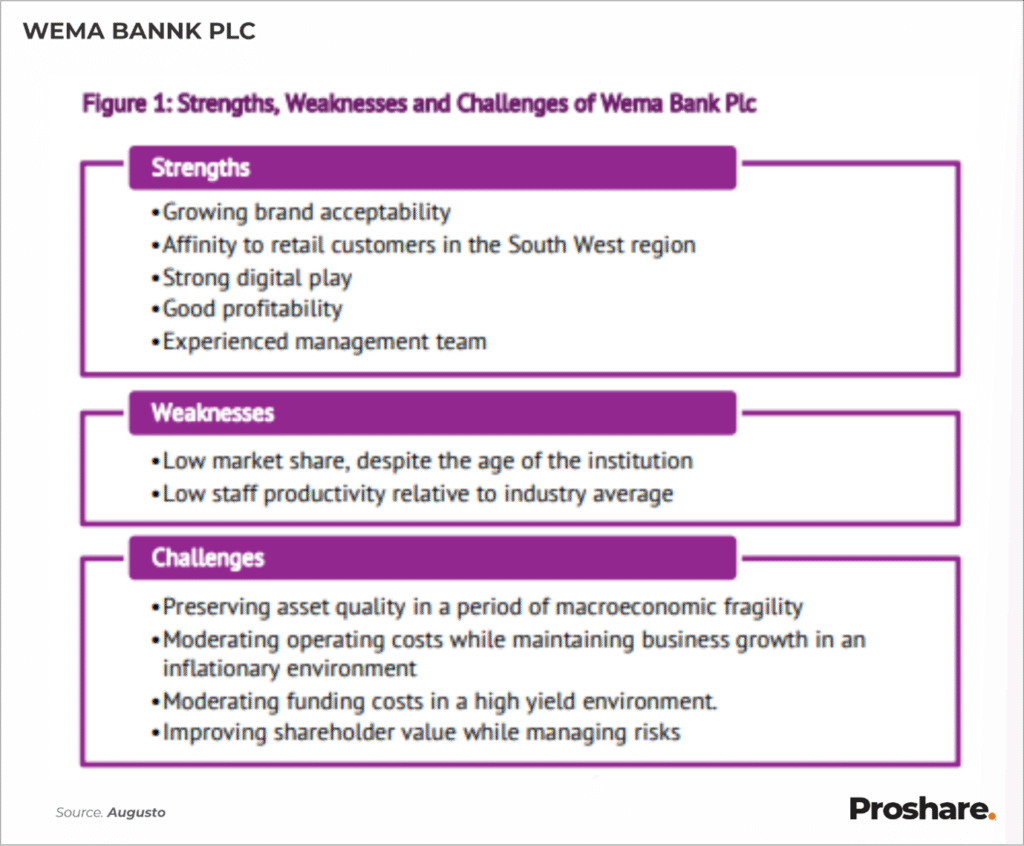
But the report also shows where the bank is still exposed. The biggest worry is bad loans. When the Central Bank stopped allowing banks to delay how they classified troubled loans, Wema had to admit that its largest single loan, given to an oil company in U.S. dollars, was in trouble. That one move pushed the bank’s total bad loans up by more than a third. Right now, the share of loans that have gone bad sits just below the maximum level the Central Bank allows. The bank has set aside enough money to cover those bad loans if they are never repaid, but the margin for error is thin. If the economy slows or the oil company’s situation gets worse, Wema could quickly find itself over the regulatory limit. The bank also plans to lend even more this year, and it wants to move into newer business areas where it has less experience. That’s risky, because every new loan is a chance to grow but also a chance to make a mistake.
The economy itself is another headwind. Inflation is running above 23 percent, and interest rates are high. Even though Wema has cheap deposits, the overall cost of money still went up last year. And because that big oil loan is in dollars, any swing in the exchange rate can hurt the bank. These are problems Wema can’t control, but it has to live with them.
So what does Wema need to do to turn this upgrade into something bigger? First, it has to be careful about how it grows. Having lots of capital is useful only if the loans you make with it get repaid. That means the bank should avoid putting too much money in one company or one industry, especially in oil, and it needs better systems to spot trouble early when it lends to new types of businesses. Second, it should use its advantage in cheap deposits to make smarter loans. Because it doesn’t pay much for its money, Wema can choose to lend to safer customers and still make a profit, instead of chasing risky deals just for higher interest. Finally, the bank needs to make more money from services and fees, not just from lending. Things like payments, transfers, and digital banking tools can bring in steady income that doesn’t depend on taking big lending risks.
The upgrade tells us Wema has fixed its foundations. It raised capital, cut costs, and built a deposit base that many older banks would envy. The next step is harder: growing without letting bad loans creep up, and turning its digital and retail strength into long-term, stable profits. If it manages that, the talk will shift from “has Wema recovered?” to “how big can Wema get?” If it stumbles, the same numbers that look strong today could look fragile tomorrow.