Watching Nigeria’s Fiscal Dial: The Case for a Fiscal Policy Committee

Nigeria’s fiscal policy is distributed across revenue administration, the annual budget, expenditure releases, cash management, domestic borrowing, debt service, tax concessions, subsidies, guarantees and the operations of government-owned enterprises. Responsibility is correspondingly spread across the finance and budget ministries, the Budget Office, the Debt Management Office, the Office of the Accountant-General, the Fiscal Responsibility Commission, the revenue authorities, and the legislature. FLAC forecasts the liquidity effects of government operations, but the broader fiscal stance is not consolidated in a regular public assessment comparable to the discipline surrounding monetary policy decisions.
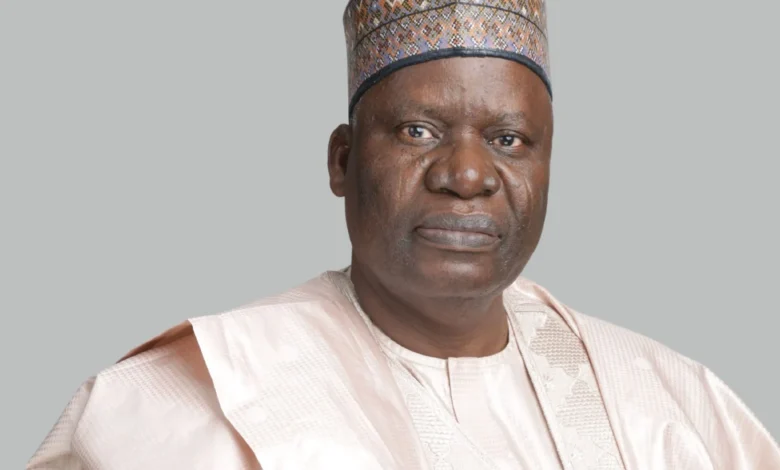
Suleyman A. Ndanusa locates his proposal for a Nigerian Fiscal Policy Committee within this institutional gap. He recommends a quarterly forum, chaired by the Minister of Finance and the Coordinating Minister of the Economy, to assess whether revenue, expenditure, borrowing, debt service, guarantees, and contingent liabilities collectively support inflation control, sustainable growth, and debt stability. Additional meetings would address material shocks or departures from the approved fiscal framework.
Ndanusa assigns the committee no authority to impose taxes, appropriate public funds, approve contracts or displace the Federal Executive Council and National Assembly. Its central output would be a concise Fiscal Policy Statement identifying the prevailing stance, tested assumptions, emerging risks, corrective actions, responsible institutions and the next review point. The proposed architecture links existing institutions around a single authoritative fiscal judgement, strengthens monetary-fiscal coordination, and makes policy trade-offs more visible without compromising constitutional authority or central bank independence.
The Missing Discipline in Fiscal Policy
Research Municipal Bonds
Nigeria has never been short of committees. Indeed, proposing another one may cause the average citizen to reach instinctively for a calculator not to estimate its contribution to national development, but to calculate the likely cost of sitting allowances.
Nigeria’s institutional challenge lies less in the number of committees than in important decisions being made in separate rooms without a common assessment.
Every meeting of the Monetary Policy Committee attracts considerable attention. Economists make predictions, banks adjust their positions, markets wait for the communiqué, journalists prepare their questions and borrowers hope, usually with more faith than evidence, for cheaper credit.
This has created an important discipline. Monetary policy must periodically assess inflation, growth, liquidity, exchange rate conditions, and financial stability, reach a collective judgement, and communicate that judgement publicly.
Fiscal Policy Without a Single Assessment Point
Fiscal policy, by contrast, is everywhere but does not always appear in one place.
It is in the budget, revenue projections, expenditure releases, domestic borrowing and debt service, tax concessions, subsidies, guarantees, public-private partnerships and the financial operations of government-owned enterprises. It is also present in supplementary budgets, emergency interventions and commitments that may not appear immediately in the headline deficit.
Monitor Fiscal Updates
Each institution sees part of the picture. The Ministry of Finance manages fiscal policy. The Budget Office prepares the budget framework. The Debt Management Office considers financing. The Office of the Accountant-General manages government cash operations. Revenue institutions pursue collections. The Fiscal Responsibility Commission monitors compliance. The Federal Executive Council approves major policies and projects, while the National Assembly authorises revenue and expenditure.
The Fiscal Liquidity Assessment Committee, known as FLAC, brings together key institutions to forecast how government operations will affect liquidity. The CBN describes its mandate as designing and regularly updating the framework for obtaining information for forecasting fiscal liquidity.
Nigeria therefore has many participants in fiscal policy, several fiscal documents, and numerous decision points, but lacks a regular, visible, and authoritative moment when the whole fiscal position is brought together and subjected to a collective judgement.
That judgement should establish the fiscal stance implied by what government intends to collect, spend, borrow and guarantee, and whether it is consistent with inflation, growth, debt sustainability and monetary policy.
That is the institutional gap a Fiscal Policy Committee could fill.
Why Monetary and Fiscal Policy Must Align
Try Operations Software
The case for such a committee begins with a simple truth: monetary policy does not operate alone. The CBN may be attempting to reduce inflation by withdrawing liquidity and maintaining high interest rates, while fiscal operations are injecting liquidity through expenditure, borrowing or arrears clearance. One side of economic policy may be pressing the brake while the other presses the accelerator.
Fiscal expansion may be warranted during periods of weak growth, insecurity, infrastructure deficits or severe social pressure. Persistent inflation or exchange-rate instability may equally require monetary restraint. The two arms of policy need not always move in the same direction, but any divergence should be conscious, coordinated and explained.
At present, fiscal policy does not receive the same regular, forward-looking collective judgement that monetary policy receives through the MPC. The annual budget is indispensable, but it cannot perform this function on its own. A budget is an authorisation and plan prepared before the financial year. Economic conditions, revenue outcomes, oil prices, exchange rates, security requirements and financing costs change during implementation.
Election periods introduce further pressure. Political activity generates legitimate expenditure, but it may also encourage commitments that were not contemplated in the original fiscal framework. A credible system should not assume that political seasons will be fiscally quiet. It should prepare for them.
Mandate and Limits of the Proposed Committee
Download Interactive Maps
A Nigerian Fiscal Policy Committee should therefore meet regularly, perhaps quarterly, and additionally when major shocks occur, to assess the direction, consistency and sustainability of fiscal policy. It should examine revenue performance, expenditure execution, the deficit, borrowing, debt service, guarantees, tax expenditures, contingent liabilities and the fiscal operations of major government-owned enterprises.
The proposed committee should not be designed as a carbon copy of the MPC.
The MPC has a relatively identifiable set of monetary instruments, including the policy rate, reserve requirements and liquidity operations. Fiscal policy has no single equivalent of the MPR. There is no fiscal button marked “increase by 100 basis points.” Fiscal policy operates through several decisions with different economic, political and distributional consequences.
Taxation affects citizens and businesses differently. Expenditure choices determine which sectors, regions and communities receive public resources. Borrowing transfers obligations into the future. Subsidies, guarantees and concessions create winners, costs and risks. These are not purely technical matters that can be removed entirely from democratic decision-making.
The Fiscal Policy Committee should therefore not have the power to impose taxes, appropriate public money, approve individual contracts or replace the Federal Executive Council and National Assembly. It should not become a second Budget Office, another debt management institution or an alternative Ministry of Finance.
Take Economics Courses
Its job should be to produce the authoritative fiscal judgement that precedes and informs those constitutional decisions.
The Committee should determine whether the overall fiscal stance is expansionary, neutral or contractionary. It should assess whether government’s revenue, expenditure and borrowing plans are internally consistent; whether the deficit is sustainable; whether domestic borrowing is crowding out productive credit; whether debt service obligations are displacing essential expenditure; and whether fiscal operations support or frustrate the country’s inflation and growth objectives.
Most importantly, it should examine fiscal policy as a portfolio rather than as a collection of individual approvals. A project may be desirable on its own and still be unaffordable when combined with every other desirable project. Government does not run out of worthy proposals. It runs out of fiscal space.
Membership and Institutional Boundaries
The Committee could be chaired by the Minister of Finance and the Coordinating Minister of the Economy, and include senior representation from the Budget Ministry, the Debt Management Office, the Office of the Accountant-General, revenue authorities, and the institutions responsible for planning and public investment. The Fiscal Responsibility Commission should participate as an independent source for fiscal risk, compliance, and sustainability assessments.
Research Municipal Bonds
The CBN should participate in the exchange of forecasts and policy assumptions, but its position should be approached with caution. It should not be drawn into approving government expenditure or made jointly responsible for fiscal decisions. Participation as a non-voting institutional member or technical observer would permit coordination while preserving the independence and accountability of monetary policy.
Nigeria should also resist the temptation to create an entirely new agency around the Committee. A committee intended to promote fiscal discipline should not begin its life by acquiring a headquarters, an elaborate fleet and an appetite of its own.
The necessary institutions already exist. The Ministry of Finance and Budget Office can provide the principal secretariat. FLAC can supply fiscal liquidity forecasts. The DMO can provide debt and financing analysis. The Fiscal Responsibility Commission can independently assess compliance with fiscal rules and the credibility of the underlying assumptions. RMAFC and the National Economic Council can provide channels for consultation on fiscal developments affecting the wider federation.
The proposed architecture is therefore not complicated:
FLAC produces the liquidity assessment. The Fiscal Policy Committee determines the overall fiscal judgement. FEC makes executive decisions. The National Assembly authorises taxation, borrowing and expenditure. The Fiscal Responsibility Commission monitors and reports on compliance.
Access Research Databases
This would strengthen existing institutions rather than invite them to compete for the same territory.
The Quarterly Fiscal Policy Statement
The Committee’s most important product should be a quarterly Fiscal Policy Statement. It should be short enough to be read and serious enough to move markets. It should explain the current fiscal stance, performance against the budget, changes in the revenue and expenditure outlook, the borrowing requirement, debt service implications, major contingent liabilities and the principal risks to the fiscal framework.
It should also disclose the assumptions underlying its judgement. If government expects a particular level of oil production, exchange rate, inflation, revenue or economic growth, those assumptions should be stated clearly and tested against alternative scenarios. Optimism may be useful in speeches, but fiscal forecasts require a more disciplined diet.
Where actual outcomes depart materially from the approved fiscal framework, the Committee should recommend corrective measures. These may include expenditure reprioritisation, adjustments to the borrowing calendar, stronger revenue action, the postponement of lower-priority commitments or measures to address emerging fiscal risks.
Its communiqué should move beyond general statements that developments were reviewed and progress was noted. Nigeria has accumulated an extensive archive of documents in which reported progress has coexisted with persistent underlying problems.
Monitor Fiscal Updates
The statement should specify what has changed, what it means, what action is required, who is responsible and when the matter will be reviewed again.
Addressing Duplication and Constitutional Authority
There will, of course, be objections.
The risk of duplicating existing institutions would be valid if the Committee were asked to prepare budgets, collect revenue, manage debt or enforce fiscal rules. It should perform none of these functions. Its distinct role would be to integrate their separate analyses into a collective judgement about the total fiscal stance.
Fiscal policy should remain under elected authority. The Committee would inform political decisions without displacing them. Independent expertise cannot replace democratic authority, while democratic authority benefits from knowing the likely cost of its choices before making them.
The Fiscal Responsibility Act already provides rules for medium-term planning, budget preparation, public expenditure, debt and borrowing. The Act created an important framework for prudent fiscal management and established the Fiscal Responsibility Commission to monitor compliance. Its weakness lies less in the absence of principles than in uneven implementation, limited enforcement, and the tendency for fiscal risks to become visible only after commitments have been made.
Download Interactive Maps
The Fiscal Policy Committee would not replace the law. It would help government operate within its spirit before breaches occur.
Improving Monetary-Fiscal Coordination
The proposal also offers an opportunity to improve monetary-fiscal coordination without compromising the independence of either side. Before an MPC meeting, the fiscal authorities should provide credible and current projections of revenue, expenditure, borrowing and cash releases. Before the Fiscal Policy Committee reaches its judgement, the CBN should provide its assessment of inflation, liquidity, interest rates, exchange-rate conditions and financial stability.
Both sides would retain their mandates. Neither would be entitled to surprise the other.
This matters because Nigeria’s current economic challenges cannot be neatly assigned to a single institution. Inflation may arise from liquidity, exchange-rate depreciation, food shortages, energy costs, insecurity, logistics failures or fiscal expansion. High interest rates may reflect monetary tightening, government borrowing, banking risks or inflation expectations. Weak growth may result from tight credit, infrastructure constraints, low investment or poor policy coordination.
Interconnected causes require coordinated policies based on a shared assessment of the economy.
Try Operations Software
A Discipline of Collective Fiscal Judgement
A Fiscal Policy Committee would create a regular discipline of collective fiscal judgement without adding another administrative layer.
The MPC has established a public discipline around the monetary authorities’ decisions and reasoning. A Fiscal Policy Committee would create an equivalent discipline around the government’s overall fiscal position, the composition of deficit financing, the sustainability of borrowing, the consistency of tax concessions and guarantees with the approved framework, and the fiscal impact of government-owned enterprises.
Fiscal and monetary policy should remain distinct while recognising their shared macroeconomic setting.
Both should operate from a common understanding of the economy, pursue complementary objectives where possible and explain any necessary divergence.
Fiscal policy, which determines what the government collects, spends, borrows, and ultimately delivers, should face the same periodic discipline of public judgement and explanation as monetary policy.
A Forum for the Whole Fiscal Picture
Nigeria already has the principal fiscal institutions. The remaining gap is a forum where all components of fiscal policy are assessed together, making the overall position visible.
Take Economics Courses
A properly designed Fiscal Policy Committee could provide that forum.
ABOUT THE AUTHOR:
Suleyman A. Ndanusa, PhD, OON, is an economist, lawyer, strategic studies scholar, and public policy thinker and practitioner with extensive experience in financial markets, regulation, governance, national security, and development.