
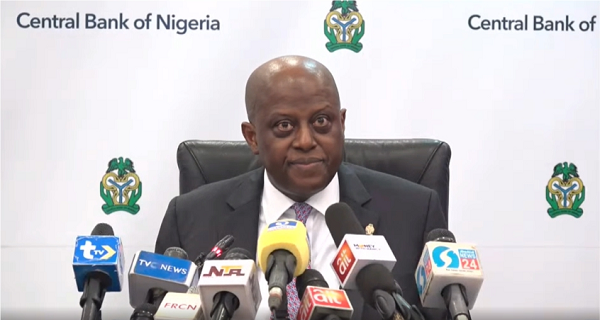
The Central Bank of Nigeria did not cut rates. It slashed them. A 350 basis point cut from 26.5% to 23.0% is not fine-tuning, it is a statement. In a world where central banks are still worried about energy-driven inflation, the MPC said Nigeria can afford to do the opposite because three things have changed: headline inflation has fallen for three straight months to 15.39% in August 2026, external reserves have climbed to $55.25 billion as of September 18, and fixed-income yields were already softening. The CBN called it a reset of the rate and corridor, with Standing Lending Facility now at 23.5% and Standing Deposit Facility at 20.0%. Real policy rate remains positive. That is the cover for a bold contrarian move.
Victor Ogiemwonyi, who frames the cut as a deliberate growth push, is right about the intent. This is not about cheap money for its own sake. It is about transmission. The question is whether Nigeria has the pipes to transmit it.
How growth is supposed to happen is through four channels, and none is automatic.
First, credit. Lower MPR reduces the marginal cost of funds for banks. If banks price loans off MPR and SDF, manufacturers who have been borrowing at 30%+ should see some relief. That is critical because Nigeria’s growth rate is still too low to reduce poverty. You cannot wait for inflation to hit 9% before you support real sector expansion. You have to try to grow and disinflate at the same time. The opportunity here is to formalize more of the informal economy. Traders, small manufacturers, consumers who have been outside the credit system because rates were punitive could be brought in. But that requires banks to actually lend, not just reprice government securities.
Second, equities. When fixed-income yields fall, the equity risk premium improves. The NGX has been riding the reform cycle, and a lower discount rate supports valuations. If banks deploy liquidity to brokerage and asset management arms, as Stanbic IBTC’s H1 results showed with fee income up 27%, market activity can rise. But durability depends on earnings and foreign participation, not just cheaper money.
Third, fiscal relief. If MPR transmits to NTB and bond yields, government debt service cost moderates. That creates space for productive infrastructure spending rather than using revenue to service debt. The effect will depend on maturity profile. Short end will reprice faster than long end.
Fourth, confidence. FTSE Russell’s return of Nigeria to Frontier Market status, strong oil prices, and steady diaspora remittances give external credibility. Reserves above $55 billion provide a buffer that Nigeria did not have in 2020 or 2023. That buffer is what makes the CBN feel it can cut now without triggering a naira collapse.
Now the risks, and they are material.
Inflation resurgence is the first. A 350bps cut injects a powerful liquidity signal into an economy heading into pre-election spending season. Election liquidity is not productive liquidity. It chases dollars, land, and imported goods. If system liquidity surges and output does not respond because manufacturers cannot get power or rural inflation remains sticky due to food logistics, you get more money chasing same goods. The disinflation of the last three months can reverse.
Second, portfolio exit. Foreign portfolio investors came to Nigeria for yield. At 26.5%, naira assets paid you to take naira risk. At 23%, with global rates still high and energy risks pushing US yields up, the relative attraction falls. If actual inflows after FTSE re-inclusion disappoint because of settlement and repatriation concerns, and existing holders exit, reserves will be tested. $55 billion looks strong until you need to defend.
Third, liquidity misallocation. Lower corridor does not guarantee productive credit. Nigerian banks have learned to be comfortable buying government paper and charging high fees. If lower rates simply mean more liquidity goes into FX speculation, crypto, or consumer imports rather than manufacturing and agriculture, you get asset price inflation without output growth. Credit transmission in Nigeria has historically been weak.
Ogiemwonyi calls this a calculated gamble, and that is the right phrase. The CBN is betting that disinflation has legs, that reserves and oil can hold the external line, and that banks will lend to the real economy. It is a growth opportunity, but only if three things happen together that rarely happen together in Nigeria: disciplined liquidity management by the CBN to mop up election-driven excess, efficient use of any fiscal relief by government for infrastructure not recurrent spending, and sound lending by banks to productive sectors rather than speculative activities.
If those happen, the cut can translate into lower borrowing costs, stronger output, and improved household purchasing power without reigniting inflation. If they do not, Nigeria gets the worst of both worlds: resurgent inflation, pressure on the naira, and reserves burned to defend a policy whose transmission never reached the factory floor.
The test is not the cut itself. It is what happens in the next 90 days to credit to manufacturing, to broad money, and to FX forward pricing.