
For almost four decades, Nigeria perfected the art of running very fast and staying in exactly the same place. It was a treadmill economy — sweating, spending, and stalling. Every government measured success by how cheap it could make things today, not by how competitive it could make the country tomorrow. It defended a fixed exchange rate with reserves it did not have, created five different prices for one dollar depending on who you knew at the window, and piled up $7 billion in verified FX backlogs just to keep imports artificially cheap while factories could not get dollars to produce. It exported crude and imported petrol, paying trillions in subsidy to keep fuel cheap today while ensuring it never built refining capacity for tomorrow. It celebrated headline reserves that looked strong, while net reserves that could actually defend the economy had collapsed to $3 billion. Growth was consumption-led, import-fed, and debt-financed. It felt stable until any oil shock exposed it.
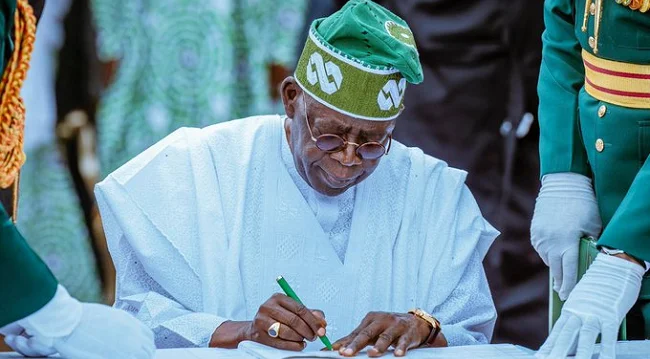
Bola Ahmed Tinubu is the President who decided to switch that treadmill off, and the shift that CBN Governor Olayemi Cardoso outlined in Bangkok at the IMF-World Bank meetings shows how deep that reversal goes. The first break with the status quo was moving from price control to market clarity. The old system thrived on opacity, with multiple FX windows that created rent rather than productivity, and allowed a small circle to access cheap dollars while manufacturers waited months. Tinubu’s reform harmonized those windows into a willing-buyer, willing-seller market and insisted on clearing the entire backlog. That single act restored trust. Today external reserves are at an 18-year high, not because oil prices are high, but because flows are transparent, and Nigeria is back on FTSE Russell frontier and J.P. Morgan bond indexes. As Cardoso put it, investors do not need a cheap naira, they need a clear naira, and Tinubu gave them clarity.
The second break was moving from subsidizing consumption to protecting production. For decades, subsidy made import cheaper than manufacturing, so Nigeria exported jobs and imported fuel. Every attempt to build a refinery failed because the pricing model punished refining. Removing petrol and FX subsidy was politically toxic but economically liberating. It is the reason Dangote Refinery can now operate as a real commercial enterprise, retaining value from Nigeria’s own crude, saving foreign exchange, creating industrial linkages, and proving that an industrial base is not built by making fuel cheap today but by making production viable forever. That is the difference between competing for today and competing for the future.
The third break, and perhaps the most strategic, is the move from oil dollars to people dollars. The treadmill economy tied 90 percent of foreign exchange to crude, so when oil fell, the country fell. It was volatile, concentrated, and controlled by a few. The reform agenda deliberately diversified the source of dollars to something more durable — Nigerians themselves. Formal diaspora remittances have moved from $200 million per month to $600 million, hitting $947 million in July 2026, within touching distance of the $1 billion target set by the CBN. Unlike oil, people send money every month, in good times and bad, regardless of Brent. It is stable, it is counter-cyclical, and it deepens financial inclusion by pulling millions of informal flows into the formal banking system where they can be saved, insured, and invested. That is future money, not past money.
The fourth break is the move from short-term populism to long-term credibility. A status quo leader keeps rates low to look pro-growth today and loses control of inflation tomorrow. In 2024, when subsidy removal and FX harmonization spiked inflation, Tinubu backed aggressive tightening to re-anchor expectations, even when it hurt. In 2026, the CBN has been able to make careful adjustments to fix monetary transmission precisely because that earlier pain bought credibility. Markets absorbed the recent rate decisions calmly because they now understand direction. That credibility is a form of capital no treadmill economy can buy, and it is what separates a country that borrows to consume from one that can attract capital to produce.
The final break is the move from burning buffers to building buffers. IMF Managing Director Kristalina Georgieva warned in Bangkok that global debt, geopolitics and sticky inflation mean no country can afford to coast. The old Nigeria spent its buffers to look stable. The new Nigeria is rebuilding them — stronger reserves, better debt management, a more competitive business environment, and a deliberate push for export diversification beyond oil. The hard truth is why change agents are rarely popular at first. A country competing for today always looks cheaper today. Fuel is cheaper, dollars are cheaper, rates are lower. A country competing for the future looks expensive today, because you are paying for refineries, for reserves, for credibility.
Tinubu chose the expensive, future path. Stabilization is done. Reserves are rebuilt. Backlogs are cleared. Confidence is returning. The treadmill has been switched off. The real test now is whether this future-country mindset can be sustained long enough to turn reserves into factories, remittances into investments, and market clarity into jobs that ordinary Nigerians can feel every day.