
The scripture says by their fruits you shall know them, and it is not limited to the spiritual — in public and private sectors the same test holds — there are two types of managers in any economy, and they produce two completely different countries . One are the numerator managers, the other are the denominator managers.
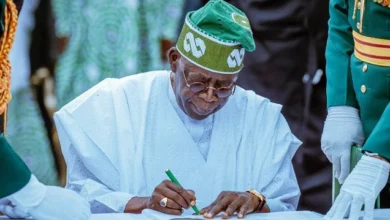
Choosing different routes by managers may not be farfetched. When you do not know how to build buffers you sell them, and when you cannot compete for the future you compete for the past. This is is why with Tinubu’s current record there is no doubt he is a numerator manager while Atiku, going by his past and his campaign pronouncements, belongs to the denominator: numerator managers build, they grow value by expanding what the country produces — more production, more reserves, more refineries, more factories, more stable and diversified inflows — taking hard decisions that feel expensive today because they are paying for market clarity, credibility and buffers that will make the economy competitive tomorrow, and that is what Tinubu has done by clearing FX backlogs, collapsing multiple prices for one dollar into a single willing-buyer, willing-seller market, removing fuel and FX subsidies that made import cheaper than manufacturing, rebuilding reserves, returning Nigeria to global indexes and shifting diaspora remittances into formal channels.
But the denominator managers like Atiku are different. They sell, they grow value on paper by shrinking what the country owns — selling parastatals, unbundling companies and concessioning assets at controversial prices to share proceeds for cheap relief today while destroying capacity to produce tomorrow — and that was Atiku’s record at the National Council on Privatization where strategic assets like NITEL, Aluminium Smelter and Delta Steel were auctioned for a fraction of their true value and left comatose, which is the same logic behind his promise to reverse subsidy removal and FX harmonization.
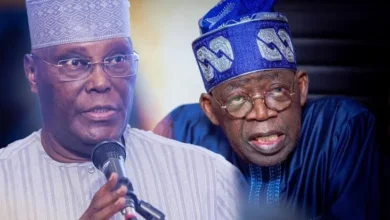
Atiku Abubakar has spent his entire public career as a denominator manager, and his plan to reverse Tinubu’s reforms proves he has not changed. He wants to take Nigeria back to competing for the past, the same past that kept the country on a treadmill for 40 years — running very fast, spending very big, and staying in exactly the same place.
The old treadmill model was simple. Defend a fixed exchange rate with reserves you do not have. Create five different prices for one dollar depending on who you know at the window. Pile up $7 billion in verified FX backlogs to keep imports artificially cheap today while factories cannot get dollars to produce for tomorrow. Export crude and import petrol, paying trillions in subsidy to keep fuel cheap today while ensuring you never build refining capacity for tomorrow. Celebrate headline reserves while net reserves that can actually defend the economy collapse to $3 billion. It felt stable and cheap today, but it was fragile every day.
Tinubu switched that treadmill off. Atiku promises to switch it back on. His promise to reverse subsidy removal is status quo economics at its purest. For decades, fuel subsidy made import cheaper than manufacturing. It exported jobs and imported poverty. Every attempt to build a refinery failed because the pricing model punished production. Tinubu removed it, painful as it was, and that is why Dangote Refinery can now operate commercially and retain value from Nigerian crude. Atiku says he will bring subsidy back. That is not a plan to build, it is a plan to burn reserves to look cheap for six months while killing the incentive to produce.
His promise to reverse FX harmonization is even more telling. The multiple window system he defends is the heart of the status quo — cheap dollars for the connected few at N400, endless queues for manufacturers at N700, black market at N1000. That opacity created the $7 billion backlog, drove net reserves to near collapse, and pushed Nigeria out of FTSE Russell and J.P. Morgan indexes. Tinubu harmonized it into a willing-buyer willing-seller market, cleared the backlog, rebuilt reserves to an 18-year high, and brought Nigeria back into global indexes. Investors do not need a cheap naira, they need a clear naira. Atiku wants to return to five prices, which means return to rent, return to queues, return to the past.
This is not new. It is his record. As Vice President and Chairman of the National Council on Privatization, Atiku did not build strategic assets, he sold them. NITEL, Aluminium Smelter Company of Nigeria in Ikot Abasi built for over $3 billion and sold for about $130 million, Delta Steel, Nigeria Airways assets and other parastatals were sold at controversial prices that Nigerians still debate. Companies that could have been re-engineered into competitive industrial anchors were auctioned for a fraction of replacement value, stripped, and left comatose. That is denominator management — sell what you inherited cheap today instead of building what you need tomorrow.
That language has not changed. He still talks about restructuring, re-engineering, unbundling, privatizing. He never talks about building buffers. Tinubu is building buffers that the IMF warned all countries will need — from reserves to domestic refining to diversifying FX from volatile oil dollars to stable people dollars, with formal diaspora remittances moving from $200 million monthly to $600 million and hitting $947 million in July 2026, close to the $1 billion target. Those are numerator achievements. They expand what Nigeria has.
Atiku’s model is the opposite. If he reverses subsidy, fuel will be cheaper for a season and local refining will die. If he reverses FX reforms, dollars will be cheaper for the connected and factories will return to waiting lists. If he returns to his privatization playbook, what is left of strategic national assets will be sold again at controversial prices, because when you do not know how to build buffers, you sell them.
Nigeria has already spent 40 years competing for the past with denominator managers who sold the future to subsidize today. It cannot afford another term of it.