The Osun 2026 Governorship Election is over, but the debate over what decided it has just begun. Early predictions spoke of conspiracy, federal might, and voter fatigue. The outcome tells a different story — one rooted in numbers, mobilization, and what Prof. Michael Abiodun Oni of the Department of Political Science and Public Administration, Babcock University, calls “gratitude politics backed by data.”
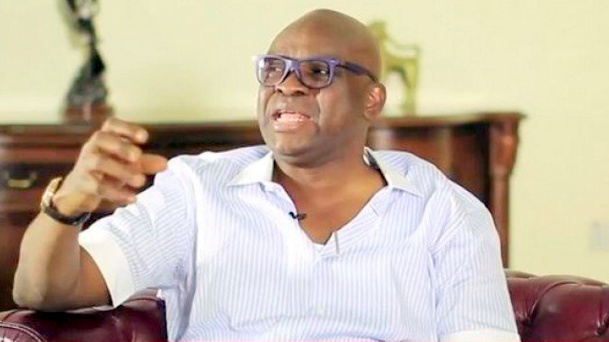
In a comparative analysis circulated last week, Prof. Oni directly addresses the claim that Governor Ademola Adeleke “Ede-ised” Osun. The allegation was revived by former Ekiti Governor Ayodele Fayose, who said he was in Osogbo throughout the election and accused the administration of favoring Ede indigenes with appointments. Prof. Oni argues that the facts and figures tell another story entirely.
Start with 2022. According to Prof. Oni’s analysis, Adeleke’s PDP polled 403,371 votes statewide while Oyetola’s APC polled 375,027 — a margin of 28,344 votes. Yet in Ede North and Ede South alone, the margin was larger. In Ede North, PDP/Accord scored 23,545 to APC’s 6,481 — a difference of 17,064. In Ede South, it was 17,720 to 4,230 — a difference of 13,490. Combined, Ede delivered a surplus of 30,554 votes. Prof. Oni’s conclusion is blunt: without Ede, Adeleke would not have become governor in 2022.
He traces that performance to what he describes as reciprocal development. Prof. Oni notes that the Adeleke family built a university in Ede, and that all construction, carpentry, furnishing and roofing were contracted to Osun indigenes. Cleaners and gardeners at the university are drawn from Ede and environs. The family also ran scholarships for indigent students. At Pacific Holdings, he writes, “from the gate to the clerical, secretarial and executive tables, it is Ede dialect all the way.” In 2021 and 2022, he adds, Osun indigenes returned home en masse for voter registration and for the election “to compensate the Adeleke family.”
The 2026 election, in Prof. Oni’s reading, was an expansion of that base. Voter registration in Ede North rose from 85,000 in 2022 to 96,644 in 2026 — an increase of 11,000. In Ede South it rose from 60,000 to 67,729 — an increase of 7,729. That is 18,729 new voters in two LGAs. Total registered voters in Ede North and South now stand at 162,444, according to the data compiled by Prof. Oni.
And they turned out. Prof. Oni’s figures for 2026 show Ede North voting 35,427 for Accord and 10,263 for APC. Ede South voted 26,188 for Accord and 6,219 for APC. That gives Accord 61,615 votes across both LGAs and APC 16,482. The difference in Ede alone is 45,133 votes. Statewide, Prof. Oni puts the difference between Accord and APC at about 66,000 votes. Remove Ede’s contribution and the margin collapses to roughly 21,000. In other words, more than two-thirds of the statewide winning margin came from one local government area.
That, Prof. Oni argues, is why accusations of lopsided appointments miss the political point. “The weight of votes in an area determines the level of political and developmental drives,” he writes. He contrasts Ede with Esa-Oke, asking what the town has gained despite having a son in the National Assembly. He also cites the 2024 Ede Day celebration, where Hon. Bamidele Salam, member representing Ede North and South, raised ₦100 million for development in Ede. His opinion is clear: use power for your people, and power will look for you.
Prof. Oni further uses Ede as a case study in electoral conduct. He notes that no one was killed, and no one was arrested in Ede before, during, or after the election. “Democracy is data driven,” he concludes in his message to Esa-Oke: “Esa, e je ka ronu.”
A comparative look at predictions versus outcome supports his analysis. One prediction held that federal appointments and infrastructure claims would return Osun to APC. Another held that “Ede-isation” allegations would depress Adeleke’s vote. Neither materialized. APC did grow its Ede numbers — from 10,711 combined in 2022 to 16,482 in 2026 — but Accord’s growth was far steeper, from 41,265 to 61,615. The gap widened.
Prof. Oni’s interpretation is that predictive models which ignored voter registration trends and local delivery networks were bound to fail. In Osun, as elsewhere, elections are won by maximizing turnout where you are strongest. Adeleke did that in Ede, and Ede did that for him.
The lesson for 2027, according to the Babcock political scientist, is not about press statements. It is about evidence. Parties that want Osun must show their own communities what development looks like, and convert it into registration and votes. Fayose and others may debate whether Ede got too much. The voters answered with 45,000 more votes than the opposition.
In the end, Prof. Michael Abiodun Oni’s comparative analysis reduces Osun 2026 to three figures: 18,729 new voters in Ede, a 45,133 vote surplus in Ede, and a 66,000 statewide margin. That is not mysticism. That is mathematics. And in democracy, as Prof. Oni reminds us, mathematics always waits for you.