Nigeria’s Reform Scorecard: N20.40tn in Incremental Resources Meets N30.64tn in Spending Pressures


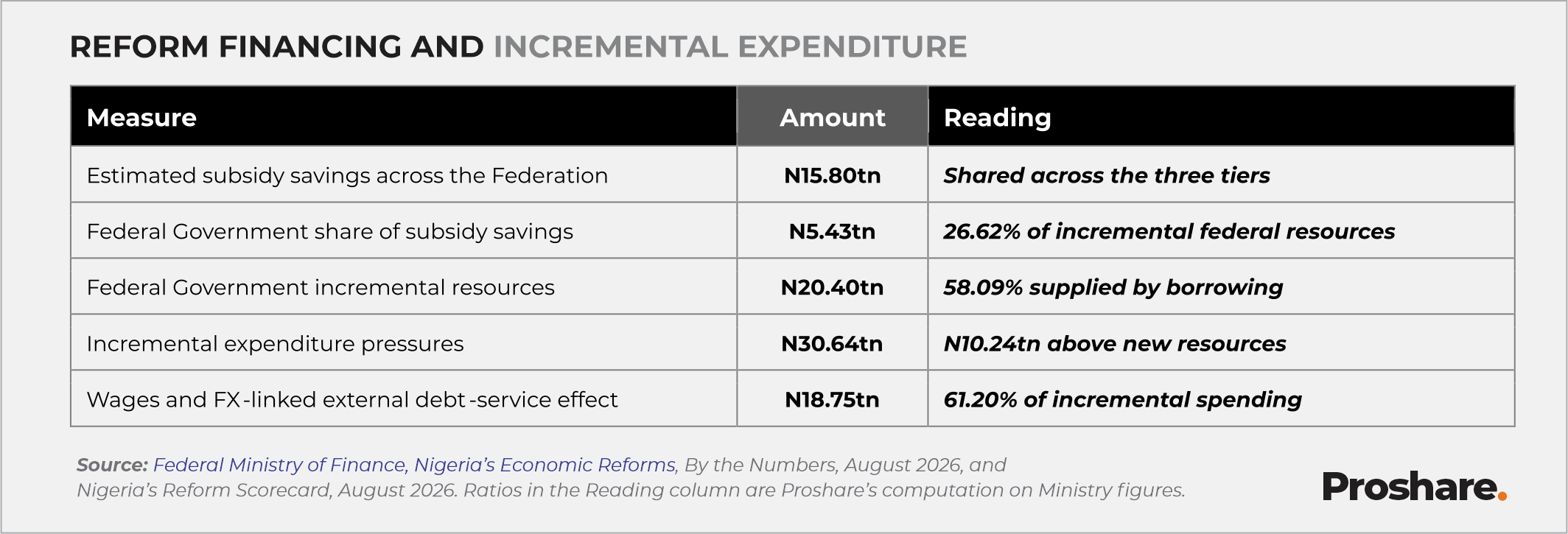
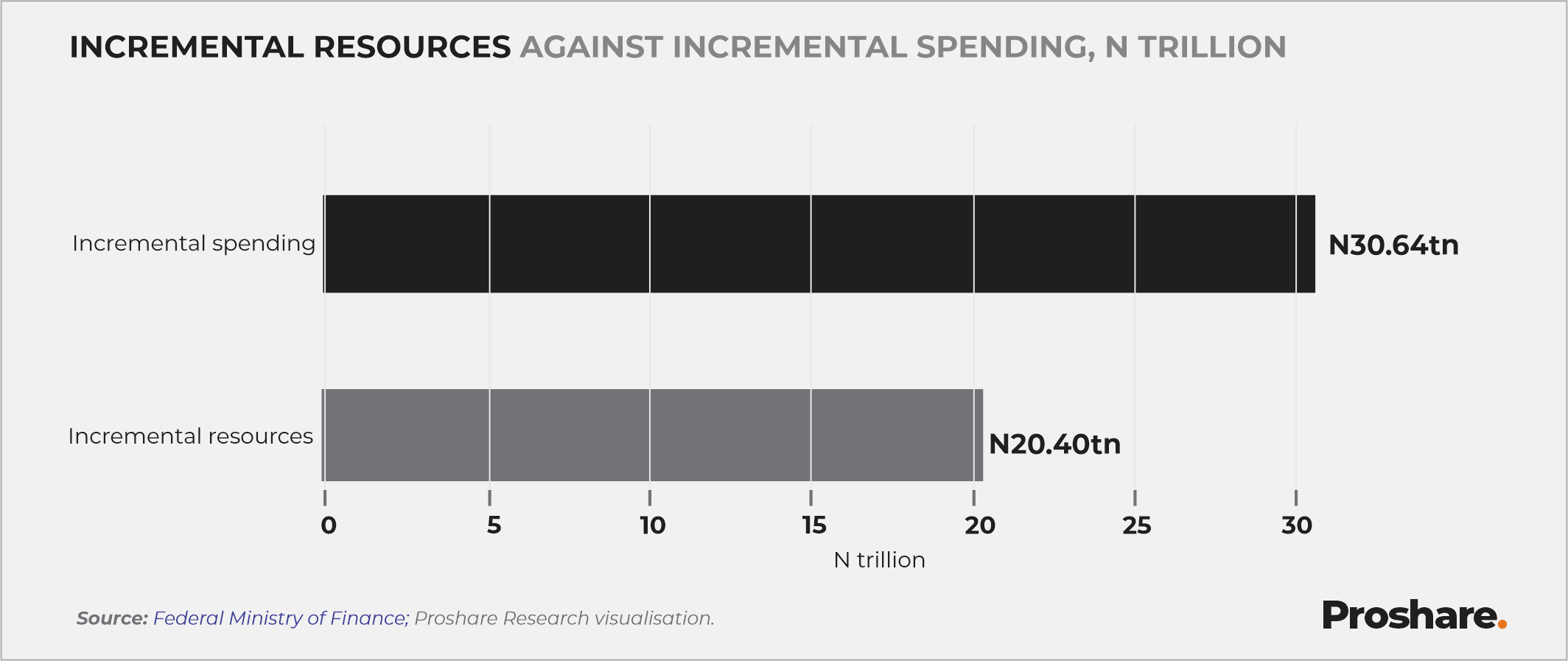
The Federal Ministry of Finance’s August 2026 reform scorecard reframes Nigeria’s post-subsidy fiscal record as a financing account rather than a cash windfall. It estimates N15.8tn in subsidy savings across the Federation, with the Federal Government receiving N5.43tn. Combined with N3.12tn in other incremental revenue and N11.85tn in additional borrowing, this produced N20.40tn in incremental federal resources against N30.64tn in additional expenditure pressures. Wage adjustments and the exchange-rate effect on external debt service absorbed N18.75tn, or 61.20% of the stated incremental spending on Proshare’s computation.
History
Improvements in reserves, the foreign exchange premium, capital importation, market capitalisation and real GDP growth indicate stronger macroeconomic buffers and a repricing of sovereign risk. It also records the substantial adjustment costs borne by households and businesses due to higher fuel prices, a weaker naira, elevated interest rates, and cumulative losses in purchasing power.
The scorecard dates its inflation entries to June 2026. The National Bureau of Statistics published the July Consumer Price Index on 17 August 2026, two days before the briefing, recording headline inflation at 15.43% and food inflation at 20.31%, compared with the 17.52% cited.
Taken together, the scorecard supports a stabilisation thesis for investors, but not yet a completed transformation case. The next evidence threshold is the conversion of fiscal space and financial confidence into productive investment, formal employment, real income growth, affordable food, reliable power and accountable subnational service delivery. Government counterfactuals on outcomes without reform remain scenario estimates and should not be treated as observed facts.
Federal Government Accounts for Reform Financing and Expenditure
Dictionaries & Encyclopedias
At the 19 August 2026 media briefing, the Federal Ministry of Finance reported that N15.8tn in subsidy savings was shared across the Federation. The minister of finance and coordinating minister of the economy, Taiwo Oyedele, presented the account following a presidential directive that the administration set out the gains, costs and consequences avoided since May 2023. The Federal Government’s effective share was N5.43tn, compared with N6.52tn for states and N3.88tn for local governments. Its wider N20.40tn incremental envelope included N3.12tn in other revenue and N11.85tn in borrowing. On Proshare’s computation, 58.09% of incremental federal resources came from debt, 26.62% from the subsidy share and 15.29% from other revenue.
Table 1: Reform Financing and Incremental Expenditure
Spending Pressures Exceeded the Incremental Resource Envelope
Government Agencies
The Ministry attributed N9.39tn to wage adjustments and N9.37tn to the naira impact of servicing existing external debt, with strategic infrastructure, incremental electricity support, domestic debt-service costs and social-welfare initiatives accounting for the balance. Existing revenues funded the N10.24tn gap between incremental resources and spending. The allocation explains the limited discretionary room created by reform. It does not establish the quality, completion or economic return of the expenditure.
Table 2: Incremental Expenditure Schedule, June 2023 to December 2025
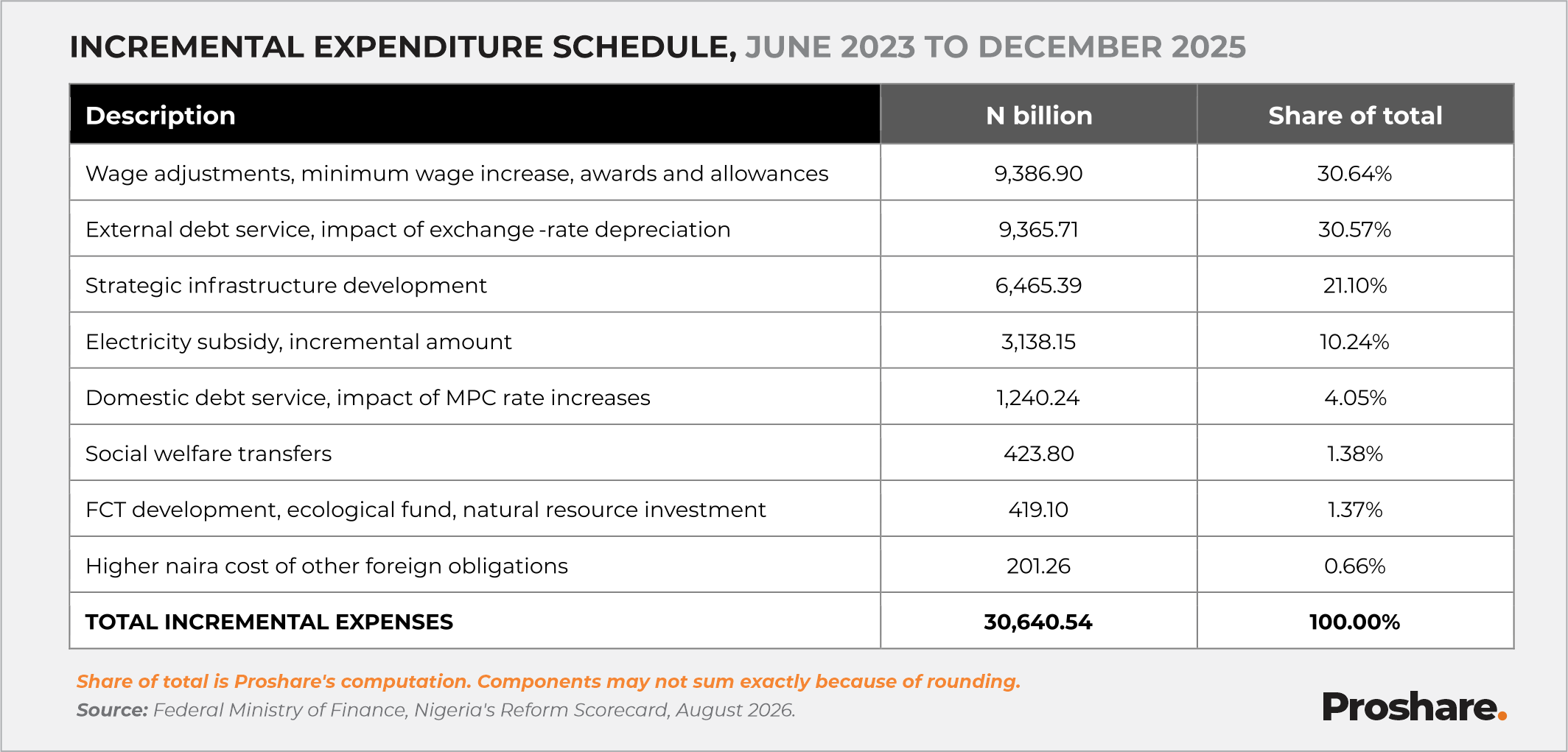
Chart 1: Incremental Resources Against Incremental Spending, N trillion
Public Finance
Macro Indicators Improve While Household Transmission Remains Incomplete
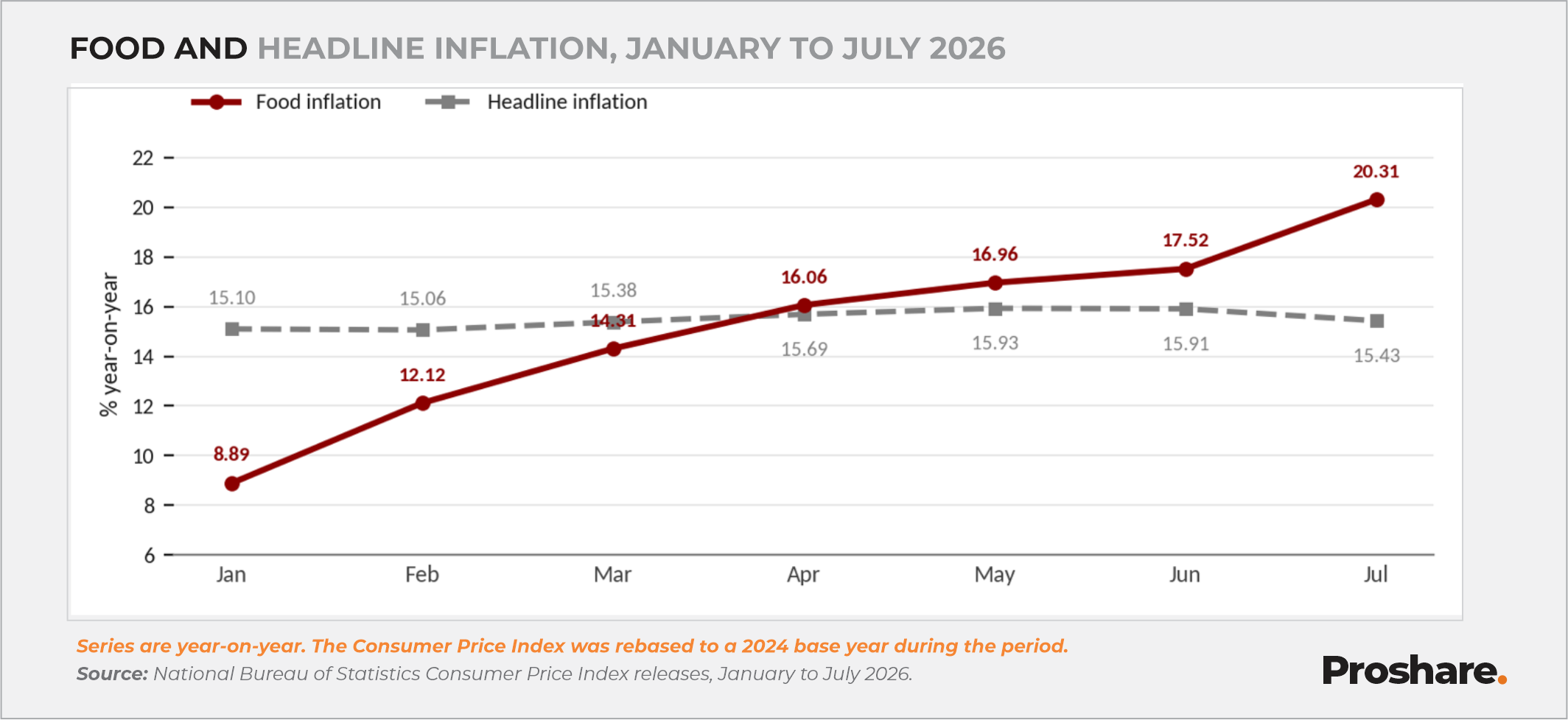
The official scorecard places gross reserves at US$52.5bn in July 2026, the official-to-parallel foreign-exchange premium below 5%, capital importation at US$10.37bn in Q1 2026 and stock-market capitalisation near N150tn in June 2026. The National Bureau of Statistics independently reports real GDP growth of 3.89% in Q1 2026. Its July Consumer Price Index, published on 17 August 2026 and therefore available two days before the briefing, reduced annual headline inflation to 15.43% from 15.91%.
Company Earnings
The EA-Proshare July 2026 Inflation Review shows food inflation rising to 20.31% year-on-year from 17.52% and accelerating to 5.56% month-on-month, about 3.5 times the 1.57% monthly headline rate. The newer reading strengthens the macro-stability case in the annual series while weakening any inference that household food pressure has eased. These outcomes coexist with a policy rate of 26.50%, petrol prices substantially above the May 2023 baseline and cumulative price increases that disinflation has not reversed.
Chart 2: Food and Headline Inflation, January to July 2026
Manifesto Alignment Is Stronger on Direction Than Delivery
Investing
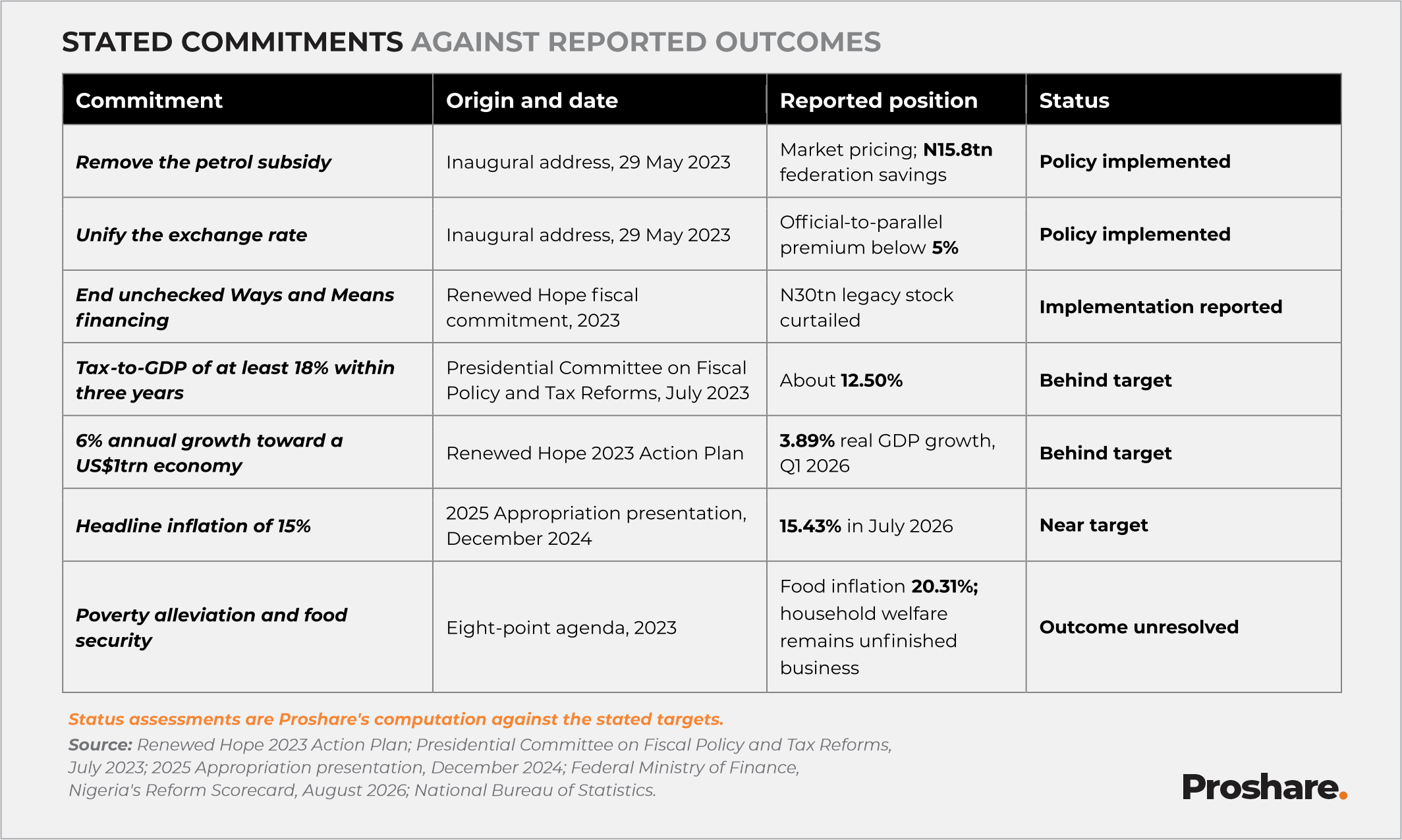
The Renewed Hope 2023 Action Plan prioritised exchange-rate optimisation, price stability, infrastructure, employment and a productive real economy. The unification of foreign-exchange windows, tighter monetary financing, tax reform and higher infrastructure allocations broadly align with that policy direction. Progress against the quantified commitments is less complete. The Presidential Committee on Fiscal Policy and Tax Reforms adopted a minimum tax-to-GDP ratio of 18% within three years in July 2023, against about 12.5% reported. The plan attached 6% annual growth to a US$1trn economy, against 3.89% in Q1 2026. The scorecard provides no comparable series for formal jobs, real wages, poverty reduction, capital-project completion or private-sector productivity.
Table 3: Stated Commitments Against Reported Outcomes
Counterfactual Claims Require Separate Treatment
The Government estimates that the absence of reform would have produced weaker reserves, a wider foreign-exchange premium, higher inflation and widespread state-level fiscal distress. These scenarios clarify the policy rationale, but they depend on assumptions and are not observed results. The directly measurable fiscal flows and macro indicators provide the firmer basis for assessment, and the counterfactual column should remain clearly labelled in subsequent scorecards.
Economics
From the Minister’s Remarks at the Briefing
The minister framed the exercise as an account rather than a claim of success, established an explicit standard for assessing the document, identified the monetary-policy and pump-price costs, and described household welfare as unfinished business. The following extracts are quoted from the remarks delivered at the Ministry of Finance headquarters in Abuja on 19 August 2026.
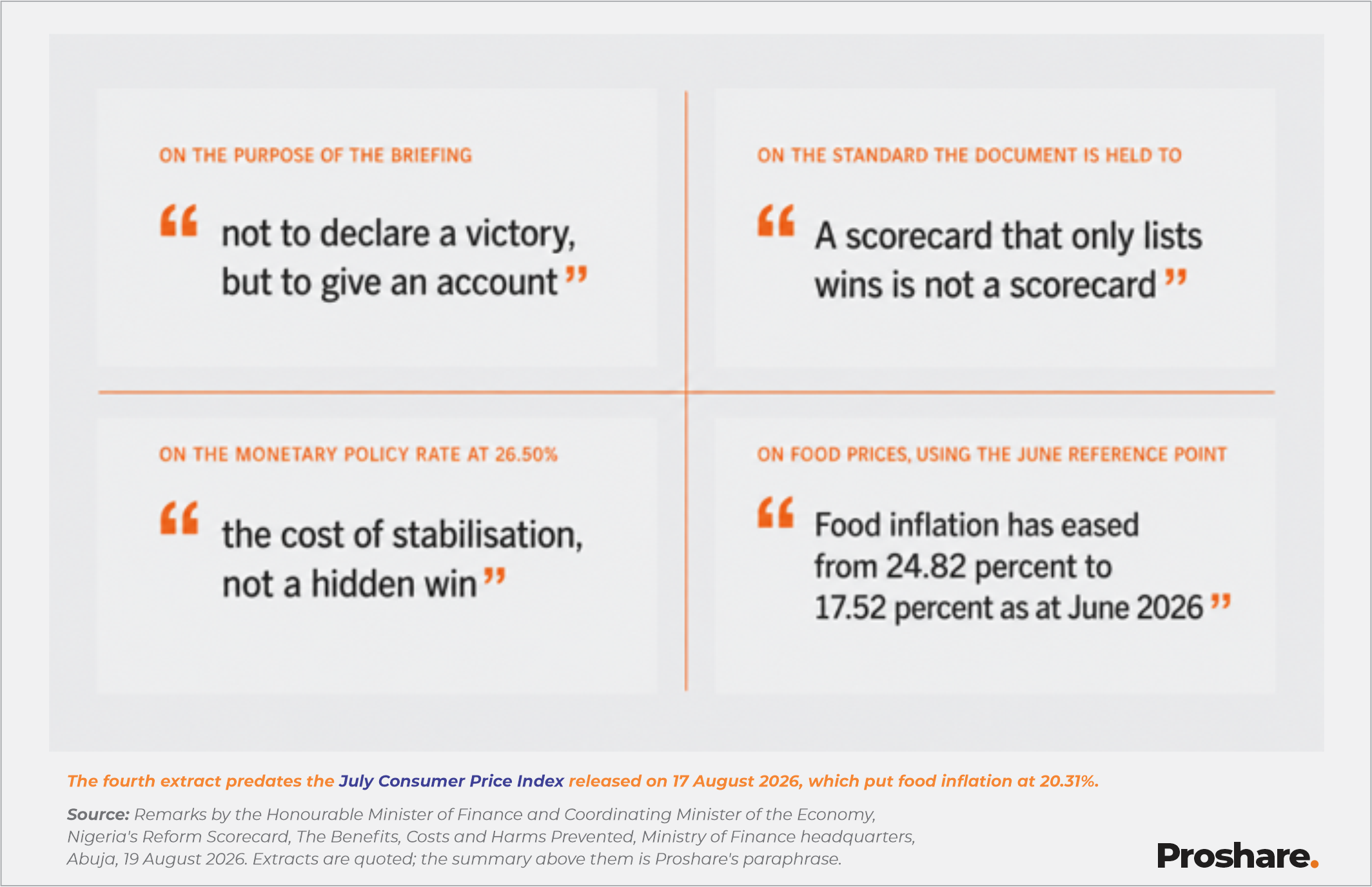
Source: Remarks by the Honourable Minister of Finance and Coordinating Minister of the Economy, Nigeria’s Reform Scorecard, The Benefits, Costs and Harms Prevented, Ministry of Finance headquarters, Abuja, 19 August 2026. Extracts are quoted; the summary above them is Proshare’s paraphrase. The fourth extract predates the July Consumer Price Index released on 17 August 2026, which put food inflation at 20.31%.
Dictionaries & Encyclopedias
Closing Thoughts and Next Steps
The briefing improves fiscal transparency by separating Federation-wide subsidy savings from the Federal Government’s actual share and by reporting that borrowing supplied most of the incremental federal resources. It also shows that wage and debt-service effects absorbed more than three-fifths of the additional spending identified.
The next scorecard should publish the calculation methodology, underlying datasets and reconciliation to audited fiscal accounts. It should add quarterly measures for capital-budget releases and completion, debt-service-to-revenue, the composition of capital inflows, real private-sector credit, formal employment, real wages, food affordability, power reliability and poverty, and it should carry the most recent National Bureau of Statistics price release rather than a reference point already superseded at the date of presentation.
The convergence of monthly food inflation towards monthly headline inflation is the measure that indicates household relief. States and local governments should report the use and outcomes of higher allocations on the same timetable. These disclosures would allow investors and citizens to distinguish stronger buffers from durable improvements in productivity and living standards.