
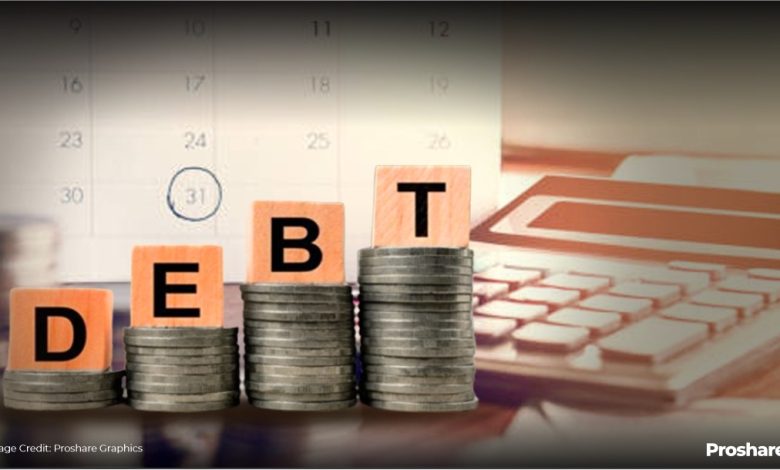
Nigeria’s debt debate is no longer about money. It is about truth. Both sides are losing it in different ways. On one side stands the opposition, led in this round by Peter Obi, asking the most legitimate question any citizen can ask of any government: where did the money go? On the other side stands the Tinubu administration, backed by fact-checkers like Kay Biyi, insisting that the opposition is not asking a question at all, but manufacturing a scandal. Both claims contain a truth. Both claims also contain a lie of omission. And until Nigerians learn to separate the legitimate question from the false figure, accountability will remain impossible.
The opposition’s argument begins with a question that cannot be dismissed, because it is the same question Tinubu himself asked in 2012. On 7 November 2026, in an X post titled Good Day, Mr President: Nigerians Deserve Accountability, Peter Obi asked what the administration had done with the N15.8 trillion said to have been saved from subsidy removal, with the increased tax revenues, and with additional government revenues, and why, if savings were so large, the government still needed to borrow so heavily. That question is not partisan. It is the core of the social contract. When a government removes subsidy on Day One, tells citizens to endure harder times before things get better, and then claims it has saved trillions, citizens are entitled to see, line by line, project by project, state by state, what those savings built. The opposition argues that the absence of that visible list is itself evidence of mismanagement, that the pain in markets, motor parks and kitchens is proof that the savings are not reaching the people, and that borrowing on top of savings, without transparency, is a repeat of SURE-P, where money accrued, committees were formed, and billions disappeared. In that broad sense, the opposition is right. A government that cannot show its work cannot demand trust.
The opposition’s counter-argument, however, collapses when it moves from question to figure. A viral graphic attributed to the opposition claimed that in 63 years, 16 Nigerian leaders borrowed N46 trillion, while Tinubu in 3 years borrowed N120 trillion and removed subsidy. Obi’s post repeated the essence of that claim by asserting that over $100 billion had been borrowed. The implication was clear: Tinubu is not just a reformer, he is a reckless borrower, worse than all his predecessors combined. That is a powerful political weapon, because it turns a complex debt story into a simple crime story. It is also, on the available evidence, false.
The government’s counter-argument is not to shout, but to count. On 12 November 2026, commentator Kay Biyi posted a video that did what the opposition had not done: it opened the Debt Management Office data. As at 30 June 2026, he argued, Nigeria’s entire public debt accumulated since 1960 is $120.9 billion. In June 2023, when Tinubu took office, it was $113.4 billion. In June 2026, it was $120.9 billion. The increase is therefore +$7.5 billion, not $100 billion. He then tested the $100 billion claim for plausibility, and the test is devastating in its simplicity. $100 billion in three years would mean $33 billion borrowed every year, every year, for three years. Nigeria is a single-B rated sovereign. Its largest Eurobond ever, in November 2025, was $2.35 billion with a record $13 billion order book. Its entire Eurobond portfolio is $15 billion. No market on earth lends a single-B sovereign $33 billion a year, every year, for three years, without anyone noticing. He stamped both viral claims FALSE. On arithmetic, the government’s defenders win.
But the government’s victory on arithmetic is not a victory on accountability, and this is where its own argument fails. To answer “Where is the N15.8 trillion?” with “We did not borrow $100 billion” is evasion, not governance. Correction is not accountability. Proving that you did not borrow $100 billion does not prove that you spent the N15.8 trillion well, that you spent the $7.5 billion you did borrow well, or that you spent increased tax revenues well. The government argues that debt is not the same as borrowing, that naira devaluation inflates naira-denominated debt figures without new borrowing, that refinancing old loans is not new debt, and that GDP growth of 4.43% in Q2 2026, reserves above $55 billion, and pension assets above N31 trillion show the economy is stabilising. Those points may be technically true, but they are politically tone-deaf. You cannot tell a trader whose transport fare has tripled that GDP grew. You cannot tell a mother whose bag of rice is now a luxury that reserves are up. Statistics without relief are not evidence of success, they are evidence of distance from the people.
The opposition, in turn, must face its own counter-argument. When it exaggerates, it gives the government an easy excuse to dismiss all criticism as lies. The government can then say: see, they lied about $100 billion, so they are lying about hunger too. And the real suffering gets buried under fake figures. Opposition without facts is not opposition, it is noise, and noise helps the government more than it hurts it. If Obi and others want to hold Tinubu accountable, they must do what Tinubu did in 2012: write, document, cite, and propose an alternative. Shouting $100 billion without evidence is the same as shouting SURE-P will work without controls. It insults the intelligence of the very people they claim to defend. A credible opposition would publish its own debt audit, its own alternative budget, its own list of what it would have done with the N15.8 trillion, and it would force the government to respond to facts, not to slogans.
The truth, by logic, is therefore uncomfortable for both camps. The opposition is right that the question is legitimate, that the pain is real, that the savings must be accounted for, and that borrowing must be scrutinised. The opposition is wrong on the numbers, wrong to inflate $7.5 billion into $100 billion, and wrong to offer outrage without a documented alternative. The government is right that it did not borrow $100 billion, right that the debt stock is $120.9 billion not $220 billion, and right that reform was necessary to avoid collapse. The government is wrong to use that correction as a shield, wrong to refuse a public, verifiable dashboard of subsidy savings with locations, contractors, costs and completion status, and wrong to mistake macro-statistics for lived relief.
When a citizen cannot tell whether the government borrowed $7.5 billion or $100 billion, accountability itself becomes impossible, because misinformation, whether deliberate or mistaken, does not just confuse, it paralyses. It makes it impossible for voters to reward good performance or punish bad performance, because they cannot agree on what performance is. That is the real debt Nigeria is accumulating, not just a debt of dollars, but a debt of trust. And until both sides agree to argue with facts — the opposition with accurate DMO data and a real alternative, the government with a transparent, auditable account of the N15.8 trillion — the debt war will continue to produce heat without light, and the ordinary Nigerian will keep asking the only question that matters: if the reform is working, why am I still suffering?