Nigeria Capital Market H1 2026: The Record Rally, Market Repricing and the Next Phase of Growth

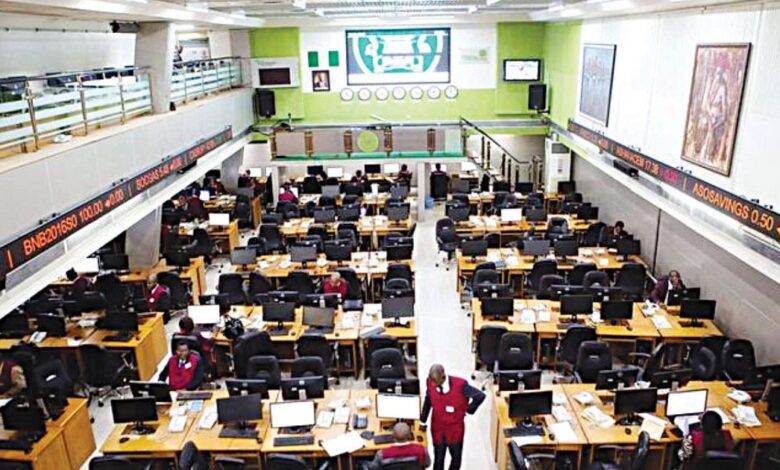
The first half of 2026 was the moment Nigeria’s capital market demanded proof instead of promises. The headline numbers were undeniable. The NGX All-Share Index climbed 47.43% year-to-date to close at 229,419.18 points, pushing market capitalization to N147.28 trillion and briefly above US$104 billion, the first time the market has crossed the US$100 billion mark since 2008. The journey there was not linear. From January to April the market ran hot, with April alone delivering a 20.36% gain as domestic institutions, pension funds and retail investors chased banking stocks undergoing recapitalization, dividend plays, and a handful of liquid large caps. Then June applied the brakes with an 8.37% decline. Rather than signal a reversal, that drawdown read as valuation discipline. After months of broad momentum, investors started asking for earnings to justify price, and regulators started asking for compliance to justify access.
What made the rally stick, at least through April, was a realignment of position, choice and action. On the position side, the market finally had a story it could defend: banks with fresh capital, improving asset quality narratives, and FX stability that made dollar earnings legible again. That honesty about where the market stood allowed for sharper choices. Fund managers rotated out of overcrowded fixed income into equities, issuers chose to tap the market through rights and public offers instead of waiting, and pension funds increased allocation to domestic stocks. The actions followed — trading volumes rose, research coverage narrowed to names that could show capital efficiency, and corporate boards began talking less about expansion for its own sake and more about returns. The result was a deeply lopsided rally. The NGX 30 Index surged 90.21%, banking stocks gained 79.03%, and industrial goods rose 59.48% on the back of cement and building materials. Insurance managed only 15.57%, a clear sign that capital was flowing to sectors with immediate catalysts and avoiding those still negotiating regulatory deadlines.
That regulatory agenda was the second force shaping H1. Nigeria became the first major African exchange to migrate to a T+1 settlement cycle. In theory it shortened risk and improved liquidity. In practice it also accelerated June’s profit-taking because institutions could rebalance faster. The Investments and Securities Act 2025 gave the SEC broader powers to protect investors and sanction bad actors, which it demonstrated on June 23 by shutting down an unauthorized marketing campaign for a supposed Dangote Refinery share offer and ordering refunds within 24 hours. The CBN, fresh off concluding bank recapitalization, issued new supervisory guidelines for Financial Holding Companies on governance and intra-group transactions. The market sold banking stocks in response, but the intent was clear: capital is welcome, but only with stronger oversight. The revocation of 46 microfinance bank licenses for weak capital and inactivity reinforced the same message. These were not technical tweaks. They were a statement that the market will no longer reward size without structure.
Corporate actions reflected that pressure. Index rebalancing admitted NASCON and Unilever into the NGX 30, while Oando and Transcorp exited. Lafarge rebranded to HBM Nigeria, Abbey Mortgage Bank received approval to become a regional commercial bank, and Deap Capital renamed itself Critical Minerals Financing Corp, signaling a pivot to a new theme. Outside the main board, the NASD Unlisted Securities Index was up 21.32% YTD, though momentum faded in Q2. On FMDQ, the fixed income market continued to dominate with N125.01 trillion in outstanding securities, about 44% of total market size, as strong demand persisted for longer-dated T-Bills and FGN bonds. The market was therefore growing in two directions at once: equities repricing on reform optimism, and debt absorbing liquidity that was still cautious about risk.
Analyst sentiment mirrored the transition. The first quarter was almost universally bullish, with “Buy” and “Accumulate” ratings across banking, oil and gas, and industrials. By the second quarter, as valuations stretched, coverage became selective. Banks like First HoldCo, GTCO, Zenith, UBA, ACCESSCORP, along with Aradel, Seplat and Dangote Cement, remained in focus, but many calls were downgraded to “Hold.” The question had shifted from whether the market could rally to whether companies could deliver on the capital they had just raised.
That question defines H2. The catalysts are tangible: how banks deploy recapitalized funds into lending and digital growth, insurance consolidation ahead of NAICOM’s July deadline, the long-anticipated listing of Dangote Refinery which could be the largest in NGX history, and NGX’s push for cross-border listings and new derivatives. But the risks are equally present — elevated interest rates, inflation, pre-election fiscal spending, oil price swings, potential foreign portfolio outflows, and the FTSE Russell review that could affect Nigeria’s index status.
H1 2026 therefore leaves us with a market that has been repriced, not just rallied. The gain is real, but its durability will depend on whether position, choices and actions continue to align. If companies treat new capital as a tool for efficiency and not just scale, if regulators enforce the new rules consistently, and if investors reward earnings over narrative, then the record rally becomes the foundation for a deeper market. If not, June’s correction was only the first reminder that in this cycle, the market is no longer asking “how high?” It is asking “how real?”