How CBN MPC Members Views Delivered Unanimous Hold at 26.5% Last May ,2026

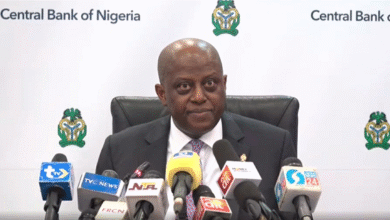
The Central Bank of Nigeria’s Monetary Policy Committee ended its meeting of May 19–20, 2026 with a unanimous decision to retain the Monetary Policy Rate at 26.50 percent, along with the asymmetric corridor, cash reserve requirements and liquidity ratio. What stands out in the personal statements of the 11 members is not just the uniformity of the vote, but the shared conviction that Nigeria is dealing with an imported shock and that an aggressive policy response would do more harm than good.
Across the statements, members traced the marginal uptick in headline inflation to 15.69 percent in April back to the escalation of the US–Israel–Iran conflict in March. The war pushed crude above $100 and in some estimates as high as $126 per barrel, lifted global food prices for a third straight month, and forced multilateral institutions to cut 2026 global growth to about 3.1 percent. Governor Olayemi Cardoso described it as a transitory supply-side disruption, while others like Aku Pauline Odinkemelu called it a speed bump that interrupted 11 months of disinflation. The key point repeated was that core inflation, month-on-month inflation and the 12-month average all continued to moderate, suggesting demand pressures remain contained and second-round effects have not yet taken hold. From that diagnosis came the consensus that raising rates would be applying the wrong instrument, and cutting would be premature and costly to credibility.
The committee also drew confidence from Nigeria’s buffers. Gross external reserves at about $49.49 billion provided over nine months of import cover. The naira had remained relatively stable and even appreciated year-on-year. GDP growth came in at 4.07 percent in the fourth quarter of 2025, supported by services, agriculture and a stronger oil sector, while the banking recapitalization exercise delivered 33 better-capitalized institutions and N4.65 trillion in fresh capital. Sovereign ratings were upgraded and investor demand for government securities stayed strong. Members argued that these fundamentals give the economy room to absorb external volatility without derailing the disinflation path.
Even with broad agreement, the statements reveal different areas of emphasis on what to monitor most closely. Several members were most concerned about global spillovers. Aloysius Ordu and Emem Usoro warned that the duration of the Middle East conflict, a stronger US dollar and tighter global financial conditions could increase competition for capital and make external financing more expensive for Nigeria. Usoro specifically flagged the risk of global stagflation, where weaker growth coincides with higher inflation, and said this reinforces the need to preserve policy credibility to keep market access open.
Another group focused on domestic transmission. Muhammad Sani Abdullahi noted that excess liquidity was evident in heavy placements at the Standing Deposit Facility and in an inverted yield curve, which means the policy rate is not fully passing through to market rates. For him, the priority is stronger liquidity sterilization through open market operations rather than a change in rates. Philip Ikeazor added that the newly introduced Nigeria Overnight Financing Rate needs time to stabilize as the operational target, and adjusting policy prematurely could distort the money market and weaken transmission.
A third thread centered on structural and fiscal constraints. Bandele Amoo, Murtala Sagagi and Mustapha Akinkunmi all argued that monetary policy has largely done its part and that supply-side issues now dominate. They pointed to persistent food inflation driven by insecurity, high transport costs and poor rural infrastructure, to inadequate CNG and electricity infrastructure, and to the gap in oil production which at 1.49 million barrels per day falls well short of the 1.84 million benchmark in the 2026 budget. Sagagi stressed that without fiscal action on agriculture and rural roads, gains in disinflation would remain fragile. Akinkunmi said monetary conditions are already among the most restrictive in the region and that the binding constraint is now revenue mobilization and infrastructure, not the policy rate.
Raymond Omachi brought the fiscal trade-off into sharper relief. He noted that higher oil prices improve government revenue but also raise import costs and debt servicing burdens. Citing CBN staff simulations, he argued that holding rates best balances growth and price stability, while further tightening would crowd out priority spending. He also welcomed improvements in tax revenue, which is now contributing more to FAAC allocations than oil.
On what comes next, the committee was careful not to present the hold as complacency. Cardoso provided the clearest forward guidance, stating that future decisions will depend on whether core month-on-month inflation returns to a disinflationary path and whether the pass-through from energy prices has run its course without triggering second-round effects. Data for May and June were described as critical, and members agreed that any sign of de-anchored expectations would prompt a firm response. In the meantime, the expectation is for active liquidity management, orderly foreign exchange operations and close coordination with fiscal authorities to sterilize any windfalls from oil revenue or pre-election spending.
In essence, the May statements portray a committee that sees its credibility as its most valuable asset after 11 months of disinflation. The unanimous hold reflects a judgment that the current inflationary pressure is external, that Nigeria’s reserves and banking system provide a cushion, and that patience will allow previous tightening to continue working through the economy. The divergence lies not in the vote but in the diagnosis of risk: whether it comes from geopolitics abroad, from liquidity at home, or from structural gaps that only fiscal policy can address. For now, the message to markets is that rates will stay high, but the central bank will not tighten further unless price expectations begin to slip.