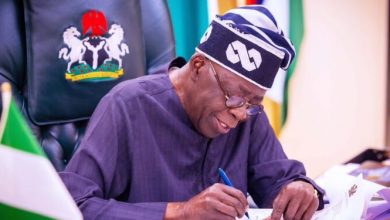
In politics, names become brands long before they appear on a ballot. Some fade after one election. Others harden into institutions people argue about for decades. Bola Ahmed Tinubu belongs to the second category. For over 25 years, whether you support him or oppose him, you know exactly who “BAT,” “Jagaban,” or “Asiwaju” is. That kind of recall is rare, and in branding terms it is priceless. But recall alone does not win trust.
But Tinubu is not just a name that keeps coming up on TV. He is a case study in how a Nigerian politician turned personal history into political infrastructure. This is a man who started on the streets of protest in the 1990s, survived exile, then went on to run Lagos for eight years when the state was broke and dependent on Abuja. He didn’t just govern. He built a machine. From that base he brokered the merger that killed off the PDP’s 16-year dominance, handpicked governors, and turned “Lagos politics” into a template that other states began to copy. By the time he ran for president in 2023, he wasn’t introducing himself. He was cashing in on three decades of being in every major political conversation. That is what makes his brand different: it was not manufactured for one campaign. It was lived, tested, and inherited by a whole generation of politicians.
His brand awareness is extraordinarily strong and was built over decades rather than a single election cycle. From his time as a NADECO activist, to Senator, to two-term Governor of Lagos, to the architect of the APC merger, and finally to President in 2023, Tinubu has remained a constant presence in national political memory. That longevity alone creates what Keller calls a strong “brand node” in the minds of voters. The brand was further reinforced through deliberate signifiers: Jagaban, Asiwaju, City Boy, BAT. These function like logos, instantly compressing a complex biography into recallable cues. Beyond personal symbols, he also extended awareness through structure. By building a political family of governors, ministers, and party officials associated with him, the Tinubu brand became bigger than the individual. In marketing terms he achieved unaided recall at a national level, something few Nigerian politicians have managed.
Where the brand becomes complicated is in image, because awareness has not translated into a single, uniform perception. On the positive side, Tinubu is widely associated with strategy and political entrepreneurship. The narrative that he “understands timing” and can build winning coalitions positions him as the tactician who feels the political moment and adapts to it. His tenure in Lagos is the core product proof for the brand. The IGR growth, infrastructure projects, and the positioning of Lagos as a tech and commercial hub are constantly invoked as evidence that the brand delivers competence. There is also the association of loyalty and patronage. He is seen as a “father of the party” figure who rewards allies, which in brand terms creates a community of stakeholders with a vested interest in protecting the brand.
At the same time, the image carries significant liabilities that weaken brand equity. The long-standing criticism of godfatherism and elite control undermines authenticity, which modern voters increasingly demand from political brands. Issues around age, health, and transparency during the 2023 campaign became points of doubt that directly attacked credibility and trust, two core components of brand image. Most importantly, Tinubu chose to personalize policy in a way that ties performance directly to the brand. Terms like “Renewed Hope” and “Tinubunomics” make subsidy removal, tax reform, and exchange rate unification inseparable from his personality. This is effective for recall, but risky, because it means any economic pain is experienced not as abstract government policy but as a direct verdict on the brand itself.
Placed on the matrix of brand awareness and positive image, Tinubu currently sits in the high awareness, contested image quadrant. He is not an unknown, and he is not universally loved. He is a polarizing icon whose brand is known to everyone but interpreted very differently depending on the audience. The conceptual framework suggests that the next strategic move for a brand in this position is to shift the image upward while maintaining awareness. That requires experiences over time that can overwrite negative associations. For a political brand, those experiences are governance outcomes: visible improvements in cost of living, security, jobs, and infrastructure that allow voters to re-evaluate what they “feel” about the brand.
Critically, Tinubu’s brand reveals both the power and the danger of personalizing politics. The strength is durability. He built a brand before social media forced everyone to, and it has survived defeats, scandals, and transitions. The weakness is centralization. Because the brand is so closely tied to one person, any failure attaches immediately to him with no buffer. The risk now is that if reforms are perceived only as hardship without payoff, the brand will be remembered for disruption without benefit. The opportunity is that brand image is not fixed. If the second half of the term produces tangible results, the same memory structures that currently store skepticism can be updated with new associations of delivery.
In essence, Tinubu represents a turnaround-CEO type of political brand. He entered with maximum name recognition and a mixed reputation, and he is betting that performance will convert awareness into positive equity. The core lesson from the matrix is that political brands live in the gap between what people know and what people feel. Tinubu has already won the battle of knowing. Whether he wins the battle of feeling will define how the brand is remembered beyond 2027.