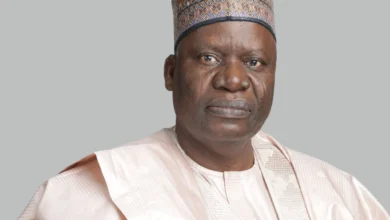


In Nigerian politics, few names travel as far and as fast as Senator Solomon Olamilekan Adeola, popularly called “Yayi.” For over 14 years, from Alimosho in Lagos to Ogun West, the name has been on ballots, on project signboards, and in heated debates. Now that brand is aiming for its biggest prize yet: the Ogun State Government House in 2027. But before the conversation turns to what he plans to do as governor, it starts with the questions that have followed him for years.
To understand Yayi is to hold two ideas at once. On one side, he is the politician who shows up. Roads get graded, boreholes are sunk, students get scholarships, and empowerment kits land in town halls with cameras rolling. That is why his name has recall in two different states and why many voters describe him as “the one who delivers.” On the other side, he is the politician who draws scrutiny. Questions about how those projects are funded, about his political base switch from Lagos to Ogun, and about a style that critics call transactional have trailed him just as loudly.
The loudest controversy has been about process. How does one senator deliver so many projects when 109 colleagues have the same constitutional allocation? Adeola chaired the Senate Committee on Finance and later Appropriations, positions that sit at the center of budget negotiations. In a sane clime, due process, constitutionality, due diligence and the rule of law should define how constituency projects are accessed and executed. Critics argue that privileged access was used to insert, defend, and protect projects in ways unavailable to ordinary members, driven by selfishness and personal ambition rather than public interest. Media reports and public commentary have repeatedly questioned the execution of some projects on this basis. When a senator allegedly circumvents due process to corner projects at the expense of others, it is dishonest, egregious, and comes at a sharp price. In facts , some of such projects executed in Ogun Osun River Basin were trailed with heavy controversy and allegations of financial impropriety .
The second controversy surrounding Senator Solomon Adeola is about identity, and it strikes at the heart of his governorship ambition. During his 2023 move to Ogun West, he faced petitions and fierce social media debates over his eligibility, with questions raised about his documents, his claim to Ogun origin after years representing Lagos West, and an alleged change of name that critics say has never been properly explained. INEC cleared him and he won, but the episode birthed a durable “outsider versus son of the soil” narrative. His camp insists he has family roots and property in Ogun West and that the attacks are political, while opponents argue the Lagos-to-Ogun switch, plus unresolved questions around his name, shows a transactional brand. That charge was reignited by Wale Adedayo’s Channels TV outburst, which alleged that “Yayi” was originally “Sulaimon Ogunleye from Ekiti” and is now making “fraudulent” ancestry claims, framing his career as rootless rather than rooted. In Ogun, where lineage, local government alignment, and traditional endorsement carry enormous weight, the allegation shifts the burden of proof to Adeola: without an open, verifiable account of his name, parentage, and roots, silence will be read as confirmation. Adedayo compounded this by predicting “seismic” APC losses in 2027 governorship, senatorial and House races even as he conceded Tinubu would win the state, suggesting identity politics could decouple federal and state voting. Legally the matter may be settled, but politically perception matters more, and if Adeola fails to decisively address the name and ancestry question, he risks being defined not as the senator who delivered projects, but as the candidate who tried to buy a hometown
There is also the critique of style. Analysts say the Yayi brand relies heavily on cash empowerment, palliatives, and direct giveaways. These create immediate goodwill and photos that travel, but critics argue they build dependency instead of systems. The concern is that the brand is better at distribution than at policy. Others point to a top-down approach that mirrors godfather politics, where loyalty is rewarded and dissent is squeezed out. In an era where younger voters are demanding data, transparency, and institutions, that style is both a mobilization strength and a credibility weakness.
Despite all of that, the reason “Yayi” is in the 2027 conversation is because the brand has undeniable strengths. Adeola began as Chairman of Alimosho Local Government in Lagos, then served three terms in the House of Representatives, followed by two terms in the Senate for Lagos West. In 2023 he made the rare jump to win Ogun West Senatorial seat, becoming one of the few politicians to represent two different states at the National Assembly. That move was not accidental. It was the first step in repositioning from Lagos operator to Ogun governorship material. Since arriving in Ogun West, he has run the same playbook: be visible, be present, and be associated with direct delivery. The work is branded under “Ogun West Agenda” and includes scholarships, vocational training, roads, health centers, boreholes, market stalls, and youth empowerment kits. He leans on personal signifiers the way corporate brands use logos: the name “Yayi,” the yellow and green colors, and large empowerment events that generate word-of-mouth. The message is simple and repeated: “I deliver, wherever I am.”
That visibility explains why the brand has positive associations despite the criticism. He is widely seen as a mobilizer who understands how to win elections. His time chairing Finance and Appropriations reinforces the image of competence and access to federal resources. For a state like Ogun that is competing for investment, IGR growth, and infrastructure, that “Abuja connection” is central to his pitch. The narrative around him is that of a self-made politician who rose from local government and stayed close to the base. For many in Ogun West and parts of Central, the promise has been access and delivery at the ward level. That is the foundation he is now trying to scale to 20 LGAs.
Placed on the brand matrix, Adeola as a gubernatorial aspirant sits in the high awareness, contested-image quadrant. He is not unknown in Ogun, and he is not universally embraced yet. He is a performance-based brand whose equity will rise or fall with what people believe he can do for the whole state, not just one district.
The strategic challenge for 2027 is therefore direct. First, he must broaden the brand beyond Ogun West by articulating a statewide vision on industrialization, agriculture, education, and jobs that goes beyond empowerment events. Second, he must close the authenticity gap by rooting the brand in Ogun institutions and narratives so it is seen as an Ogun project, not an imported one. Third, he must address transparency head-on by making project tracking and impact data public, so the brand is judged on evidence rather than rallies.
In essence, Solomon Olamilekan Adeola is attempting the classic political brand extension: from “Senator who delivers” to “Governor who can transform.” The power of the brand is its mobility, its organization, and its connection to the base. The risk is centralization. Because “Yayi” is the product, any failure in governance attaches directly to him.
Political brands live in the space between what people know and what people believe. Adeola has already won the battle of being known in Ogun. Whether he wins the battle of being believed as a governor, not just a distributor, will decide if the Yayi brand moves from the National Assembly to Oke-Mosan in 2027.