Beyond the Hidden GDP: Behaviour, Incentives and the Political Economy of Election Spending – A Rejoinder

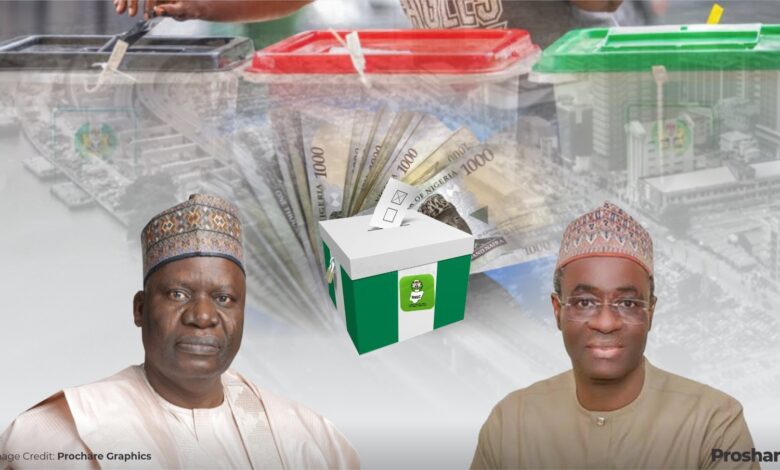
In this rejoinder to Dr Suleyman A. Ndanusa’s essay, “The Economy of National Elections: The Hidden GDP”, Tanimu Yakubu Kurfi extends the analysis of election spending beyond the temporary demand it creates across transport, hospitality, printing, media, telecommunications, security, logistics and informal services. He examines the incentives embedded in that expenditure and the institutional obligations that may remain after voting ends.
Nigeria Economy Report
Kurfi treats campaign finance as an investment in an intangible political asset. Contributions may reflect ideology, party loyalty, civic commitment or confidence in a candidate’s programme. They may also carry expectations of preferential access to contracts, licences, appointments, tax treatment, regulatory accommodation and other state-controlled opportunities. Where public office confers broad economic discretion, the value of political access rises and attracts greater private capital.
The rejoinder identifies direct implications for investors and market institutions. Capital committed to political influence can displace investment in production, innovation and operating efficiency. Firms with privileged access may gain advantages unrelated to competitiveness, encouraging others to shift resources from value creation towards political proximity. Weak disclosure, uncertain enforcement and broad administrative discretion increase the expected return on political financing.
Kurfi also distinguishes the short-term election multiplier from a productivity multiplier. Campaign spending may circulate income and support temporary employment, but most election-related expenditure creates few durable assets. Its long-term effect may be negative where it diverts savings, public revenue or investment capital from productive use.
Proshare notes that the Electoral Act 2026 gives the argument immediate application. Higher spending ceilings, a larger individual donation cap and a substantially higher donor disclosure threshold have increased the lawful scale of campaign finance ahead of the 2027 elections. Section 93 of the same Act supplies a test, requiring every political party to file an audited return of election expenses with INEC within six months of the poll, naming donors and amounts, and to publish that return in two national newspapers and on its own website.
Kurfi’s intervention advances Ndanusa’s hidden GDP thesis from the measurement of electoral transactions to the conversion of private wealth into political influence, public authority and economic allocation. Kurfi’s closing words, “democracy must remain financeable without allowing the financing of democracy to become a privately enforceable claim upon the state”, offer a worthy aide memoire on this subject.
Introduction
Dr. Suleyman A. Ndanusa’s essay (see below) makes a valuable intervention by treating national elections as episodes of economic activity rather than as political events alone. His idea of a hidden gross domestic product draws attention to the temporary expansion in transport, hospitality, printing, media, telecommunications, security, logistics and informal services that accompanies a major election. That insight is important because it recovers activity that conventional political commentary often ignores. It is, however, the beginning rather than the end of the inquiry. The circulation of money tells us that elections have an economy; it does not yet tell us what kind of economy they create, whose interests it serves or what obligations survive after the ballots have been counted.
This paper argues that election expenditure is best understood not merely as temporary economic activity, but as investment in future political influence, institutional access and, in some cases, expected economic advantage. The central analytical issue is therefore not only that money moves during elections, but why it moves, what conduct it is intended to induce, what rights, policies or privileges its providers expect in return, and how those expectations affect public administration after the election. Once these questions are introduced, campaign finance becomes part of a continuing sequence in which private resources may be converted into political influence and political authority may subsequently be converted into economic opportunity.
Public Choice theory and institutional economics provide familiar explanations of political incentives, rent-seeking and the effects of rules on conduct. They remain essential to this discussion. A Fanonian approach adds a further and particularly useful dimension because it asks how those incentives operate within a post-colonial state whose productive base may be narrow, whose institutions may be formally modern but unevenly effective, and whose government remains a major allocator of land, contracts, licences, foreign exchange, appointments and commercial opportunity. Fanon therefore helps to connect the behaviour of individual political actors to the historical structure of the state and to the material interests operating through its institutions. Applied to elections, this perspective requires campaign expenditure to be analysed together with the distribution of economic rents, the strength of enforcement, the dependence of private wealth on public discretion and the behaviour of those who finance political competition.
Election Expenditure as Investment
Investment Opportunities Platform
Campaign spending is often classified as consumption because it pays for goods and services used within a short period. That accounting description is correct for national-income purposes but incomplete for political-economy analysis. The investment discussed here is not investment in physical capital such as factories, machinery or infrastructure. It is investment in an intangible political asset: influence over the selection of leaders, access to decision-makers, the direction of policy, the interpretation of regulation or the allocation of public opportunity. Like other investments, it is made in the present because the contributor expects a stream of future benefits, although the nature, legitimacy and certainty of those benefits vary considerably.
The expected return may be entirely legitimate. A citizen may contribute because of ideology, party loyalty, civic commitment, regional interest or genuine conviction that a candidate’s programme would improve public welfare. A political party may spend to communicate its programme, expand its membership, improve voter registration or build an organisation capable of competing across several electoral cycles. A business association may support a candidate because it expects stable policy, more predictable regulation, lower transaction costs or reforms that improve the general investment climate rather than confer a private favour. Civil society organisations may spend on voter education because they expect greater participation and stronger democratic accountability. These motives are political investments in the broad sense, but they need not be corrupt, transactional or narrowly pecuniary.
The same investment logic can, however, operate in less defensible ways. A financier may expect preferential access to public contracts, appointments, licences, waivers, concessions, tax treatment, regulatory tolerance or privileged information. A contribution may also be intended to preserve an existing monopoly, delay enforcement, influence the design of a levy or secure protection from competitors. Where such expectations are credible, present campaign support becomes an advance payment against future public decisions. The economic value of those decisions may greatly exceed the amount initially spent, which creates an incentive for financiers to invest heavily even where the probability of electoral victory is uncertain. Political finance then begins to resemble a portfolio of contingent claims on the state.
The cause-and-effect relationship is direct. The greater the economic discretion attached to public office, the higher the expected value of controlling or influencing that office. As the expected value rises, political spending becomes more attractive. As spending increases, the cost of electoral competition rises. Higher costs make candidates more dependent on wealthy financiers, organised interests and networks capable of mobilising money rapidly. That dependence can subsequently affect appointments, procurement, regulation and policy priorities. The result is not inevitable in every case, but the incentive becomes stronger wherever disclosure is weak, sanctions are uncertain and official discretion is broad.
Risk, Uncertainty and the Expected Political Return
Political investment is necessarily uncertain because electoral outcomes, governing coalitions and subsequent administrative decisions cannot be known in advance. A contributor therefore weighs the probability of electoral success against the value of the benefit expected if the supported candidate or party gains office. The calculation resembles an expected-return decision: a low probability of success may still justify a large contribution where the potential policy, regulatory or contractual gain is exceptionally high.
This uncertainty also explains why major financiers may support several candidates, parties or factions at the same time. Such contributions are not always expressions of ideological confusion. They may constitute political risk diversification intended to preserve access regardless of the result. The practice can weaken electoral accountability because it allows economic power to remain close to government even when voters replace the political leadership.
The expected return is also affected by time. Some benefits, such as appointments or emergency contracts, may be realised quickly. Others, such as regulatory protection, tax treatment, land conversion or the preservation of a market position, may accrue over an entire term of office. Political investment should therefore be understood not as a single exchange but as a relationship whose value depends on probability, timing, enforceability and the durability of access.
Politics as Work: The Election Labour Market
Election campaigns also create a temporary labour market that deserves more systematic treatment. Political parties and candidates employ campaign managers, researchers, lawyers, accountants, drivers, media consultants, data analysts, social-media operators, security personnel, event managers, printers, photographers, polling agents and local mobilisers. Transporters, caterers, hotels, telecommunications firms and informal vendors also receive additional demand.
This labour market operates according to supply and demand. As campaigns expand, demand rises for workers who possess local knowledge, organisational networks, communication skills or experience in election management. Scarce political skills command higher compensation. Individuals with influence over professional associations, religious communities, youth organisations, labour unions or traditional institutions may also acquire temporary economic value because they can reduce the cost of reaching large groups of voters.
The employment effect is real but often unstable. Campaign work is generally short-lived, weakly regulated and disconnected from long-term productivity growth. Once the election ends, demand contracts sharply. The income generated may support household consumption, but it does not necessarily improve skills, capital formation or future employability. For this reason, the election labour market should be distinguished from durable employment creation. It is a temporary absorption of labour rather than a permanent expansion of productive capacity.
This distinction matters for national accounts and public policy. An election may increase recorded activity during the campaign period while leaving the productive structure of the economy unchanged. The visible rise in employment and spending can therefore coexist with little or no improvement in long-term output, competitiveness or household security.
Money and the Purchase of Political Behaviour
The principal object of election spending is behaviour. Campaigns use money to influence whether citizens register, attend rallies, volunteer, donate, endorse, persuade others and eventually vote. Spending also seeks to shape how citizens interpret information, evaluate candidates and understand their own interests.
Different expenditures purchase different behavioural responses. Advertising purchases attention. Polling purchases information about preferences. Data analysis improves the targeting of messages. Endorsements attempt to transfer trust from a respected individual or institution to a candidate. Local mobilisation reduces the logistical and psychological cost of participation. Direct inducements, where they occur, seek to replace political judgment with an immediate private reward.
The effect of money therefore depends on the conditions under which voters make decisions. Where citizens have access to credible information, independent media and meaningful policy choices, spending may mainly improve communication and mobilisation. Where poverty is severe, institutions are weak and public services are distributed through patronage, the same expenditure may exploit vulnerability, reinforce dependence and convert public citizenship into a private transaction.
Behavioural influence is not confined to voters. Money can also affect party delegates, campaign officials, community leaders, media organisations, election personnel and security agencies. The common analytical principle is that expenditure changes the incentives faced by an actor. Where the expected personal benefit of cooperation exceeds the expected cost of defection or sanction, behaviour becomes more responsive to the financier.
The Political Market for Rent Creation
Election finance must also be connected to the creation, protection and distribution of economic rents. A rent is an income or advantage obtained not from additional productive activity but from privileged access, artificial scarcity, regulation or control over public authority. Elections matter because they determine who will control institutions capable of creating, allocating, preserving or withdrawing such rents. The larger the rent-producing capacity of the state, the greater the premium that private actors may rationally place on political access.
Where government controls major contracts, licences, import permissions, foreign-exchange access, land allocations, mineral rights, tax exemptions and regulatory approvals, political office acquires substantial economic value. Financiers then have an incentive to support candidates who can preserve existing rents or create new ones after taking office. The campaign becomes the first stage in a longer exchange: private resources support political acquisition, while public authority later allocates economic advantage.
The effect is cumulative. Once political contributions generate returns, financiers learn that influence is more profitable than competition. Capital is then diverted from innovation, production and efficiency towards relationship-building and political access. Firms that succeed through influence gain an advantage over firms that succeed through productivity. This weakens market competition and encourages other firms to adopt the same strategy.
Over time, the economy can become organised around access to the state rather than the creation of value. The political class becomes an intermediary between public resources and private beneficiaries, while economic elites become financiers of political continuity. Fanon’s warning about the post-colonial bourgeoisie is relevant here: a class that controls distribution without sufficiently expanding production may reproduce dependence, inequality and institutional weakness even while maintaining the formal structures of sovereignty.
The policy consequence is that campaign-finance reform cannot be separated from reforms to procurement, regulation, appointments, taxation and public disclosure. Reducing the supply of political money without reducing the rents available after elections may simply move transactions further underground. Effective reform must reduce both the opportunity to purchase influence and the discretionary economic rewards that make influence valuable.
The Election Multiplier and the Productivity Multiplier
Election spending can generate a short-term multiplier because payments received by printers, drivers, hotels, consultants, entertainers and campaign workers are partly spent again within the economy. This secondary spending supports additional income and consumption. In a period of weak demand, the effect may be locally significant.
The size and quality of this multiplier, however, depend on how the money is financed and where it is spent. If campaign expenditure is financed from previously idle private savings and directed to domestic suppliers, it may produce a temporary increase in local demand. If it is financed by diverting funds from productive investment, public revenue or essential services, the immediate stimulus may be offset by larger future losses. If a large share is spent on imported vehicles, equipment, media platforms or foreign consultancy, part of the multiplier leaks out of the domestic economy.
A productivity multiplier is different. It arises when expenditure increases the economy’s future capacity to produce. Investment in education, infrastructure, technology, health and productive enterprise can raise output over many years. Most campaign expenditure does not have this effect. Posters, rallies, temporary travel and political entertainment generate income while they are being purchased, but they rarely create assets that continue to produce after the election.
Investment Opportunities Platform
The distinction prevents a misleading interpretation of the hidden GDP. Higher election-related activity is not automatically an economic gain. Its net effect must be assessed against opportunity cost. The relevant question is what the same resources would have produced if they had been invested elsewhere. Where campaign spending crowds out productive investment, the election multiplier may be positive in the short term but negative in its long-term effect on growth.
This also explains why an economy can experience intense monetary circulation during elections without a corresponding improvement in welfare. Nominal activity may rise, yet inflation, exchange-rate pressure, fiscal stress and postponed investment may reduce real incomes. The measure of benefit should therefore not be the volume of transactions alone, but the extent to which those transactions expand durable productive capacity or improve institutional quality.
Institutional Strength and the Cost of Political Investment
Institutional quality determines whether political finance contributes to democratic competition or to economic capture. Strong institutions raise the cost of converting campaign support into private privilege. Transparent procurement, independent regulation, enforceable conflict-of-interest rules, credible courts, audited campaign accounts and professional public services reduce the expected return on improper political investment.
Weak institutions have the opposite effect. When enforcement is uncertain and discretion is wide, campaign financiers can reasonably expect access and favourable treatment. The anticipated return on political investment rises, attracting more money into elections. This produces a feedback loop: weak institutions encourage expensive campaigns; expensive campaigns deepen dependence on financiers; and that dependence further weakens institutions after the election.
The cost of political competition therefore cannot be separated from the design of the state. Where public office carries excessive discretion over economic opportunities, elections will attract correspondingly high expenditure. Lowering campaign costs requires reducing the private value of public discretion through rules, transparency and impersonal administration.
Towards a General Theory of the Economics of Elections
A general theory of election economics can be expressed as a sequence of linked relationships, but it should begin by distinguishing motive from mechanism. Political investment may arise from conviction, identity, public-spirited commitment or an expectation of private return. Whatever the motive, expenditure becomes politically consequential through mechanisms such as organisation, information, communication, mobilisation, endorsement, inducement and access.
The first structural relationship therefore connects the economic and symbolic value of public office to the level of campaign investment. The greater the control that office confers over public resources, regulation and rents, the more rational it becomes for political actors and financiers to spend heavily to obtain or influence it.
The second relationship connects campaign investment to behaviour. Money purchases organisation, information, communication, mobilisation and, in weak institutional settings, inducement or coercive influence. These mechanisms affect voter preferences, turnout, party decisions, elite endorsements and administrative conduct.
The third relationship connects behaviour to political outcomes. Where spending successfully changes enough decisions, it affects candidate selection, electoral victory and the composition of governing coalitions. Political outcomes then determine who controls the institutions responsible for public allocation.
The fourth relationship connects political control to economic returns. Governments make decisions on taxation, expenditure, contracts, appointments, licences, regulation and enforcement. Where prior financiers receive preferential treatment, political investment generates economic returns. The expectation of such returns then shapes financing in the next electoral cycle.
The complete cycle can therefore become self-reinforcing: valuable public discretion attracts political investment; political investment shapes behaviour; behaviour produces political control; political control allocates economic advantage; and the resulting advantage finances future political investment. Yet the cycle is neither universal nor irreversible. Transparent institutions can separate political support from administrative reward, while competitive markets can reduce the value of state-created privilege. Institutional strength interrupts the cycle by limiting discretion, disclosing relationships, professionalising decision-making and imposing sanctions. Institutional weakness allows it to mature into policy capture or, in its most advanced form, state capture.
This framework also clarifies the relationship between elections and development. Elections contribute positively when money finances information, participation, competition, policy debate and accountable organisation, and when winners remain constrained by institutions after taking office. They contribute negatively when money finances dependency, manipulation, intimidation or rent-seeking, and when political victory permits financiers to recover their investments through public decisions. The developmental effect therefore depends less on the mere volume of spending than on the channel through which it operates, the source from which it is financed and the institutional rules governing the post-election return.
Conclusion
The idea of a hidden GDP captures an important but incomplete aspect of national elections. Elections do generate temporary economic activity, create work and circulate income across many sectors. Yet their deeper significance lies in the conversion of money into behaviour, behaviour into political authority and political authority into economic allocation. The analytical task is therefore to move from measuring electoral transactions to identifying the incentives, claims and institutional consequences embedded within them.
The political economy of election spending begins with the expected value of public office and the motives of those who seek to influence its allocation. Some political investment is an expression of ideology, civic responsibility or policy conviction and is indispensable to democratic competition. Other investment is made in expectation of recoverable private advantage. Where office confers extensive control over contracts, regulation, taxation, appointments and rents, the incentive for the latter form of expenditure grows. Where citizens are economically vulnerable and institutions are weak, spending has greater capacity to alter behaviour through patronage, dependence or inducement. Where financiers can recover campaign investments through public decisions, capital is diverted away from production and towards influence.
A proper assessment of election economics must consequently distinguish temporary commercial stimulus from durable productive gain. It must examine the labour market created by campaigns, the behavioural responses purchased by money, the rents expected by financiers, the opportunity cost of expenditure and the institutional arrangements that either restrain or reward political investment.
The most important hidden economy of elections is therefore not merely the activity that official statistics fail to record. It is the network of expectations and exchanges through which private wealth seeks political influence, political influence seeks authority and public authority redistributes economic opportunity. Understanding that network provides a fuller explanation of election spending and of the institutional and developmental consequences that persist long after voting has ended. It also reveals the central reform challenge: democracy must remain financeable without allowing the financing of democracy to become a privately enforceable claim upon the state.
Adapted from Proshare