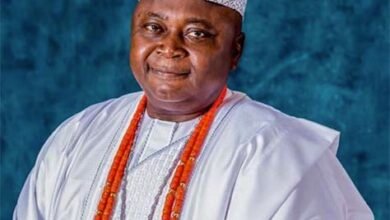
Greed, despotism, and selfishness have become the defining indictment leveled by critics and estranged political associates against Gboyega Oyetola, portraying him as a leader whose approach to power contracts rather than expands the circle of trust. Greed is invoked to capture a politics of accumulation, where access and reward are hoarded instead of circulated, reducing party stewardship to a balance sheet of personal gain. Despotism is alleged in the style of control, a governance reflex that substitutes command for consensus and treats dissent as disloyalty to be excised rather than difference to be managed. Selfishness completes the triad, describing a leadership calculus in which the preservation of one man’s dominance outweighs the survival of the collective, turning a political party into an extension of personal will. Together, the three words frame Oyetola, in the mouths of his accusers, as the embodiment of a politics that takes more than it gives, rules more than it listens, and keeps more than it shares.
The loudest indictments against Gboyega Oyetola are no longer coming from opposition podiums. They are coming from men who once sat in his cabinet, ran his campaigns, and staked senatorial ambitions on his victory. Except for Ajibola Famurewa, his 2018 campaign Director-General, some associates like ex-commissioners Bamisayemi and others, including Jamiu Olawumi, Aleem Bakare, Taiwo Akeju, and Yemi Lawal, have since defected. One thing common to them is that the portrait is strikingly uniform.
In their accounts, Oyetola is the architect of Osun APC’s implosion, and the tools of that unraveling are alleged greed, selfishness, and despotic control. These remain allegations, unverified and denied by implication, but they now form the political brief defectors use to justify walking away from a party they once built’
After becoming Minister of Marine and Blue Economy, Oyetola was allegedly advised by party elders to broaden his appointment net and use federal slots to heal a party wounded by the 2022 loss. Former allies claim he did the opposite. Out of about 29 federal positions linked to him, critics allege Oyetola “alone appointed twenty-six,” with slots concentrated among “his cousins, his town people, and Oba of his town.” Famurewa says the rest who worked for the lost 2022 election and Oyetola’s ministerial emergence were “left helpless.” For the ex-commissioners who defected, that rationing of reward turned loyalty into a one-way street. Interpretatively, defectors frame this as greed, but not cash greed. It is political oxygen. When appointments become dynastic, the party suffocates. A structure that cannot feed its base will not fight for it, which is why, in their telling, APC “became a pariah party in the state.”
Yet to the beneficiaries and loyalists who staff his network, Gboyega Oyetola represents the opposite of greed, despotism, and selfishness, embodying instead strategic generosity, decisive leadership, and principled loyalty to a cause. They read his consolidation not as hoarding but as safeguarding scarce opportunities for those who stood with the party through loss, arguing that reward must follow sacrifice if political structures are to survive. What critics call despotism, they defend as discipline, the firm hand needed to halt internal sabotage and restore order after defeat, insisting that a house divided cannot win and that cohesion sometimes demands hard choices. And where others see selfishness, they see selfless protection of a political family, a leader who shoulders the cost of tough decisions so his people can advance, using access to open doors that had long been shut to them. In their telling, Oyetola is not taking from the party but giving to it through stability, structure, and the refusal to surrender its soul to indiscipline.
Between these allegations and counter-allegations lies the question that refuses to disappear: where does truth lie? The same actions are cast as plunder by one camp and prudence by another, as tyranny to some and necessary order to others, as self-interest in one mouth and self-sacrifice in the next. Interpretation has replaced evidence, perception has eclipsed record, and the contest over Oyetola’s character has become a contest over meaning itself. Facts are sacred, yet in a climate where loyalty defines what counts as fact, the sacred risks becoming subjective, and the space between charge and defense grows wider than the party it seeks to describe.
His accusers, no doubt , fortified themselves with facts and figures difficult to be disputed by Oyetola himself . The circulating document tagged “Political Federal Appointees in Osun (All in Oyetola’s Hometown and Camp)” is more than a list of names. It is a map of power, and at its center sits Alhaji Gboyega Oyetola, Honourable Minister of Marine and Blue Economy. What critics describe as selfishness, despotism, and greed is not abstract. It is expressed in how federal office, presidential access, and ministerial leverage are being converted into a closed political system that sidelines other leaders with impunity. The allegation is blunt: Oyetola is using his relationship with the President and his cabinet seat to build a personal empire, not a state party.
For critics, the charge of selfishness is visible in the structure of the 26-man list itself. From Marine and Blue Economy down to NIMASA, NPA, NIWA, FCC, RMAFC, NPC, CSC, NASC, SWDC, FHA, OORBDA, and multiple Governing Councils, the posts are occupied by one camp. Mr. Bola Oyebamiji runs NIWA as Managing Director while already tagged “Governorship Candidate” in handwriting on the document itself. Alongside him, Engr. Adeyemi is ED Operations at NIMASA, Engr. Lekan Badmus holds the same at NPA, and Mr. Adeniran Aderogba is CEO of the Regional Maritime Development Bank. Similarly, Dr. Charles Akindiji is MD of SWDC, Hon. Ayo Omidiran chairs the Federal Character Commission, and commissioners include Hon. Nike Omoworare at SWDC, Mr. Dayo Eluyemi at FCC, Mr. Oladele Gboyega at RMAFC, Hon. Amidu Tadese at NPC, Hon. Taiwo Oluga at NASC, and Dr. Festus Olowogboyega at CSC. In the same vein, Engr. Remi Omowaiye is ED Projects at FHA, Engr. Kayode Sowade at OORBDA, Mr. Dayo Babaranti at the Nigerian Agricultural Insurance Corporation, while Prof. Taiwo Olaiya, Hon. Rotimi Makinde, Dr. Obawale Adebisi, Mr. Segun Fanibe, and Hon. Bosun Oyintiloye chair or sit on Governing Councils. Because of this concentration, the Ministry, the ports, the waterways, and the regulatory commissions answer to one address, and that address is not Osun State Secretariat but Oyetola’s country home. Moreover, the inclusion of Engr. Kayode Adereti as “Deputy Governorship Candidate” on a federal appointee list, plus Mr. Sunday Akere as Osun Renewed Hope Ambassador feeding into 31 LGA and 332 Ward Renewed Hope Ambassadors, shows how public appointments are being warehoused for electoral machinery, leaving Ife, Ijesa, Ede, Iwo, and Osogbo locked out of federal access.
Consequently, the allegation of despotism flows from how dissent has been managed since Oyetola lost the governorship in 2022. The party leadership loyal to him expelled 84 members and suspended another 26, including former SSG Moshood Adeoti, ex-Speaker Najeem Salami, ex-party chairman Adelowo Adebiyi, and former commissioners Adelani Baderinwa, Sikiru Ayedun, and Senator Mudasiru Hussain. Rather than rebuilding a coalition, critics argue, Oyetola chose decree. Federal Character, created to stop sectional dominance, is now chaired by Hon. Ayo Omidiran from the same circle, turning the safeguard into a symbol of the capture. With proximity to the President as currency, Oyetola’s brand of autocracy does not require electoral mandate or grassroots negotiation. The appointments prove the method: offices go not to the most capable but to the most connected. As a result, when Mr. Bola Oyebamiji can be NIWA MD and anointed governorship frontrunner simultaneously, and when federal boards become rewards for loyalty, the message is that the President’s ear outweighs the party’s constitution. Therefore, Aregbesola’s public apology and call for restructuring were met with expulsions, not inclusion, and former commissioner Baderinwa’s words remain the indictment: “they decided to make the issues we raised as non-issues and eventually went ahead to criminalise us as anti-party people.”
From this pattern, the charge of greed emerges, tied directly to the 2026 endgame. The federal network is being fused into a campaign vehicle, with Oyetola as Osun APC leader hosting elders and stakeholders in Iragbiji to “intensify grassroots mobilisation,” while the names on federal lists mirror the guest list of those strategy sessions. Thus, the embedding of “Renewed Hope Ambassadors” at every ward level exposes the design: agencies that control contracts and federal presence are staffed by loyalists whose primary debt is to one patron, not to merit or national balance. Even his former deputy is forced to contest against a structure already staffed and resourced from federal appointments. In this way, Marine and Blue Economy, NIWA, NIMASA, NPA, and the Regional Maritime Development Bank form one corridor of influence, each post reinforcing the next. The cost is a party that is deep but narrow, a structure that reaches 332 wards yet estranges former commissioners from Oyetola’s own cabinet who have now defected. Because loyalty to one camp has become the only route to Abuja, other leaders are sidelined not by debate but by exclusion from the federal pipeline.
Ultimately, critics argue that Oyetola’s relationship with the President and his position as Minister are being leveraged to operate above party checks. The outcome of concentrating NIWA, NIMASA, NPA, FCC, RMAFC, NPC, CSC, NASC, SWDC, FHA, OORBDA, and multiple governing councils in one camp is a party that is smaller, not stronger. The outcome of expelling 84 and suspending 26 while unveiling 332 ward ambassadors is control without consent. The outcome of positioning Bola Oyebamiji and Kayode Adereti through federal posts is a ticket built on patronage, not primaries. If August 15 is the next test of Osun APC’s viability, the party goes into it with a Minister who controls the ports but not his party, with appointees who run agencies but not the wards, and with a list that critics say justifies every charge of a leader who takes more than he gives, rules more than he listens, and keeps more than he shares
One of the critics alleges that Oyetola first signaled he would run for governor in 2027, then dropped the ambition and anointed Bola Oyebamiji, informing only his cabal. The motive, he claims, was to “become the minister and still be controlling the state,” a plan that would be “impossible with Omisore.” To achieve it, heavyweight aspirants were allegedly cleared out. Former Deputy Governor Benedict Alabi, Senator Babajide Omoworare, Iyiola Omisore, and SAN Kunle Adegoke were sidelined.
Omisore’s disqualification is cited as emblematic: ward executives who signed his form were allegedly declared non-members despite prior revalidation and Abuja acknowledgement. The selfishness label sticks for defectors because the process is seen as designed for one outcome: install a proxy, not run a contest. In a state the APC lost in 2022, they argue the priority should have been unity tickets and reconciling Aregbesola’s bloc. Instead, the allegation is that Oyetola chose control over coalition. Selfish interest, in this telling, trumps electoral arithmetic, and that is why men who fought Aregbesola for Oyetola now say Oyetola “messed him up.”
The third pillar for defectors is method, how decisions are allegedly made. Famurewa describes Oyetola’s government as a “three-man show” with himself, then-Finance Commissioner Oyebamiji, and then-Works Commissioner Remi Omowaye. Advice to run an inclusive government was reportedly rejected once those two disagreed, and the adviser would be “tagged an enemy or supporter of Aregbesola.” The Commissioner for Local Government is also named in the inner ring. That pattern, defectors allege, followed him to Abuja. As minister, he is accused of appointing “without any consultation with other leaders” and removing names if loyalty was doubted. At the party level, the claims are starker: 2am calls cancelling primaries after aspirants spent N5m, tickets reassigned without contests, and forms voided on grounds party men call “not genuine.” For those who left, despotism here is not military. It is administrative. It is the quiet power to exclude, to unmake, to narrow the room until only echoes remain. “Everything they are doing there is autocratic not democratic,” Famurewa wrote in his resignation. When process looks performative, members stop competing and start leaving.
To defectors, despotism is also measured in distance. Oyetola is described as unreachable, not attending social functions, moving by helicopter, not visiting towns for day celebrations, not picking calls from ex-commissioners. Aleem Bakare adds a personal charge: no condolence call after his mother and wife died, though other politicians sent delegations. Severance is another sore point, with allegations that Oyetola collected his own, his wife’s, Oyebamiji’s, and his deputy’s, “leaving others to their fate.” In Osun politics, empathy is infrastructure. A leader who is absent in grief is absent in war. Thus, the “despot” label among former associates is fueled less by policy than by presence, or the lack of it.Put together, the defectors’ allegations cast Oyetola as architect in three ways. He allegedly centralized reward, creating a class of political have-nots who now see defection as rational. He allegedly personalized succession, choosing a proxy over a primary and triggering fresh factional lines. He allegedly institutionalized exclusion, running government and party through a cabal and dismissing dissent as disloyalty.
The result is a party at war with its own memory. A DG who sacrificed a senate bid now says he was “kept at arm’s length.” Ex-commissioners who served in his cabinet say there is no room for advancement outside the inner circle. A campaign that won in 2018 produced a party that lost in 2022 and is splintering before 2026.Oyetola’s defenders would argue that he retains Tinubu’s trust, and that trust is currency in Abuja. Critics among the defectors counter that it is borrowed power funding private ends. If the allegations of greed explain why the base is hungry, and selfishness explains why the ticket is narrow, then despotism explains why the room is empty. Autocracy wins primaries. It rarely wins governorships in Osun. And when the architect builds only for himself, the house eventually falls on the party.Note: This article is based on allegations and accounts provided by former APC members including Ajibola Famurewa and other named ex-commissioners. Gboyega Oyetola and others named have not publicly responded to these specific claims at the time of writing. The accusations remain unverified and are presented here for interpretative analysis of the internal crisis..