
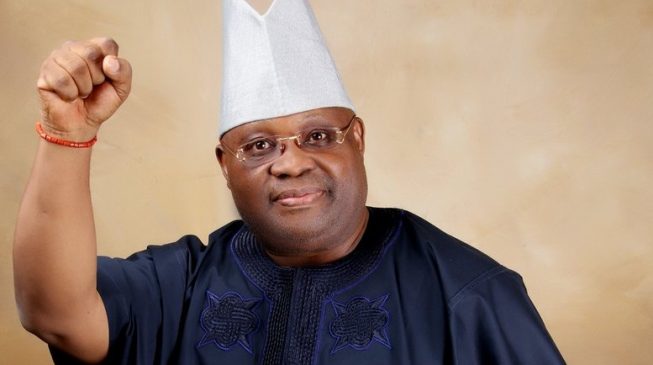
Osun State has existed since 1991, but the Adeleke name has been in its public life for longer. Raji Ayoola Adeleke served in the Senate in the Second Republic. His son Isiaka Adeleke became Osun’s first civilian governor in January 1992 and later held the Osun West senatorial seat until his death in April 2017. Months after, his brother Ademola Adeleke won that same Senate seat in a by-election, and in 2022 he was elected governor for a four-year term. Three men, one town, one family, and four decades of high elective office between them. That concentration is not illegal. It is not unique in Nigeria. But it does raise a structural question that voters in any democracy eventually ask: when power keeps returning to the same household and the same hometown, what happens to political competition, to the circulation of elites, and to the idea that a state belongs to all its parts?
What did those years in office deliver? Isiaka Adeleke’s governorship ran from January 1992 to November 1993, when the Third Republic was cut short by the Abacha takeover. That window was too brief for long-term projects to mature, and the records from that era are sparse. The more recent data belongs to Ademola Adeleke’s tenure from November 2022. Since then, Osun’s FAAC receipts have climbed sharply, driven by subsidy removal and exchange rate unification. From Q4 2022 through Q2 2026, the state has collected over one trillion naira in gross FAAC. In the same period, the state government has commissioned roads, revamped primary health centers, and launched an infrastructure plan . Debt Management Office figures show Osun’s domestic debt dropped from 148.37 billion naira in December 2022 to 122.24 billion naira by March 2025, while external debt remains serviceable. Although there are measurable shifts in the state infrastructure ,they do not erase the infrastructure deficit built over 30 years.
Nearly four years later, that light has dimmed under a cloud of allegations that have come to define his tenure: a family dynasty tightening its grip on appointments from Works to Budget and Planning, major “Infra Plan” contracts awarded without competitive bidding to allies, windfall FAAC revenues managed behind late and opaque budget reports, mass sackings of workers and monarchs by Executive Order, renegotiated mining deals whispered to favor his inner circle, and palliatives distributed through party structures rather than need. For a governor who campaigned against impunity, the charge sheet now reads like a betrayal of “Imole” — nepotism, secrecy, and a blurring of the line between state power and family empire.
Governor Ademola Adeleke’s administration has drawn sharp criticism over what many see as entrenched nepotism, with key state roles dominated by members of his immediate and extended family. Beyond holding the governorship, Adeleke also serves as Commissioner for Works, while his brother Dr. Deji Adeleke chairs the Advisory Council alongside Yeye Dupe Adeleke as co-chair. The arrangement extends to two designated “First Ladies” — Títí Adeleke for administration and Ngozi Adeleke for academics — and cuts across finance, planning and local governance with Adenike Folasade Adeleke as Commissioner for Federal Affairs, Prof. Maruf Adeleke overseeing Budget and Planning, Tunji Adeleke chairing the local government commission, and Gbolahan Adeleke as Special Adviser on Government House Affairs. Even sports and public funds are not exempt, with David Adeleke named Chairman of the Osun Sport Trust Fund. The concentration of political and fiscal authority within one family raises serious questions about merit, transparency, and the use of Osun taxpayers’ money, suggesting a governance model where public appointments function less as vehicles for service delivery and more as instruments for dynastic control.
The most persistent charge is that Osun is being governed like a family compound. Opposition parties and civic voices have repeatedly pointed to a pattern of appointments that keeps cabinet seats, board chairmanships, and agency headships within the orbit of the Adeleke family and its long-time business allies. The defense from government is always the same: loyalty and competence are not crimes, and the governor is entitled to work with people he trusts. Yet trust is not the standard the Public Service Rules demand. Merit is. When the “Ede factor” becomes shorthand for who gets what, the perception of a state captured by kinship takes root, and perception in politics is a form of reality. A government that campaigned against impunity cannot dismiss this as propaganda when the optics suggest a narrowing of the state to a family project.
From Ede to Ilesa, the same whispers now trail his convoy: who really runs this government, whose pockets are being lined, and whether the line between state power and family empire has been erased. These are not yet court convictions, but they are the allegations that have defined the Adeleke years, and a government that promised daylight owes the public answers before the shadows harden into legacy.
Financial management has become another front. Critics have flagged the pace and detail of budget performance reports, questioning whether the public can truly track how grants, allocations, and loans are moving. The APC alleged in 2024 that fresh loans were taken without disclosure, a claim the government denied by pointing to debt restructuring rather than new borrowing. The dispute itself reveals the problem: in a FAAC-rich season, accountability should be easier, not harder. When IGR is rising and debt is supposedly untouched, the books should be wide open. That they are not, or that the publications come late, feeds the suspicion that windfall revenue is being managed as political capital rather than public trust.
The fact that Osun State still draws more than 80 percent of its revenue from Abuja proves the old rule has not changed. Dependence on the Federation Account is not just a line in the budget. It is a way of governing, and its effects appear long before the next monthly allocation lands. When a state lives on federal transfers, planning horizons shrink to thirty days, IGR reform gets postponed because taxing locals is politically costly, and every capital project becomes a hostage to oil prices and exchange rates set far from Osogbo. Commissioners spend more time chasing allocations than building revenue, contractors pause work when FAAC dips, and citizens begin to see government as a distributor of Abuja’s money rather than a creator of local value. Accountability thins out in that setup because a governor who raises only a fraction of what he spends can deflect blame upward. The deeper cost is autonomy. As long as Osun’s schools, hospitals, and roads rise and fall with decisions made in the capital, the state will remain a spectator in its own development, and no amount of political pedigree can change that math.