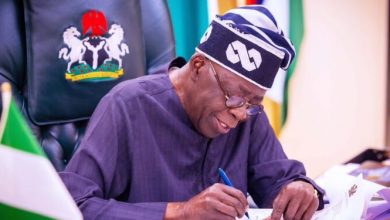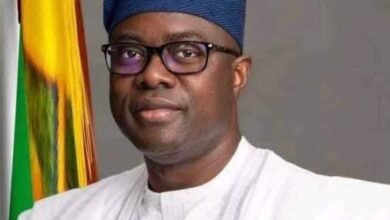


Nigeria’s electricity sector is a chain where every link is cracked. Generation can’t get gas and gets underpaid. Transmission wheels what little is produced on a grid so fragile that one snapped line can black out the country. Distribution companies lose nearly half of what they push out to theft, poor networks, and customers who refuse to pay for darkness. The bulk trader, NBET, is broke because DisCos remit 40 kobo on the naira, while the regulator, NERC, is trapped between tariffs that must rise and a public that will protest if they do. Rural Electrification brings solar to villages only to see panels stolen or batteries die without replacement. That is the landscape Adebayo Adelabu inherited in August 2023 as Minister of Power.
Adelabu came in selling himself as a banker who understands cash flow. His diagnosis was simple: the sector is starved of investment because it doesn’t collect enough money, and it doesn’t collect because service is poor. His prescription followed that logic. Push service-based tariffs so DisCos can ring-fence Band A customers who get at least 20 hours a day, then use that revenue to cross-subsidize the rest. Force DisCos to meter those Band A feeders, bring in the Siemens Presidential Power Initiative to fix transmission bottlenecks, and chase embedded generation so states and industries stop waiting on the national grid.
In practice, the initiatives have been a mix of speed and friction. The Band A tariff hike to 225 naira/kWh in April 2024 shocked the system, but collections from that band jumped. For the first time, some DisCos had cash to pay NBET closer to 100%. He got TCN to fast-track mobile substations and cleared key transmission lines like the 330kV Gombe-Damaturu-Maiduguri link that had been down for years. Under him, the Electricity Act 2023 was operationalized, allowing states to run their own markets. Lagos, Edo, and Oyo began building state grids. He also pushed the pivot to renewables, backing REA’s mini-grid rollout and signing deals for solar plants to take pressure off the grid.
Yet the limitations are just as loud. The national grid collapsed more than six times in 2024 alone. Nigerians don’t remember mobile substations. They remember sitting in heat during grid collapses and then getting higher bills the next month. That is why “Minister of Darkness” stuck. Adelabu controls policy and the ministry, but he doesn’t own the wires. TCN is underfunded and bureaucratic. DisCos are private and debt-ridden. GenCos won’t run plants if NBET can’t pay. NERC can approve tariffs, but the President can freeze them. So the Minister ends up announcing megawatts that the grid can’t wheel and customers can’t afford.
This is where interpretation matters. The recurring problem in Nigeria’s power sector is not generation capacity, or gas, or rainfall. Those are symptoms. The disease is misaligned incentives and shared blame. GenCos blame NBET for debt. NBET blames DisCos for non-remittance. DisCos blame NERC for low tariffs and customers for theft. TCN blames budget shortfalls. NERC blames government for political interference. And the Minister blames “decades of neglect.”
So who do we blame? The honest answer is the structure, not a single man. The 2013 privatization sold distribution to investors who had no money to upgrade the networks and no political cover to enforce payment. It left transmission in government hands without commercial discipline. It created NBET as a stopgap that became permanent. Adelabu walked into a market where nobody trusts anybody. He can raise tariffs, but he can’t force DisCos to meter every house. He can commission transformers, but he can’t stop communities from vandalizing them. He can sign Siemens contracts, but he can’t make states grant right-of-way in 48 hours.
Where Adelabu deserves scrutiny is execution and messaging. The Band A policy makes sense on paper, but the rollout was messy. Many customers were migrated to Band A without 20 hours of supply, which broke trust again. His ministry communicates megawatts added, not hours enjoyed. Nigerians don’t live in capacity. They live in experience. Also, his focus on big federal projects sometimes overshadows the Electricity Act’s promise. If states are now empowered, the Minister’s job is to be an enabler, not a contractor. The slow pace of getting state markets off the ground is partly on his ministry.
But to lay the sector’s failure at Adelabu’s feet alone is to misunderstand the game. He has been minister for just over two years. The grid he runs was built in the 1960s. The tariff gap he’s closing was created by 10 years of frozen rates. The gas debt predates him. The DisCo balance sheets were insolvent before he was sworn in. You can fault his political capital. He came from banking, not from PHCN or NERC, so he lacks the technocratic priesthood that shielded past ministers. His two failed governorship bids mean opponents call him unelectable, and that weakens his ability to push hard reforms through the National Assembly or state governors.
The blame, then, is distributed. The Federal Government is culpable for not funding TCN properly and for using electricity as a subsidy tool every election cycle. NERC is culpable for weak enforcement and for approving performance agreements with DisCos that were never realistic. DisCos are culpable for under-investing and for years of estimated billing that killed customer trust. GenCos are culpable for signing PPAs without firm gas contracts. Customers are culpable for bypassing meters and beating up staff. And yes, the Minister is culpable when his reforms are tone-deaf or when he overpromises.
Adelabu’s initiatives prove that the sector responds to cash and accountability. Band A collections showed that when people get power, many will pay. Siemens mobile units showed that bottlenecks can be cleared if procurement is fast. His limitations prove that no minister can outrun a broken structure. Until DisCos are recapitalized or re-privatized, until TCN is concessioned or commercialized, until tariffs reflect cost and government funds the social portion transparently, the grid will keep collapsing and the Minister will keep trending for the wrong reasons.
The recurring problem is orphaned responsibility. In Nigeria’s power sector, everyone has an excuse and no one has the final buck. Adelabu owns the microphone, so he gets the blame. But the darkness is older than him, and it will outlast him unless the rules of the game change. The real test of his tenure isn’t whether he avoids the “Minister of Darkness” tag. It’s whether he can force the sector to a point where the next minister inherits a market, not a maze.