NGX at N160 Trillion: A Bull Market Built on Three Engines and Exposed by Thin Depth

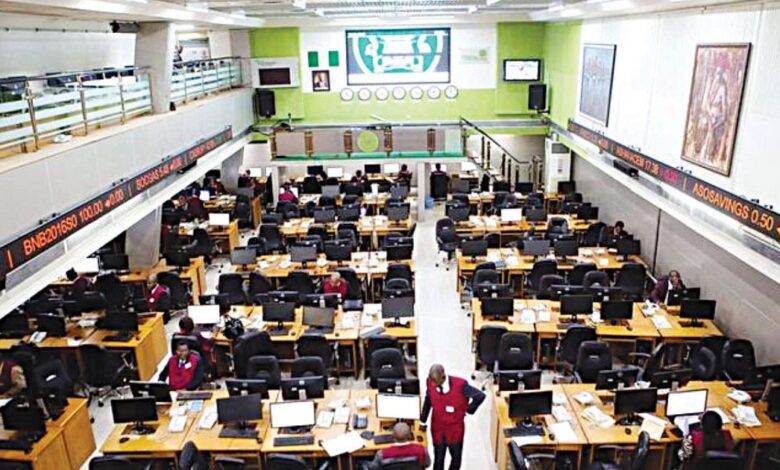
Nigeria’s equities market closed the trading week ending September 18, 2026 in uncharted territory, with market capitalisation crossing N160 trillion and the All-Share Index closing at 249,804.56 points after a 1.42 percent gain on Friday. The market has now advanced for seven consecutive sessions and year-to-date return has reached 60.53 percent, with 36 advancers against 22 decliners on the day, suggesting breadth. Yet the Proshare data underneath the celebration shows a rally that is both powerful and precariously narrow, driven by a handful of large movers while being qualified by weak liquidity and emerging weaklings.
The most visible movers were MTNN, which surged 9.20 percent to N890.00, WEMABANK which jumped 9.03 percent to N32.00, and FIRSTHOLDCO which rose 8.11 percent to N160.00 and printed a new 52-week high above its previous N149.95. These three names tell the story of what investors are betting on. MTNN is rallying because foreign exchange conditions have modestly improved, with the BDC rate appreciating to N1,390 per dollar from N1,395 and the NFEM rate firming to N1,331.20, narrowing the parallel market premium. For a company with huge dollar-denominated obligations and heavy import of network equipment, FX stability directly improves earnings visibility. The banks, on the other hand, are riding the recapitalization wave. First HoldCo’s record price reflects the market’s repricing of Femi Otedola’s 27.6 percent controlling stake now valued above N2 trillion, and the expectation that the bank will successfully raise fresh capital and deploy its vast deposit base and branch network. Wema Bank’s surge mirrors the same logic for mid-tier banks aggressively pushing digital retail. Supporting the advance were other financials like GTCO at N130.00, STANBIC at N153.00, ZENITHBANK at N128.40 and FIDELITYBK at N19.10, alongside industrials such as DANGCEM at N1,050.00, DANGSUGAR up 1.63 percent, and BUAFOODS at N760.60. These industrial names are being used as inflation hedges at a time when broad money supply has hit N139.38 trillion, up 16.4 percent year-on-year, forcing investors to seek real assets that can pass through price increases.
The defining feature of the session, however, was SEPLAT at N14,907.80. It alone accounted for N67.51 billion of the N96.91 billion total value traded, or 69.67 percent of all value. Total volume actually collapsed by 52.68 percent to 526.01 million units across 44,293 deals, with MBENEFIT leading volume with 76.64 million units but negligible value. This means the market is not rallying on broad participation. It is rallying on block-driven value in one oil stock while depth outside that line is thin. The Proshare note that the float-adjusted total-return index rose 1.98 percent compared to 0.84 percent for the cap-weighted measure confirms that the few freely tradable large caps are doing the heavy lifting.
That thinness exposes the weaklings. TRANSPOWER closed at N178.00 and CADBURY at N53.00, both below their 52-week lows, despite a generally bullish market. TRANSPOWER’s decline is particularly instructive. Despite belonging to the much-talked-about Transcorp power group, the market is punishing it for unresolved structural issues in the power sector — gas supply constraints, grid evacuation limits, tariff shortfalls, and delayed receivables from distribution companies. Investors are choosing telecoms and banks over power because power cash flows remain regulated and uncertain, even when headline generation improves. CADBURY’s fall reflects the opposite side of the economy. Consumer goods companies are facing compressed purchasing power, high input costs, and an inability to fully pass through FX costs to consumers. While banks benefit from high interest rates, consumers and the companies that serve them suffer.
The factors responsible for this divergence are threefold. First is excess domestic liquidity searching for scarce quality assets. With net domestic assets rising by N925.5 billion in a single month and overnight and open repo rates at 22.24 percent and 22.00 percent respectively, real returns on fixed income remain unattractive for many local investors, pushing them into equities as a hedge against money supply expansion. That is why equity market capitalization at over N160 trillion now dwarfs the debt market size at N111.93 trillion. Second is the tentative FX stability narrative. The naira’s firming on both the official and parallel windows, supported by Brent crude holding around $103.70 and WTI around $101.09 after a partial restoration of Saudi pipeline capacity, has calmed foreign portfolio investors and reduced panic dollar hedging that typically triggers equity sell-offs. Third is positioning ahead of corporate actions. The calendar is full of board meetings and AGMs for Sterling Financial Holdings, AXA Mansard, and Red Star Express, and the market is front-running expected dividend declarations and bonus issues, especially in the context of bank recapitalization and the upcoming Dangote Refinery offer at N525.
The outlook into the new week is therefore constructive but fragile. If crude defends the $100 level, FX remains stable, and money market liquidity stays around 22 percent, the ASI can sustain momentum toward the 260,000 mark, supported by continued buying in MTNN, FIRSTHOLDCO and other Tier-1 banks. However, the dependence on SEPLAT for value and the sharp drop in volume means any absence of block trades could expose the lack of depth and trigger a quick retracement toward 240,000. The weaklings will likely continue to lag. TRANSPOWER will need concrete power sector reform and improved collections to recover, while CADBURY and other consumer names will need a recovery in real incomes. For now, Nigeria has a two-speed market where the shakers are liquidity and policy beneficiaries and the weaklings are those tied to the real economy’s unresolved bottlenecks, a reflection not of broad earnings growth but of a N160 trillion market chasing too few investable stories.