N2.15 Trillion on the Table: Dangote Refinery IPO Puts Nigeria’s Market to Its Biggest Test Yet

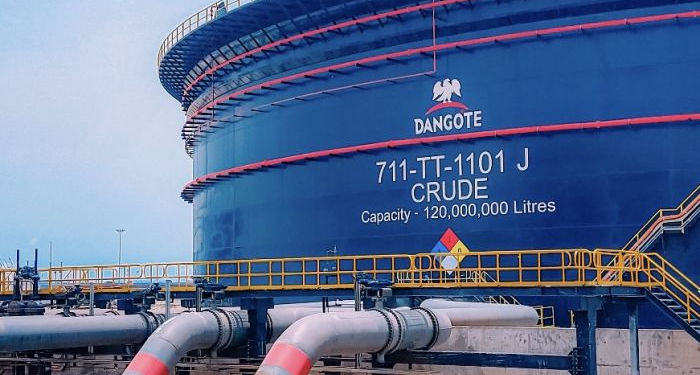
On September 14, 2026, Nigeria’s capital market will face a moment it has never seen before. Dangote Refinery will open books for an Initial Public Offer worth N2.15 trillion, offering 4.1 billion ordinary shares to the public at N525 per share.
The numbers alone tell the story. At N525 per share, the offer values the entire float at N2.15 trillion, making it the largest IPO in Nigerian capital market history by value. For context, that single transaction is almost 9x the size of the NGX’s average monthly equity turnover in 2025. The structure is straightforward: 4.1bn shares are being offered to retail investors, domestic institutions, pension funds, insurance companies and asset managers. If fully subscribed, the refinery will instantly become one of the heaviest weights on the NGX and create a new liquid, large-cap proxy for Nigeria’s industrial and energy future.
This is not just another listing. It is a direct test of market depth. Coming after a year where the NGX All-Share Index has gained 56.19% YTD, the offer will ask investors to decide: do we recycle gains from existing stocks to buy into a new national champion, or do we sit out and risk missing the anchor asset of the next decade? The success of subscription, the quality of institutional demand, and the stability of the listing price will determine whether this IPO expands the market or strains it.
Our findings show that investors are already positioning ahead of the offer, and the market felt it last week. The NGX ASI declined 1.60% week-on-week to close at 244,802.11 points as of September 11, with 17 of 22 major indices closing lower. The pullback was sharpest in liquid names. The Total Return Float-Adjusted Index fell 2.50% WoW, compared to a 1.55% drop in the Market Cap-Weighted Index. That suggests profit-taking in the stocks institutions and foreign investors trade most, likely to free up cash for IPO subscriptions. Despite the weekly decline, the market’s year-to-date strength remains intact. The Total Return Float-Adjusted Index is still up 76.45% YTD, the ASI is up 56.19%, and the Market Cap-Weighted Index is up 45.63%.
Sector rotation also tells the same story. Banking fell 4.07% on the week, Insurance dropped 5.52%, Industrial Goods declined 3.36% and Consumer Goods lost 2.55%. Yet Banking still holds a 66.82% gain YTD, indicating this is profit-taking, not panic. On the flip side, Oil and Gas gained 2.83% WoW to extend its YTD return to 117.86%, while the Commodity Index added 2.19% to reach 60.90% YTD. Sovereign Bond, Dividend Yield and MERI Value indices also posted modest gains. Industrial Goods, Banking and the Premium Index have all delivered over 60% YTD, while the Growth Index remains negative at -4.06%. The pattern is clear: investors are favoring earnings visibility, pricing power and liquidity, and stepping away from counters under margin pressure.
The Dangote offer is not the only catalyst. One week later, on September 21, Nigeria returns to the FTSE Russell Frontier Market Index Series. That reclassification restores the country to a benchmark tracked by passive funds and global frontier managers. In theory it should improve visibility, tighten spreads in eligible stocks, and bring back foreign portfolio flows that have been scarce. In practice, the gains will be concentrated. FTSE-eligible names tend to be the biggest, most liquid and most compliant companies, the same set that just saw the steepest selling.
Taken together, the next two weeks will define the tone for the rest of 2026. The potential is obvious. A fully subscribed Dangote IPO plus FTSE re-entry could give Nigeria the scale, depth and global credibility it has chased for years. It creates a new investable giant and signals that the market can handle mega-deals.
But the risks are just as real. If retail uptake is weak, if institutions struggle to allocate, or if the listing debuts flat because liquidity has been drained from the rest of the market, sentiment could turn quickly. With valuations already elevated and breadth uneven, we expect rotation to continue.
Our outlook remains constructive but selective. The market is no longer rewarding broad momentum. From here, performance will hinge on three things: how much cash the Dangote offer absorbs, how much foreign money the FTSE return brings in, and whether companies can deliver earnings to justify current prices. For investors, the Dangote IPO is more than a transaction. It is the line in the sand between a market that can grow with size, and one that buckles under it.