
Market Pauses for Breath: Profit-Taking Tests NGX Resilience Ahead of Eid-el-Kabir

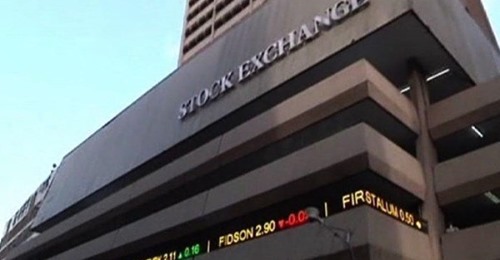
The Nigerian equities market hit the brakes on Tuesday, ending a three-day rally as investors chose to protect gains ahead of the Eid-el-Kabir holiday. The NGX All-Share Index slipped 0.55% to 249,738.84, erasing N888.61 billion in market value in a single session. While the year-to-date return remains a robust 60.49%, the pullback exposed the market’s concentration risk. Heavyweights and mid-caps led the retreat. DANGSUGAR, TRANSPOWER, and TIP each shed nearly 10%, while Fidelity Bank dropped 9.05% and Tier-1 names like GTCO, Oando, AccessCorp, and UBA also closed red. TRANSPOWER’s decline pushed it below its 52-week low at N245.50, underlining how quickly sentiment can shift when traders move to de-risk. Market breadth was firmly negative with 38 decliners against 18 gainers, and both volume and value contracted by 10.38% and 27.22 billion naira respectively. The selloff was broad but orderly, suggesting position squaring rather than panic.
Proshare’s indexes confirmed the weakness, with the market cap-weighted index down 0.61% and the total return float-adjusted index falling 1.20%. The steeper drop in float-adjusted names shows that liquid, widely-held stocks bore the brunt of profit-taking. The NASD OTC market echoed the mood, dipping 0.02% on thin participation despite a pickup in volume to 2.18 million units. This alignment across exchanges points to a market-wide cooling, not a sector-specific rotation. Global cues were unhelpful, with major indices negative and Brazil’s Bovespa leading losers. African markets, however, held up relatively well, hinting at a partial decoupling from developed-market risk-off flows.
In currency markets, a rare divergence emerged. The BDC rate firmed 0.36% to N1,385 per dollar from N1,390, while the NFEM rate softened marginally by 0.04% to N1,375.41. The parallel market’s appreciation into a holiday suggests either improved dollar supply or reduced pre-holiday demand, narrowing the gap with the official window. That convergence, if sustained, eases one of the long-standing distortions in Nigeria’s FX architecture and supports the broader reform narrative that has underpinned equity performance this year. Still, with O/N and OPR rates unavailable at the time of reporting, a full read on short-term liquidity conditions will have to wait until after the break.
Commodities reflected rising geopolitical tension. Brent crude jumped 4.06% to $100.04 after US strikes in Iran renewed concerns over Strait of Hormuz flows, while WTI fell 2.78% to $93.91 as traders priced regional supply differentials. Gold and silver retreated 1.17% and 2.42% respectively, indicating that risk appetite held up despite the headlines. On the domestic front, AFEX data showed maize surging 15.00% to N296.95, a reminder that food inflation risks persist even as broader markets correct.
. The market drop isn’t a crisis. The N889 billion wipeout is technical, not structural. After a 60.49% YTD surge backed by strong Q1 GDP prints and sovereign rating upgrades, the market used the holiday window to lock in profits and reduce exposure to large-caps that have driven the rally. The mild FX convergence and Africa’s relative outperformance provide a constructive backdrop, but thin fixed-income data and weak OTC breadth mean liquidity must be watched closely post-holiday. If buyers return and absorb supply without a spike in rates, the uptrend remains intact. If not, the market may need a deeper reset before the next leg higher.