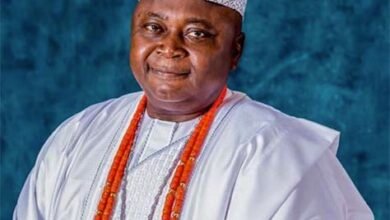
Senator Iyiola Omisore’s decision to remain in the All Progressives Congress now reads as a clear political alignment: to stay put in APC is to decide to support Munirudeen Bola Oyebamiji, popularly known as AMBO, and to line up behind President Bola Tinubu ahead of 2027, despite the controversy that trailed Oyebamiji’s emergence. Omisore, former deputy governor, former APC National secretary ,without any doubt is doing this “in the interest of progress and development of the country in general and Osun in particular”. With the party having settled on AMBO amid complaints from other aspirants . His refusal to defect is itself a statement. He is choosing party over personal ambition at this cycle, and that choice reshapes the risk-benefit map for APC in Osun.
The benefit for APC is immediate and structural. Omisore staying keeps the Ife/Ijesa political axis inside the party tent rather than in rebellion. That axis underperformed for APC in 2022 and contributed to the loss. His presence means APC retains a veteran who understands ward-level politics in Ile-Ife, Ijesa North, Ijesa South, and the rural belts where Adeleke’s PDP has grown strong. He also brings institutional memory. He was deputy governor under Chief Bisi Akande, senator for Osun East 2003-2011, and most recently APC National Secretary. That background gives him credibility with elders and the NWC, and it makes him a useful stabilizer when the controversy around AMBO’s selection threatens unity. By staying, he signals to his own supporters that the party, not the individual, comes first. That helps AMBO, because a fractured Ife bloc would hand Adeleke a clear path. It helps Tinubu 2027, because Osun is a Southwest state the President cannot afford to lose again if he wants a clean regional sweep. Omisore’s decision therefore functions as a ceasefire. He is not lending his structure to Accord or PDP, and he is not filing petitions that could distract the party before the August 8 gubernatorial election.
The risks of staying are personal and organizational. For Omisore, the cost is that he absorbs the anger of loyalists who feel betrayed by the process that produced AMBO. Scores of his supporters, including ex-commissioners Folorunson Bamisayemi and Yemi Lawal, already defected to Accord and declared for Governor Adeleke’s re-election. They cited APC’s refusal to give Omisore the ticket and fielding a “weak candidate”. Every day he stays and campaigns for AMBO, he risks more of his network walking away. He becomes the general who chose the flag over his soldiers. For APC, the risk is legitimacy. If the controversy around Oyebamiji’s emergence is not managed, Omisore’s endorsement looks like elite imposition rather than reconciliation. The party then carries two burdens into the election: an aggrieved base that thinks the ticket was handed down, and an opposition that will frame AMBO as Abuja’s candidate. Staying put helps, but it does not erase the perception problem. It only gives APC a chance to fix it.
This is where Omisore’s strengths become APC’s tools to neutralize its weaknesses and threats. The party lost in 2022 because of internal bickering, weak rural penetration, and a blurred message against Adeleke’s populism. The threats for 2026 are incumbency, defections, and the “dancing governor” narrative that still resonates with voters. Omisore’s politics is retail. He defected from PDP in 2018 and still pulled SDP votes because he works wards, not just headlines. That counters APC’s top-down weakness. Deploying him to lead Ife/Ijesa mobilisation for AMBO puts the party’s best grassroots operator on the exact terrain where it bled in 2022. He is also a cross-party bridge. Having been in AD, PDP, SDP, and APC, he knows the former field commanders who are now uneasy. If APC wants to stop more defections to Accord or PDP, it needs Omisore inside the room making the case for AMBO and for Tinubu’s second term. On message, he gives APC the contrast it lacked. He talks “mature governance, educational improvement, agricultural advancement, rural capital development”. That language lets the party frame the election as competence versus performance, which is the only way to blunt Adeleke’s personal appeal. Finally, as a former National Secretary, he understands the legal and procedural landmines that can follow a contested selection. His public support reduces the threat of internal litigation that could cripple AMBO before the ballot.
To deliver victory to APC, Omisore’s stay must be used, not wasted. The party cannot treat him as a photo-op. He needs a defined, visible role in AMBO’s campaign that his supporters recognize as respect, not tokenism. His structure must be funded and allowed to run the Ife/Ijesa ground game without suspicion from Oyebamiji’s camp. And the party must address the equity grievance that pushed Bamisayemi and Lawal out. If AMBO is framed as “David” against Adeleke’s “Goliath”, Omisore’s endorsement will not be enough. He has to be part of building a “David” that looks like it can win.
The political meaning of his decision is therefore stark. To stay put in APC now is to accept AMBO as the vehicle and Tinubu 2027 as the cause, despite the controversy. It is to take responsibility for healing a party wound he did not inflict, using a reputation he built over 25 years. If APC lets him work, his strengths — structure, crossover appeal, and narrative discipline — directly neutralize the party’s weaknesses of disunity and weak rural reach, and the threats of incumbency and defections. If APC sidelines him, his stay becomes symbolic and the controversy around AMBO festers. Victory in Osun and a clean Southwest for Tinubu 2027 will depend on which path the party chooses. Omisore has made his choice. What APC does with it is the next decision that matters.