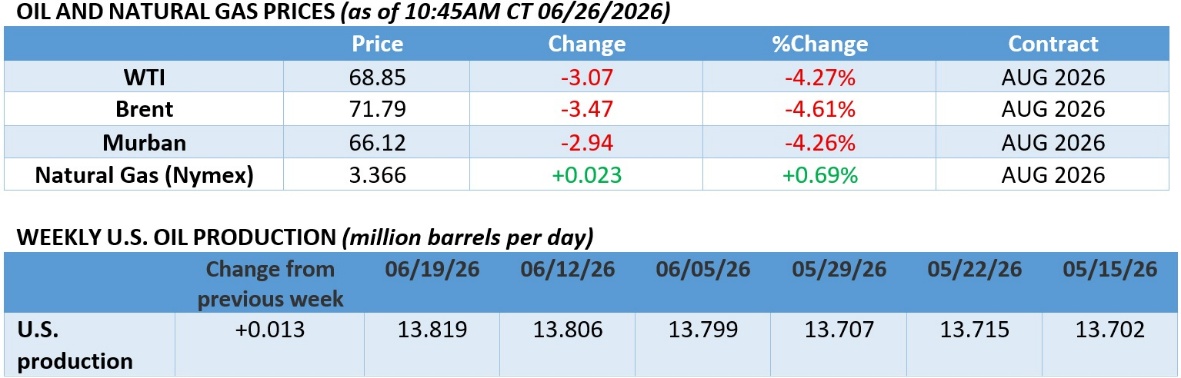
ICE Brent crude closes the week near US$72 per barrel, registering a 10% weekly decline and fully unwinding the war risk premium that had accumulated since the United States struck Iran on February 28. Markets are pricing a gradual Hormuz reopening following a recovery in crude transits to over 16 million barrels across a two-day window. However, volumes remain a fraction of the pre-conflict norm of 130-140 daily transits.
The benchmarks Dubai and Murban have moved into contango, signalling near-term oversupply in Asian markets rather than confirmed demand strength. Residual risks remain structurally material. Iran’s drone strike on the Ever Lovely cargo vessel demonstrates that transit security is not yet stabilised. Iraq’s reported consideration of an OPEC exit, China’s potential resumption of Iranian crude imports within the 60-day US diplomatic window, and Saudi Aramco’s restart of Persian Gulf loadings collectively indicate a supply landscape in active realignment rather than settled equilibrium.
For Nigeria, the simultaneous compression of Brent prices and West African crude differentials compounds fiscal exposure. With comparable grades trading at discounts of US$7 to US$10 per barrel below Dated Brent, Nigeria’s realised crude export revenues are likely tracking below the federal budget benchmark assumption, constraining FAAC distributions, narrowing FX inflows into the official market, and reducing the Central Bank’s capacity to support exchange rate stability or accrete gross external reserves. Inflation transmission through energy and transport costs remains a secondary but live concern, contingent on how domestic fuel pricing absorbs international movements.
Demographics
In the coming week, investors and policy watchers should monitor Brent’s ability to hold support at the US$70 per barrel threshold, the security and pace of Hormuz transit recovery, formal OPEC+ communication on quota positioning following Iraq’s signalled discontent, and Nigeria’s cargo lifting data as a leading indicator of revenue and FX sensitivity.
Oil prices tumble as markets bet on a Hormuz reopening despite slow tanker movements following the U.S.-Iran ceasefire.
Friday, June 26, 2026
Demographics
Whilst ship transits through the Strait of Hormuz remain a fraction of their previous norm (130-140 transits per day), plunging crude oil prices suggest the commodity markets anticipate that flows would start to recover sooner rather than later. The two Middle Eastern crude benchmarks, Dubai and Murban, have flipped into contango, as a temporary period of oversupply is sending ripples across the Asian markets. Logging a hefty 10% weekly loss, ICE Brent will close the week around $72 per barrel, the same level that it was before the US attack on Iran on February 28.
Hormuz Is Starting to Reopen, In Earnest. Crude transits through the Strait of Hormuz rose to the highest weekly tally since the onset of the US-Iran conflict this week, with more than 16 million barrels passing through the waterway this Wednesday-Thursday, raising hopes of a full, gradual reopening.
Iran Fires at Taiwanese Cargo Ship. Raising fears that Hormuz transit could be choked off again, Iran’s IRG fired several drones at the Taiwan-owned Ever Lovely cargo ship, reportedly attempting to cross the Hormuz through ” unauthorised routes, damaging the vessel’s bridge some 7 miles off the Omani coast.
Iraq Might Throw OPEC Under the Bus. According to media reports, Iraq has considered leaving OPEC if the oil group does not allow Baghdad to significantly increase its crude production quotas, currently at 4.378 million b/d, a claim that the Iraqi Oil Ministry subsequently denied as ‘premature’.
China’s State Refiners Eye Resuming Iran Imports. Chinese state-controlled refiners such as Sinopec and PetroChina are considering resuming Iranian oil purchases for the first time since 2019, as the 60-day window granted by the Trump administration may be sufficient to complete several transactions.
Qatar Flaunts Its Return to LNG Markets. Qatar plans to resume normal operations at its Ras Laffan liquefaction plants within the upcoming weeks, seeking to restart the undamaged 12 trains at the world’s largest export plant (2 trains remain damaged) following a four-month-long hiatus.
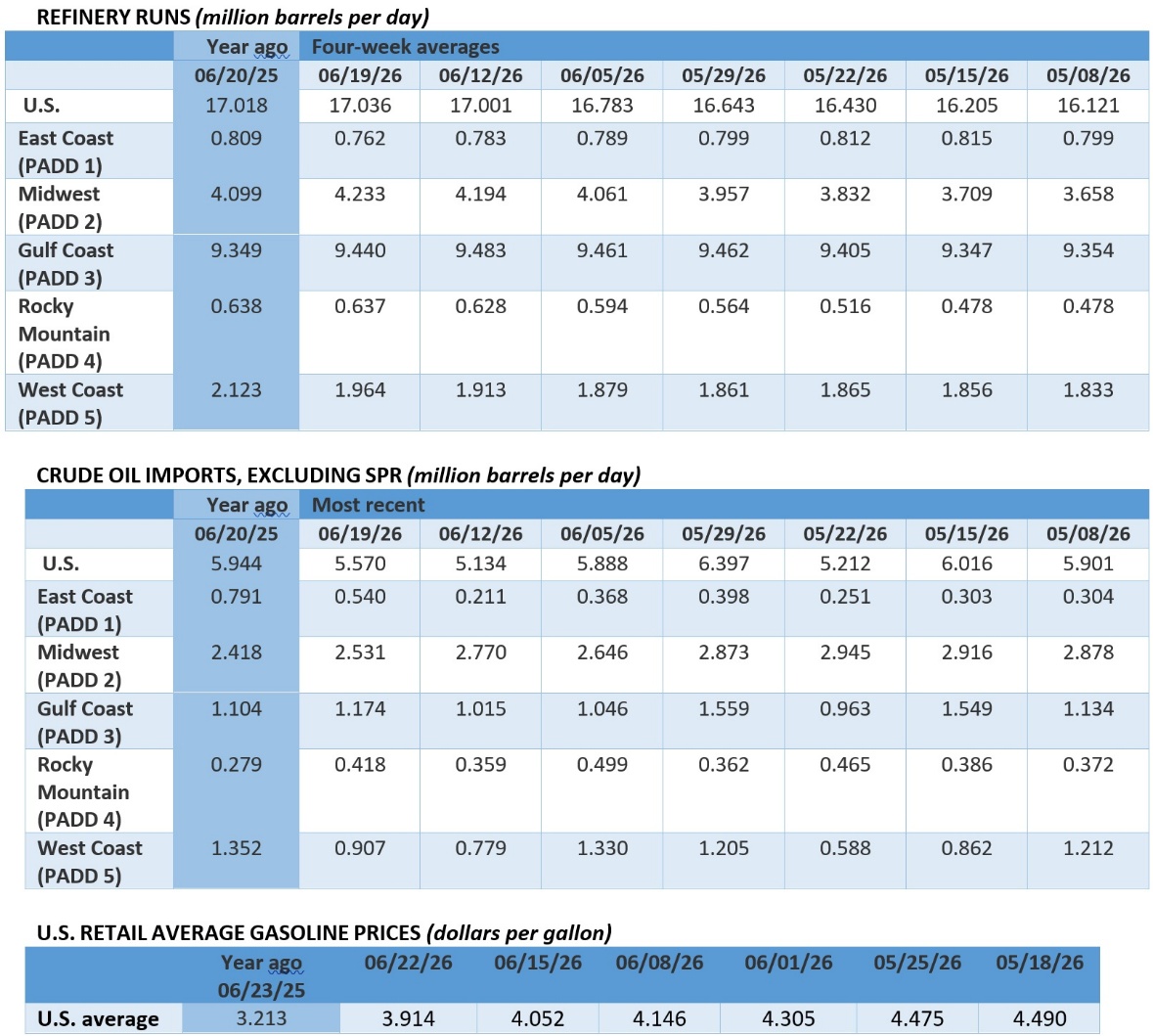
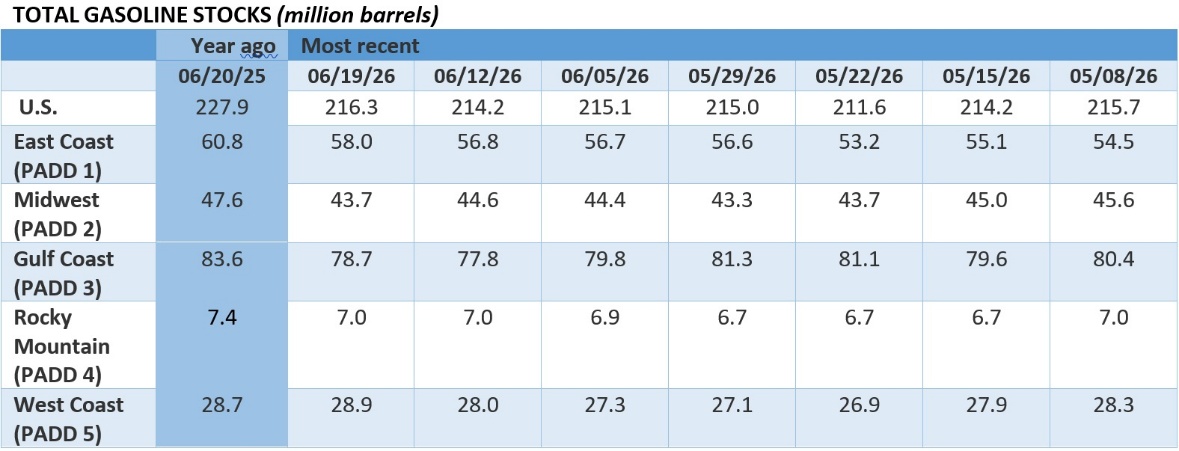
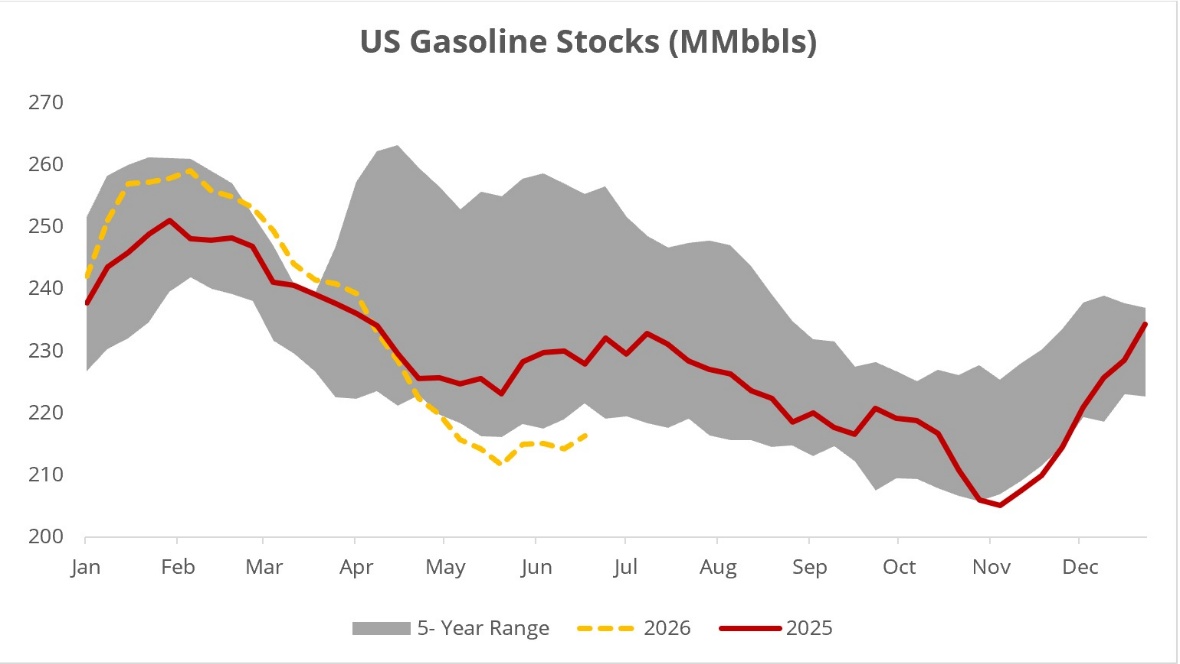
Trump Blames Big Oil for High Gasoline Prices. US President Trump has ordered the Department of Justice to investigate companies’ pricing policies, claiming that American refiners are not ‘dropping their gasoline price at the pump commensurate’ to oil prices, which have dropped like a rock.
Refiners Lost Their Appetite for African Oil. Differentials for West African grades have collapsed to their lowest on record, with Congo’s flagship Djeno crude – once a staple for northern Chinese refineries – now trading at a $ 10-per-barrel discount to Dated Brent, while Angolan grades are at -$7 vs Dated.
Kazakh Oil Output Sapped by Drone Strikes. Kazakhstan’s giant Karachaganak field saw its production curbed by 25%, dropping to 200,000 b/d, after a Ukrainian drone strike on the Orenburg gas processing plant this week reportedly led to a complete halt in operations.
Oman Joins Calls for a No-Toll Hormuz. The government of Oman joined other members of the Gulf Cooperation Council in a declaration rejecting the imposition of tolls in the Strait of Hormuz, assuaging fears that it could lead to a joint transit payment mechanism with Tehran.
Saudi Arabia Restarts Loadings in the Gulf. Saudi Arabia’s national oil company, Saudi Aramco (TADAVUL 2222), has loaded its first two cargoes in the Persian Gulf since the start of the US-Iran conflict in March, using its own Karan and Zaynah VLCCs, adding to the 4 million b/d export flow from Yanbu.
Chinese Metal Traders Await Their Time. As Chinese zinc futures have collapsed in recent weeks and are now trading at a $ 400-per-tonne discount to international prices, around ¥22,000 per metric tonne ($3,235/mt), the country’s zinc traders are preparing a flurry of outflows to ME warehouses next month.
Venezuela’s Deadly Earthquake Spares Oil Production. The 7.2-magnitude earthquake that shook Venezuela this week, resulting in at least 235 casualties so far, has not caused any significant damage to PDVSA’s oil production and refining facilities, despite blackouts in several states.
Russia Mulls Diesel Export Ban. Russia’s Deputy Prime Minister Alexander Novak stated that Moscow is considering a ban on exporting diesel to fuel producers for several months, as Ukrainian drone strikes on Russian refineries have curbed product supply and pushed prices up 9% year-on-year to $4 per gallon.
Gold Prices Plunge on US Interest Rate Hikes. The bullion is on track to mark its 5th straight weekly loss, with spot gold trading around $4,025 per ounce on Friday, as a stronger-than-expected dollar and expectations of US interest rate hikes coming as soon as September weighed on sentiment.
Credit:
The article “Brent Erases Iran War Premium as Hormuz Flows Show Signs of Recovery” was initially published on Oilprice.com on June 26th, 2026

DISCLAIMER
This briefing draws on third-party reporting from OilPrice.com by Tom Kool, dated 26 June 2026, reproduced with attribution, and includes the editorial framing and Nigerian read-across produced by the Proshare EMIU. It is published by Proshare for general information and educational purposes only and does not constitute investment, legal, or tax advice, nor a solicitation to buy, sell, or hold any security, derivative, or commodity contract. Market prices, geopolitical commentary, and operational data cited herein reflect publicly available information at the time of preparation and remain subject to rapid change as events evolve. Forward-leaning observations are intended as calibration tools rather than directional forecasts. Copyright in the underlying article vests with OilPrice.com and the named author. Readers should consult their licensed financial, legal, or tax advisers before acting on any matter referenced in this publication. Proshare and its affiliates accept no liability for any loss or damage arising from reliance on the contents of this report. See our Terms of Use. For feedback and further information,