
I
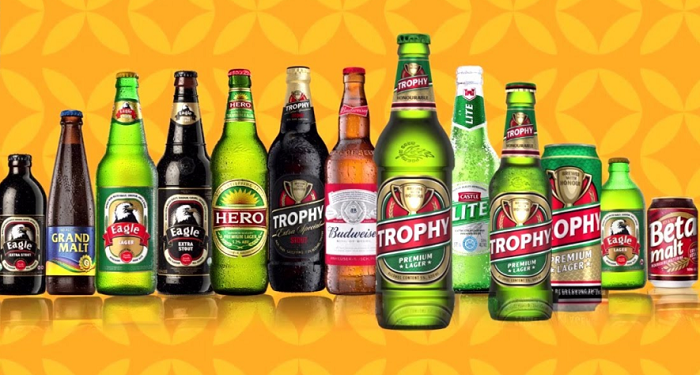
International Breweries Plc just delivered the kind of operational recovery most brewers dream of in this economy. Revenue up 6.8% in Q3, gross profit up 38.9%, operating cash up 215% to N121 billion. Yet profit for the period fell 2.09% in Q3 and 5.74% in nine months to N54.5 billion, and EPS slipped from N0.34 to N0.32. The company made more from selling beer, but less for those who own it. That contradiction is the story of its Q3 2026.
The weakness is not in the brewery, it is in what happens after the beer leaves the gate.
First, tax wiped out operational gains. Profit before tax grew 23.35% in Q3 to N15.6 billion and 21.86% in nine months to N90.4 billion – the best in two years. But income tax expense exploded 119% in nine months to N35.9 billion from N16.3 billion last year. Effective tax rate jumped from 22% to 39.7%. The four new tax laws that took effect in January 2026, which the CFG Advisory warned would test revenue assumptions, are now biting corporates, not just government. INTBREW’s strength of higher finance income, up 93.9% in Q3, and lower cost of sales, down 8% in nine months, was not enough to neutralize this fiscal threat.
Second, cost control stopped at the factory gate. Cost of sales fell 6.88% in Q3, delivering gross profit growth of 38.91% on just 6.81% revenue growth. That is world-class efficiency. But administrative, marketing and distribution expenses rose 39.03% in Q3 to N45.6 billion and 26.13% in nine months to N116.1 billion. The company saved N6.3 billion on cost of sales in Q3, but spent an extra N12.8 billion on admin and marketing. Every naira saved in production was lost twice in distribution, marketing war and overhead inflation. The strength of gross margin expansion failed because it was not carried through to operating leverage.
Third, working capital is deteriorating. Inventories down 13.47% looks efficient, but trade and other receivables jumped 39.54% to N85.3 billion, far faster than 2.13% nine-month revenue growth. That means beer was sold, but cash is stuck with distributors. Deferred tax assets crashed 66.93% from N33.4 billion to N11 billion – the company has burned through its tax shields. The N84 billion return of capital in nine months, which cut share premium by 40.85% and pushed financing outflow up 629% to N99.7 billion, explains why cash fell 33.18% to N103.7 billion despite record operating cash of N114.4 billion. The strength of record cash generation failed to avert a liquidity decline because capital allocation prioritized return of capital over cash retention.
These weaknesses feed three threats that analysts already see.
The first threat is analyst distrust. PAC Research cut INTBREW from Buy to Hold with negative 7.18% expected return, while ARM Research upgraded it to Accumulate with 15.47% upside, the highest in the market this week. That 22 percentage point split on the same stock is rare. It means the recovery story is not credible enough to agree on. When the same company gets both the best and worst brewery rating in one week, volatility is guaranteed.
The second threat is cost-led, not volume-led growth. Nine-month revenue grew only 2.13% to N482.6 billion, but gross profit grew 21.76%. This is not consumers drinking more beer, it is the company spending less to make it. If household real incomes do not recover – which Adebajo’s 7th recommendation to judge reforms by real incomes captures – top-line will remain flat. You cannot cut your way to growth forever.
The third threat is lease maturity bunching. Non-current lease liabilities fell 47.31% but current lease liabilities surged 230.48% to N12.2 billion. Obligations have moved from long-term to short-term, increasing near-term cash calls just as cash balance is down.
Why did strengths fail to exploit opportunities?
The company had clear opportunities: ARM’s 15.47% upside bet was based on margin recovery translating to profit, high interest rates at 17.29% on FGN bonds could be exploited with its N103.7 billion cash pile, and its N370 billion PPE base plus N85 billion capex could drive volume when purchasing power recovers.
But it failed because strengths were deployed in isolation.
The strength of lower cost of sales was not used to fund volume-driving marketing efficiently – instead marketing costs grew faster. The strength of N121 billion cash generated from operations was not used to collect receivables or retain liquidity buffer – instead N84 billion was returned as capital, shrinking the share premium buffer that was meant to absorb future shocks. The strength of being net finance income positive, up 33% in nine months, was not enough to offset a tax regime change that no operational efficiency can fix.
In the end, INTBREW turned retained losses of -N191 billion in December 2025 to retained profit of N54.5 billion by September 2026 through a capital reorganisation, not through sustainable earnings. That is balance sheet engineering, not business turnaround. The brewery fixed its gross margin, but left its net margin exposed to tax, overhead and capital allocation choices.
Until marketing cost growth falls below revenue growth, receivables growth falls below sales growth, and tax planning mitigates the new laws, INTBREW will remain what it is today: a company that brews more efficiently, generates more cash, but earns less for shareholders.