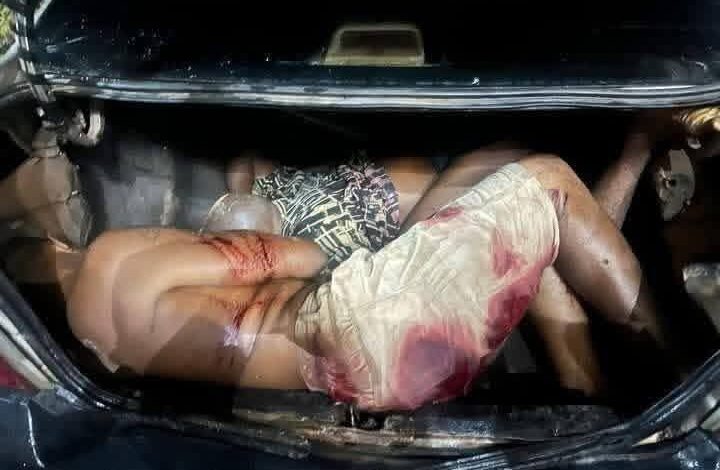
A kidnapping that began with quiet photos of a school run ended three days later in gunfire at Lado community, Ayegun, Ibadan. The Oyo State Police Command’s rescue of a woman and her twin sons on 6th June 2026 was not just a tactical win. It was a window into how modern kidnapping gangs operate, and how intelligence-led policing can take them apart piece by piece.
The syndicate did not stumble into the crime. They built it. For weeks they ran structured surveillance on the family. They tracked daily routines, photographed vehicles, mapped the children’s school environment, and even tried to flip an insider. In May 2026, they approached Segun, a household staff member, attempting to recruit him. That detail matters. It shows a gang that understood leverage. An insider turns a high-risk street abduction into a controlled extraction. When that failed, they adjusted. On 3rd June they moved anyway, using an unregistered ash-coloured Toyota Corolla, the kind of vehicle that disappears into traffic because it has no digital trail.
Inside the gang, roles were defined. Wale Abolalewa, alias “Oloro,” was already on the police watchlist. He was a key member who took part in both planning and execution. His arrest later became the thread that unraveled the entire network. Dare Oyedele, alias “Solution,” was the principal operational link. He handled surveillance, planning, and the mechanics of the abduction itself. Two others, Semiu Ishola, 39, and Adeyemi Ayobami, 35, played a quieter but crucial part. They were the agents who secured and facilitated the criminal hideout at Lado community. Without a safe house, there is no kidnapping economy. They provided that infrastructure. At the hideout, Kelechi served as the lookout. When police stormed the compound at about 7:30 p.m. on 6th June, it was Kelechi who opened fire. He and another unidentified gang member were neutralised in the exchange. The victims, a mother and her twin sons, came out unhurt.
The police response shows how the Command executed the operation. The Commissioner of Police ordered an immediate intelligence-driven manhunt the same day the distress report came in. That meant FID-IRT, Oyo State Command operatives, and other tactical units were working from hour one. The breakthrough came from crime scene analysis combined with digital footprints. Every photo the gang took, every call they made, every movement of that unregistered Corolla left a trace. Arresting “Oloro” turned those traces into names and locations. From him came “Solution,” and from both of them came the address in Ayegun. By the time operatives hit the hideout, they were not guessing. They were confirming.
The haul recovered tells the rest of the story. Three pump-action rifles and 14 live cartridges speak to firepower. Criminal charms, a battle axe, and a hammer speak to intimidation and the psychology of fear gangs use to control victims. Face masks and suspected hard drugs speak to anonymity and stamina. This was not a one-off hustle. It was a cell with tools, rituals, and method.
There is a human side the operation laid bare too. The gang’s attempt to recruit Segun in May shows how close they get to families before striking. Domestic staff, drivers, and school aides are now intelligence targets. The syndicate’s patience in monitoring routines also shows they invest time before they invest violence. That is why the police appeal matters. They are urging healthcare providers to report suspicious gunshot wounds because some fleeing members are believed to have been hit. The network is wounded but not finished, and mopping up depends on public vigilance.
The interpretative lesson is direct. Kidnapping in Nigeria has evolved from opportunistic to organized. There are planners like “Solution,” enforcers like Kelechi, fixers like Ishola and Ayobami, and known faces like “Oloro” who tie it together. Defeating it requires an equally coordinated response. Oyo State Police showed that response on 6th June: track the planners through data, locate the safe houses through intelligence, and hit the hideout with decisive, disciplined force.
The woman and her twins are home. Two kidnappers are dead. Four suspects are in custody. Others are running, possibly injured. The syndicate is broken, but the model persists. For families, the takeaway is to vary routines and vet staff. For gangs, the message is that the watchlist is active and the hideouts are no longer safe. For the public, the role is clear. If you see a gunshot wound with no explanation, report it to the police. That is how the next family gets rescued before the shootout starts.