The road to Government House in Osogbo in 2026 runs through one hard truth: APC cannot win Osun with communiqués and endorsements alone. It needs an infantry. That is where Iyiola Omisore comes in. He is the field commander who knows how elections are actually won in the state, ward by ward, polling unit by polling unit. If APC is serious about removing the incumbent, Omisore is the wing that turns Akande’s legitimacy and Oyetola’s governance record into votes that survive collation.
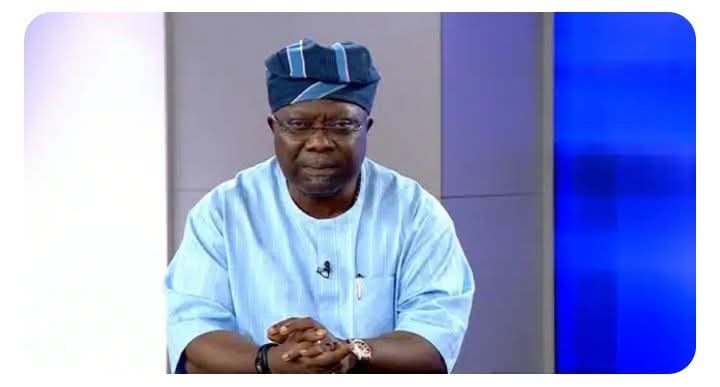
The fear that Omisore is too independent-minded for Bisi Akande and Gboyega Oyetola has been overstated and, more importantly, misread. Independence in Omisore’s case is not indiscipline. It is capacity. In 2018, when APC was staring at defeat after the first ballot, it was Omisore who delivered Ife and the rerun. He did not wait for a committee. He moved, negotiated, and produced numbers. As National Secretary from 2022 to 2023, he ran the party’s engine room and showed he could work within structure when the mandate was clear. The problem has never been control. It has been APC’s reluctance to define a role big enough for a man who understands PDP’s playbook because he once ran it. You do not win Osun by managing Omisore. You win by deploying him.
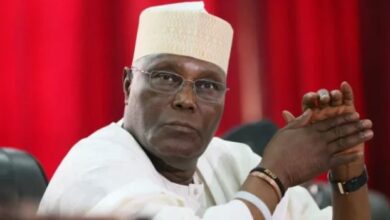
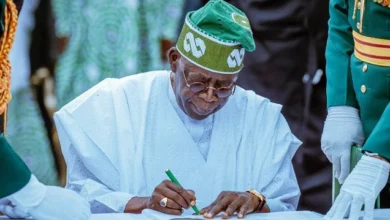
As a human being, both Akande and Oyetola have their pluses and minuses too, but the synergy of their pluses with that of Omisore could deliver the victory for the party and remove the incumbent. Akande provides the legitimacy. He is the founding father whose word still settles elders, monarchs, and the old ACN network. His minus is 1999 to 2003. The mass sacking of civil servants created a grudge PDP still exploits. His plus is that he was an outstanding performer who chose fiscal discipline over popularity, blocked leakages, and entrenched due process. That record, if reframed, becomes a story of tough leadership rather than a liability. Oyetola provides the governance face. His minus is the perception of lethargic performance between 2018 and 2022. The grassroots complained he was quiet and slow. His plus is the record: full salaries when others cut pay, inherited loans serviced, domestic debt reduced, and the state economy stabilized despite lean allocations and COVID-19. As Minister of Marine and Blue Economy, he now has federal leverage that must be made visible in Iwo, Ikirun, Ilesa, and along Osun’s trading corridors.
Neither Akande’s legitimacy nor Oyetola’s balance sheet, however, wins an election without infantry. That is the gap Omisore fills. He brings three things APC currently lacks in Osun. First is terrain intelligence. He knows where PDP is strong, where it is bluffing, and what it costs to flip a ward. Ife East, Ife Central, Ife North, and Ife South are not just LGAs. They are battlegrounds where Omisore’s network runs deep. Second is counter-mobilization. Adeleke’s strength in 2022 was not just personality. It was structure. Omisore understands that structure because he helped build parts of it before crossing to APC. Third is risk appetite. Elections in Osun are not won by caution. They are won by presence. Omisore does not wait for Abuja to send signals. He creates them.
The justification for placing him at the center of the 2026 strategy is therefore practical, not sentimental. Akande without Omisore gives you elders with no army. The moral authority is there, but the polling units are empty. Oyetola without Omisore gives you a commissioner trying to win a war. The technocratic case is sound, but the streets do not vote for spreadsheets. Omisore without Akande gives you an army with no cause. The troops can march, but the elders will not bless the mission. When the three aligned in 2015 and 2019, the Southwest delivered and APC looked hegemonic. When they pulled apart in Osun 2022, the party bled from its base.
For 2026, the division of labor is clear. Akande must take ownership of his legacy and neutralize the “anti-worker” narrative by casting his 1999 decisions as the painful foundation for the fiscal sanity Oyetola later practiced. That reframes the past and gives the party a reformist lineage to campaign on. Oyetola must convert his federal portfolio into tangible Osun dividends. Blue-economy projects, port access for traders, dredging that helps farm produce move, and job pipelines that reach the towns. Full salaries were the floor. Visible impact is the ceiling. Omisore must be given the infantry command with clear terms: secure the Ifes, split Ede, contest Iwo, and hold Ijesaland. He must be resourced, not suspected. His private and public experience is an asset only if the party stops treating it like a threat.
The incumbent will not be removed by press releases. Incumbency in Osun is cultural as much as it is administrative. It takes a coalition of legitimacy, competence, and force to dislodge it. Akande provides the first, Oyetola the second, Omisore the third. Together, their pluses cancel out their individual minuses. Akande’s old baggage is offset by Oyetola’s recent prudence. Oyetola’s quietness is offset by Omisore’s street presence. Omisore’s controversial reputation is offset by Akande’s moral cover.
APC’s choice is binary. Treat Omisore as a problem to be managed and watch another defensive campaign collapse under the weight of its own caution. Or recognize him as the infantry wing that complements every other resource the party has, and build a campaign that can actually take territory. The 2026 election will not be won in newspaper columns. It will be won in the wards where voters know who fought for them, who paid them, and who showed up. Omisore shows up. Pair that with Akande’s name and Oyetola’s record, and the synergy becomes more than theory. It becomes the margin that removes an incumbent.