

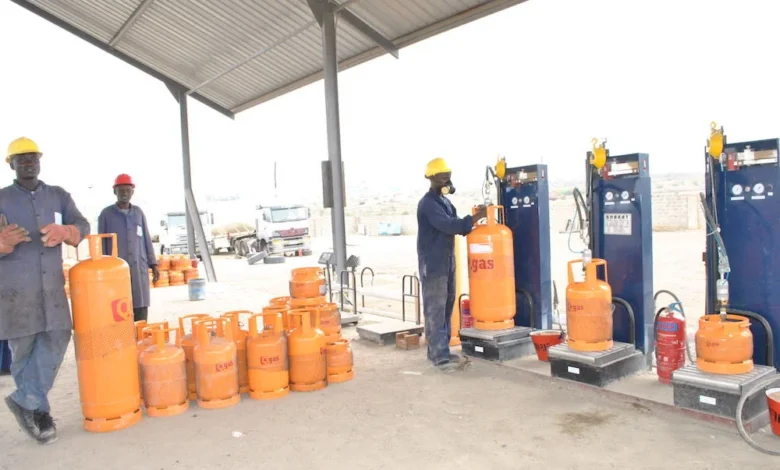
Nigeria will end regulated pricing in the domestic gas market by September 24, 2028, as it transitions to a fully willing-buyer, willing-seller framework.
The Chief Executive of the Nigerian Midstream and Downstream Petroleum Regulatory Authority (NMDPRA), Rabiu Umar, disclosed this on Thursday at the Gas Market Maturity Workshop organised under the Decade of Gas initiative at the Petroleum Technology Development Fund (PTDF) in Abuja.
Umar said the transition will be guided by measurable indicators of market maturity across different segments of the gas market, in line with the Petroleum Industry Act (PIA).
“Gas must be affordable for Nigerians while supporting President Ahmed Tinubu’s investment reforms. This transition is in line with the Nigeria Decade of Gas goal to become a gas-powered economy by 2030,” he said.
He explained that the PIA provides for a shift from a market largely driven by regulation to one driven by commercial contracts between willing buyers and sellers.
“Invariably, this is the first time that we have been bold enough to set a clear target for our gas market transition,” Umar noted.
According to him, the Authority is targeting a 24-month period to establish the conditions required to declare the market fully commercial.
“The journey we are starting should lead us to a place where we should target a 24-month at best period within which we will be able to declare the market to be truly a willing-buyer, willing-seller market,” he said.
Umar stressed that the transition must be based on clearly defined indicators, thresholds and safeguards, including supply availability and diversity, number and quality of buyers and sellers, access to transportation infrastructure, strength of contracts, payment reliability, delivery obligations, market information and credible price signals.
He, however, noted that domestic gas supply remains tight despite Nigeria’s vast reserves, adding that infrastructure development must be matched with adequate gas supply.
“If you look at supply, for example, on the domestic side, it is still tight, no matter how you look at it. We have a lot of work to do in our infrastructure space. The focus right now is not just delivering the infrastructure, but ensuring that we have enough molecules to fill the pipeline,” he said.
He emphasised the need to ensure major infrastructure such as the Ajaokuta-Kaduna-Kano (AKK) pipeline has sufficient gas to be commercially viable.
Umar said the role of the regulator will evolve to focus more on market rules, fair access, competition protection and monitoring market conduct.
He disclosed that the NMDPRA has commenced consultations on draft regulations on anti-competitive practices to give effect to the competition provisions of the PIA.
He also said the Authority is close to concluding the issuance of gas distribution licences, with qualified companies expected to be licensed in the fourth quarter of 2026.
The NMDPRA boss added that the Authority is working to deepen domestic utilisation of Liquefied Petroleum Gas (LPG), Liquefied Natural Gas (LNG) and Compressed Natural Gas (CNG), noting that increased domestic use would boost economic growth, support power generation and reduce dependence on imports.
Also speaking, the Coordinating Director of the Decade of Gas Secretariat, Ed Ubong, said Nigeria could achieve a willing-buyer, willing-seller market before the end of the first phase of the programme in 2030. He said the target includes raising gas supply to 12.6 billion cubic feet per day by 2030, supported by 16 key infrastructure projects and over 60 demand-side projects capable of creating about 15 billion cubic feet per day.
In her remarks, President of the Nigerian Gas Association, Engr. Mrs Yetunde Taiwo, said the transition must be driven by clearly defined milestones and properly sequenced to avoid moving too early or too late.
She said while significant progress has been made in the last decade, stronger collaboration between government, regulators and industry players is needed to build a market that attracts investment and delivers reliable gas to industries, businesses and consumers.