Cooking Gas Hits ₦2,000/kg in Lagos as Import Costs and FX Pressure Squeeze Supply

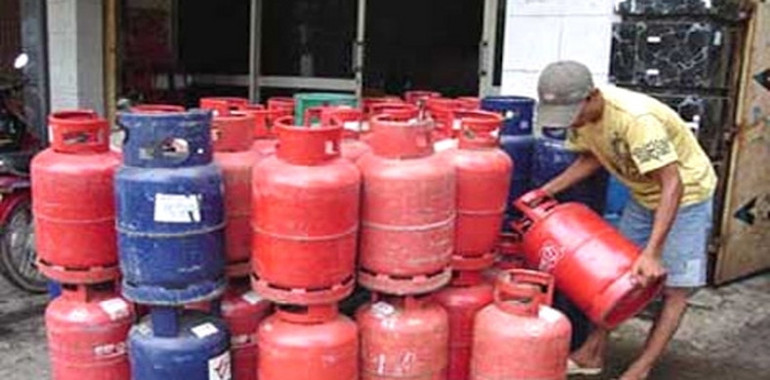
The price of Liquefied Petroleum Gas, or cooking gas, has surged again across Nigeria, with Lagos recording the sharpest increases and some retail outlets now selling for as much as ₦2,000 per kilogramme. The spike is driven by higher landing costs, foreign exchange pressures, and tighter supply after several marketers cut back or halted imports.
Market checks show the steepest rise in Lagos and parts of Ogun State. In Alakuko, vendors are selling between ₦1,800 and ₦2,000 per kg. At Atan in Ota, Ogun State, prices range from ₦1,600 to ₦1,800 depending on the retailer. Primeview Gas Plant in Obere, Atan, is slightly lower at about ₦1,450 per kg, while independent retailers around the Berger axis, including Warewa and Arepo, are asking ₦1,700 to ₦1,800. Along the Lagos-Ibadan Expressway, Sungas Filling Station in Aseese is selling to end users at about ₦1,600 per kg, putting a 12kg cylinder at ₦19,200. Bulk buyers may still access lower rates based on volume.
In Ikeja, a gas station on Oba-Akran Road sold for ₦1,500 per kg over the weekend. That is ₦200 more than the ₦1,300 it went for just one week earlier, after an earlier ₦50 increase. Roadside resellers are charging more. One egg seller who refills her cylinder there said street prices now sit between ₦1,700 and ₦1,800 because retailers add their own margin after buying from major depots.
“Even at this price, it is still cheaper because those who buy and resell on the street will sell it for ₦1,700 to ₦1,800. They also need to make a profit,” she said.
Traders say the repeated hikes are cutting into already thin margins. “We use this gas to sell in the market. Tell me how much we are making from this petty business that gas will just keep going up every time,” another seller said.
Outside Lagos, prices are mixed but trending up. In Abuja, a trader in Wuse paid about ₦1,400 per kg at a depot but saw roadside resellers charging ₦1,650 to ₦1,750. In Bida, Niger State, consumers reported depot prices around ₦1,600 per kg. In Port Harcourt, where NESGAS is active and a large storage facility is planned, traders described more acute shortages. Some depots quoted ₦1,700 per kg, while others refilled at up to ₦1,800 in certain neighbourhoods.
A major marketer, speaking on condition of anonymity, said ex-depot prices jumped sharply within days, triggering panic in the downstream market. The source noted that only a few suppliers, including NESGAS, currently have stock in Lagos. Ex-depot prices that were previously much lower spiked to about ₦1,500 per kg over the weekend. That increase quickly filtered into retail markets, pushing end-user prices toward ₦2,000 in high-demand areas.
Industry stakeholders blame the crisis on rising import costs, foreign exchange volatility, and constrained supply. Many marketers have pulled back from importation because landing costs no longer work with current retail pricing. The result is tightening availability across several depots in the South-West.
The pressure comes as Nigeria tries to scale up LPG use. The country is said to have one of the fastest-growing LPG markets globally, with a projected market size of about $10 billion. Yet infrastructure lags. Current storage capacity is about 800,000 metric tonnes, far below the estimated national requirement of five million metric tonnes. That gap continues to affect distribution and pricing.
NESGAS Limited recently secured a $200 million contractor financing deal with Cakasa Nigeria Limited for a 50,000-metric-tonne LPG storage facility in Onne, Rivers State. The project could ease bottlenecks in the South-South, but near-term supply remains tight.
For households and small businesses, the impact is immediate. Many say the rising cost may push users back to firewood and kerosene at a time when economic conditions are already difficult. Until import volumes recover or domestic supply improves, retailers expect prices to stay high and volatile.