Aradel’s H1 2026: Scale Delivered, Efficiency Still a Work in Progress

Energized, but not yet efficient.
Aradel Holdings Plc walked into the first half of 2026 as Nigeria’s leading integrated indigenous energy company. It walked out looking like a different business entirely. The numbers tell the story of a group transformed almost overnight by assets and price. Revenue hit ₦2.49 trillion, up 577% from a year ago. EBITDA came in at ₦1.389 trillion, up 688%. Operating profit jumped 789% to ₦1.055 trillion. Production averaged 139,500 barrels of oil equivalent per day, a 523% increase, with crude output up 258% to 55,600 bpd and gas output up more than eleven-fold to 503.2 million standard cubic feet per day. Cash generated from operations surged 6.9 times to ₦975.6 billion, and the company ended June with ₦1.718 trillion in cash on hand.
For a company that only listed on the NGX in October 2024, that is a step-change that puts it in the top tier of Nigerian independents. The market narrative is now simple: Aradel has scale. The harder question is whether it can manage the weight of that scale.
Beneath the headline growth, three pressure points stand out in the unaudited results. The first is the cost of borrowing. Finance costs rose to ₦326.1 billion from ₦11.1 billion in H1 2025. That created a net finance expense of ₦302.5 billion and is the main reason why profit before tax of ₦752.7 billion translated to just ₦191 billion profit after tax. With total borrowings still around ₦1.81 trillion, Aradel is carrying one of the heaviest debt service burdens on the exchange. Interest paid in six months alone was ₦145.5 billion. It is the direct cost of funding the asset expansion that delivered the production jump, and it will remain a drag until debt comes down further.
The second pressure point is taxation. Tax expense jumped 1,150% to ₦561.7 billion, implying an effective tax rate of about 75% compared to 24% last year. As a result, while profit before tax grew 293%, profit after tax grew only 30%. Earnings per share did rise to ₦35.37 from ₦33.26, but the fiscal take meant shareholders saw far less of the operating upside. For an oil and gas company operating in Nigeria today, it underscores how quickly a larger portfolio also enlarges fiscal exposure in a regime with petroleum profit tax and other levies.
The third is volatility and working capital. Other income swung to a ₦213.1 billion loss from a small gain last year, largely reflecting foreign exchange moves. Currency translation alone wiped ₦169.3 billion off comprehensive income, pulling total comprehensive income down to ₦28.6 billion from ₦144.8 billion. Trade and other receivables also ballooned 45% to ₦2.51 trillion, tying up ₦767 billion of cash that would otherwise be available. In refining, output fell 22% to 126.2 million litres due to feedstock constraints and unplanned downtime in Q1, though the company recovered some ground in Q2 with volumes up 15% quarter-on-quarter to 67.5 million litres. None of these are fatal, but they are classic growing pains of a company that acquired size faster than it has optimized it.
Where Aradel wins decisively is in cash generation and operational leverage, and that is what gives it a path to deal with those issues. Gross margin expanded to 57.8% from 44.3%, and EBITDA margin was 55.8%. The enlarged portfolio delivered 25.2 million barrels of oil equivalent in the half year, and sustained gas offtake at 503.2 mmscf/d shows that commercial contracts are holding. Crude handling income of ₦149.8 billion also helped lift operating profit. Most importantly, the cash is real. The ₦975.6 billion generated from operations funded ₦298.9 billion in capital expenditure and ₦253.8 billion in debt repayment. The result was a 70% collapse in net debt to ₦46.5 billion from ₦475.1 billion at year-end, while cash rose 14%. That liquidity gives Aradel options few Nigerian E&Ps currently have. It can self-fund, de-risk, and invest without going back to expensive debt.
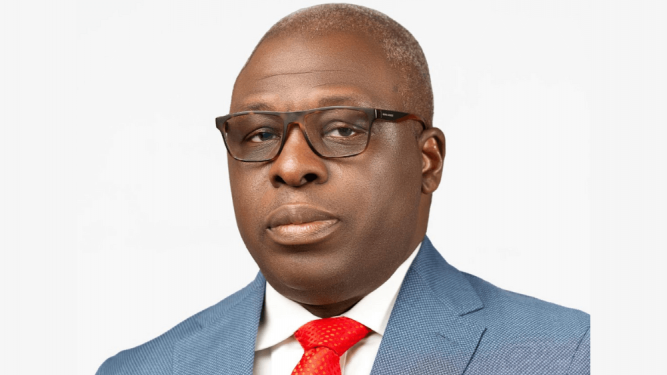
CEO Adegbite Falade framed the results around execution rather than celebration. “The Group delivered a strong first-half performance… Our priorities for the second half of the year are unchanged: optimising our enlarged portfolio and improving operational efficiency. Our enlarged portfolio provides more opportunities to generate stronger cash flow and returns for shareholders and unlocking that potential is our main focus.” CFO Adegbola Adesina authorized the release, a signal that the finance function is now central to that optimization drive. Falade also reaffirmed full-year production guidance of 110,000 to 140,000 barrels of oil equivalent per day and committed to operating responsibly in a changing energy landscape. The subtext is clear: the acquisition phase is over, the integration phase has begun.
That aligns with what the numbers are demanding. With net debt now low, Aradel can redirect cash away from servicing and toward four things. First, further deleveraging to bring finance costs down from the ₦326 billion level. Second, securing feedstock to lift refinery utilization back above last year’s levels. Third, tightening receivables to free up working capital. Fourth, investing in gas where demand is proven and margins are stable.
Aradel’s H1 2026 is therefore a tale of two companies. The old Aradel was small, nimble, and lightly levered. The new Aradel is large, cash-rich, and complex. The strengths are undeniable: record production, record revenue, record cash flow, and a balance sheet that went from ₦475 billion net debt to ₦46.5 billion in six months. Those strengths directly address the biggest threats. Expensive debt can now be paid down, and volatility can be absorbed with ₦1.7 trillion cash.
But the weak points are equally real. Punitive taxation, high interest costs, FX losses, and operational hiccups in refining will cap how much of the growth actually reaches shareholders if they are left unaddressed. Falade’s message suggests management knows this. “Unlocking potential” now means turning scale into sustainable margins. Aradel has proven it can grow. The second half of 2026 will show if it can govern.