
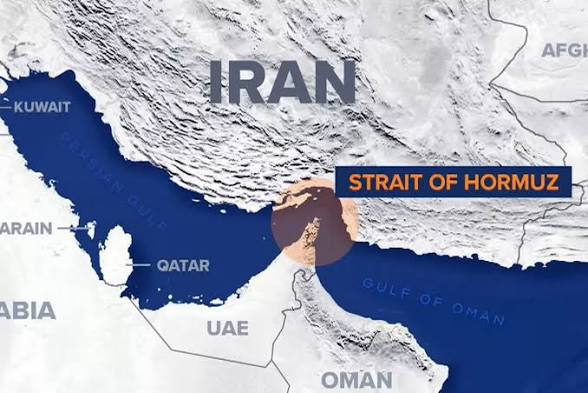
Global oil markets entered the week on fundamentally different terms after the US-Iran agreement reopened the Strait of Hormuz and lifted the US maritime blockade on Iranian exports. Brent’s slide below $80 per barrel for the first time in more than four months isn’t evidence of collapsing demand, but a rapid unwinding of the geopolitical risk premium that had been built into prices during the conflict. The market is reading the deal as directional, not definitive. With signatures from Trump, Vance, and Iran’s Qalibaf now public, tankers can move and insurers can breathe, yet the entire repricing hinges on a ceasefire that looks fragile, especially with tensions around Lebanon still unresolved. ADNOC has already moved to exploit the opening, placing at least 30 million barrels of spot crude into Asian hands this month. When stranded Gulf barrels re-enter the market that quickly, prices don’t wait for OPEC+ commentary. They adjust.
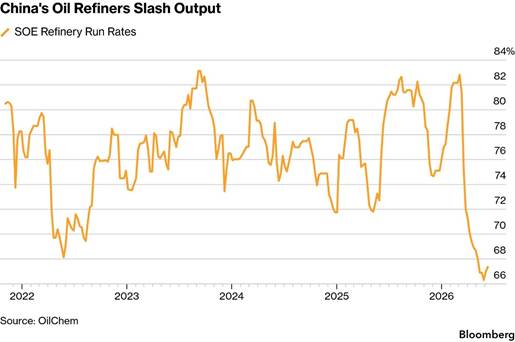
That supply relief is colliding with a demand picture that keeps getting murkier. China’s refiners are pulling back hard, with throughput down 9.1% year-on-year to 12.7 million b/d, the weakest level since April 2022. Negative margins and an ongoing product export ban have left run rates depressed even as Beijing dangles fresh export quotas. Seaborne imports into China have slipped another 600,000 b/d in June to 6 million b/d, suggesting May’s multi-year lows weren’t the bottom. There are signs of rebalancing, with inventories down roughly 20 million barrels over two months from a 1.3-billion-barrel stockpile, but the broader signal is caution. Retail sales in China contracted for the first time since the pandemic, a reminder that consumer spending reacts quickly when energy costs spike. So while the Strait of Hormuz reopening removes a major tail risk, China’s retreat in refining introduces a new headwind, and that tug-of-war is why banks like Goldman Sachs and Morgan Stanley have already trimmed 2026 forecasts, with Brent now seen averaging $80 in Q4, down $10 from earlier calls.
The broader market is already repositioning for a post-conflict flow of commodities. QatarEnergy says it can bring 12 of its 14 Ras Laffan LNG trains back to full capacity within a month after drone damage, and aluminium dropped 5% on the LME as Bahraini and UAE supply routes look viable again. But the return of barrels isn’t orderly. Russia’s seaborne crude exports have hit a 2026 high of 3.83 million b/d, partly because Ukrainian strikes on six refineries this month are pushing more unrefined oil toward export terminals. India, despite the Hormuz reopening, has raised diesel and jet fuel export levies to $24 and $21 per barrel respectively, because domestic transport demand is rising and refiners are protecting margins. Corporate moves reflect the same calculation that volatility remains even if war risk fades. Equinor is doubling share buybacks to $3 billion on the back of conflict-era windfalls, Chevron is taking a 70% stake in Greece’s Block 10, and Hungary’s MOL is negotiating to buy Serbia’s NIS from Gazprom Neft with a 15-day OFAC extension.
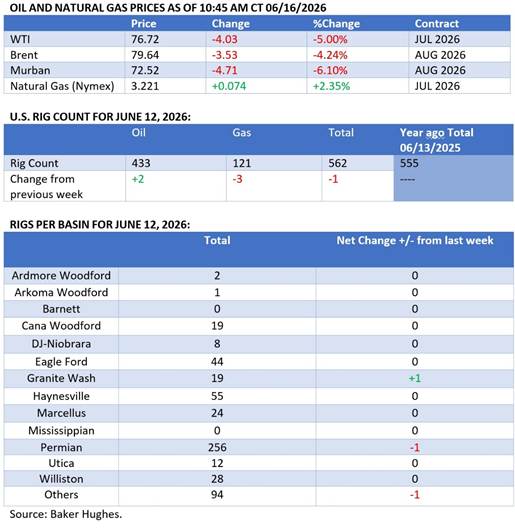
Even the US is dealing with its own imbalances. The Strategic Petroleum Reserve sits at 340.2 million barrels, the lowest since 1983, and Washington still has a mandate to sell another 88 million barrels by fiscal 2031. Meanwhile, Waha natural gas in West Texas has finally turned positive at $0.42 per MMBtu as cooling demand rises and spring maintenance ends. None of this suggests a market settling into a trend. It suggests a market reacting, headline by headline.
What happens next depends less on fundamentals and more on durability. If the ceasefire holds and Israel-Lebanon tensions don’t escalate, the war premium stays out and attention shifts to OPEC+ discipline, US and Chinese inventory data, and whether Nigeria can meet the production volumes its budget assumes. If the deal frays, the $80 floor quickly becomes resistance again. For now, oil is flowing and the premium isn’t. But the calm in crude is conditional, and the next drone or diplomatic stumble will decide which returns first.