Unilever Nigeria – Turning Cost Pressure into Margin Gains

In an operating environment defined by geopolitical volatility, rising input costs, and pressure on consumer spending, Unilever Nigeria chose the harder path: grow volume, protect margin, and pay shareholders anyway.
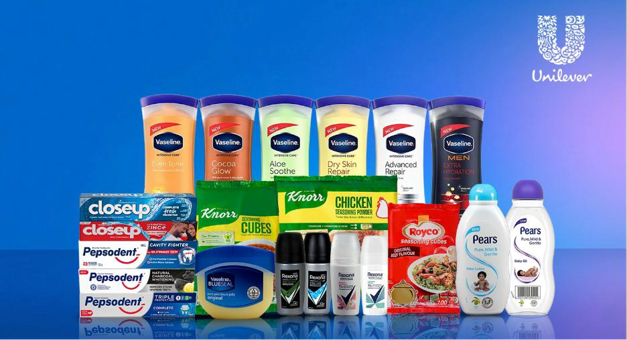
For H1 2026, the 100-year-old consumer giant showed that disciplined execution can still beat macro headwinds. Turnover climbed 22.2% to ₦119.92 billion from ₦98.10 billion a year earlier. That means more Nigerians reached for Knorr, Closeup, Lux and Pepsodent despite tighter wallets. The growth was not bought with reckless discounting. It was earned through what MD Tobi Adeniyi called “route to market excellence, impactful innovations, and serving consumers better.”
The real story, however, is in the cost line. For manufacturers, cost of sales almost always moves north. Unilever managed it. Cost of sales rose 16.4% to ₦65.18 billion, slower than revenue growth. That careful containment pushed gross profit up 30% to ₦54.74 billion, and lifted gross margin to 45.6% from 42.9% last year. In plain terms, Unilever made 45.6 kobo gross profit from every naira of sales — a clear signal that brand strength and pricing power are holding.
Doing business in Nigeria, however, extracts its tax elsewhere. Selling, marketing and administrative expenses surged to ₦31.16 billion from ₦24.01 billion, reflecting higher distribution costs, media spend, and inflation. Finance cost also quadrupled to ₦1.70 billion from ₦0.48 billion. Despite that, operating profit still jumped 29.5% to ₦24.36 billion, helped by ₦6.51 billion in finance income from prudent cash management.
The bottom line followed. Profit before tax rose 20.8% to ₦29.18 billion. After paying ₦13.58 billion in taxes — up 39% YoY — net profit settled at ₦15.60 billion, an 8.3% improvement from ₦14.41 billion in H1 2025. EPS ticked up to ₦2.72 from ₦2.51.
Margins tell a mixed but encouraging tale. Pretax margin improved to 24.3% from 24.6%, while net margin eased slightly to 13.0% from 14.7% because of higher tax and interest. Analysts will argue the net margin compression is the price of growth in a high-rate, high-inflation year. In that context, holding profitability above 13% is a gain.
On the balance sheet, Unilever is liquid but less cash-rich. Cash and equivalents fell to ₦97.15 billion from ₦110.75 billion at year-end, as working capital absorbed funds: inventories rose to ₦26.64 billion and receivables to ₦11.46 billion. Yet total assets remain solid at ₦177.24 billion, and shareholders’ funds stand at ₦104.38 billion. The company also cut current tax liabilities sharply to ₦11.45 billion, freeing up short-term flexibility.
Most telling is what management did with the profit. The Board approved an interim dividend of ₦2.00 per 50k share — ₦11.5 billion in total — payable end of July. That is “patient money” returning to shareholders even while the company invests in brands and distribution. At a share price of ₦125, the interim payout alone implies a 1.6% yield in six months.
Unilever’s narrative is different from the brewers’ volume war. It is not about outspending on sponsorships. It is about out-executing on basics: innovation that is “unmissably superior,” distribution that reaches the last mile, and cost discipline that protects margin when input prices bite.
The challenge ahead is sustaining it. Inflation, FX volatility, and funding costs are not going away. But H1 2026 shows a company that has stopped managing for the present and started building for the next decade — growing revenue faster than costs, expanding margins, and still rewarding shareholders.
For a business that has operated in Nigeria for over a century, that may be the clearest proof yet: in a rough competitive space, relevance and execution still pay.
Unilever Nigeria – Managing Cash in a Tighter Cycle
The company continued to tighten its working capital management in H1 2026, even as liquidity came under mild pressure from higher business activity. Cash and cash equivalents eased to ₦97.15 billion from ₦110.75 billion at year-end 2025, as inventories climbed to ₦26.64 billion and trade receivables rose to ₦11.46 billion on the back of 22% revenue growth. Trade and other payables also expanded to ₦55.51 billion from ₦47.62 billion, suggesting Unilever leaned more on supplier credit to fund growth, while current tax liabilities dropped sharply to ₦11.45 billion, freeing up near-term cash. The balance sheet re-jig showed up in leverage too: total borrowings stayed minimal at ₦2.12 billion and the company carried no aggressive short-term debt, keeping overall financial risk low even as equity remained strong at ₦104.38 billion. The net effect was a business that converted stronger sales into higher margins, but funded that expansion by cycling more cash through inventory and receivables. It is a trade-off typical of consumer companies in an inflationary period — liquidity is softer on paper, but the underlying cash-generation engine, backed by ₦6.51 billion in finance income and disciplined cost control, leaves Unilever better positioned to sustain dividends and reinvest in brands without leaning on expensive debt.