
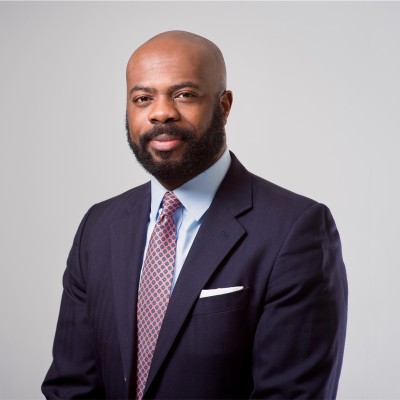
UAC of Nigeria Plc’s board restructuring announced on July 14, 2026 is less about changing faces and more about changing how the conglomerate manages value. By appointing Adebolanle “Debola” Badejo to the Board of UPDC Plc while stepping him down from the UAC Plc board, the Group is signaling a deliberate shift: push governance closer to where the assets operate, and keep capital allocation decisions tightly held at the center.
The move is framed as governance sharpening, but its interpretation is strategic. Badejo retains his role as Group Investment Director and remains on the Group Executive Committee, reporting directly to the Group Managing Director. That structure matters. It means UAC wants investment discipline and portfolio oversight to run in parallel with, not through, the holding company board. In practice, Badejo will now sit inside UPDC’s boardroom, giving the real estate arm direct access to the person leading UAC’s M&A, divestments, and major capital allocation. For a subsidiary like UPDC, which has historically struggled with market confidence and asset monetization, that proximity could translate into faster decisions on asset sales, partnerships, or recapitalization.
This appointment also reflects how UAC is thinking about its diversified portfolio in 2026. The company explicitly states the goal is to “enhance operational performance and unlock shareholder value.” Badejo’s mandate covers exactly those levers: leading M&A, overseeing non-core asset divestments, and directing capital into strategic investments. By placing him on UPDC’s board, UAC is effectively embedding its investment office inside a key operating company at a time when real estate is under pressure and the Group needs to prove it can extract value from property holdings, not just hold them.
The breadth of Badejo’s other board roles reinforces that this is a portfolio-wide governance play, not a one-off. He remains Non-Executive Director and Chair of Risk at CAP PLC, Non-Executive Director at C.H.I. Limited and DP World Logistics Limited where he also chairs Risk and Governance, and holds multiple governance and risk chair positions at Grand Cereals, Livestock Feeds, UAC Foods, and UAC Restaurants. That spread across food, paints, logistics, and quick-service restaurants tells you how UAC intends to use him: as the Group’s risk and capital lens in every major operating company.
There is a clear logic here. Conglomerates often suffer from a governance gap where the holding company sets strategy but subsidiaries execute in silos. By moving the Investment Director onto subsidiary boards, UAC is closing that gap. It allows Badejo to see operational risks first-hand, challenge capital requests at source, and align divestment or investment decisions with the Group’s overall portfolio priorities. It also frees the UAC Plc board to focus on Group-level strategy and oversight, rather than getting drawn into subsidiary portfolio management.
The timing is important. 2026 is a year of recalibration across Nigerian corporates after years of FX volatility, inflation, and capital raising. For a holding company like UAC, the pressure is to prove that diversification creates value, not complexity. The restructuring suggests UAC’s answer is to double down on active portfolio management: sell what doesn’t fit, invest where there is scale or synergy, and ensure every board has someone directly accountable for capital effectiveness.
In that context, Badejo’s expanded role looks like UAC’s version of what banks are now calling “capital effectiveness.” It is not enough to own assets. The test is whether the Group can reallocate capital quickly, govern risk at subsidiary level, and communicate a coherent story to shareholders about where value is being created.

The takeaway is straightforward. UAC is not just reshuffling directors. It is restructuring how decisions get made. By putting its Investment Director inside UPDC and keeping him across the risk committees of its other key companies, UAC is betting that tighter, more direct oversight will be the fastest way to turn a diversified portfolio into a more focused, higher-return business.