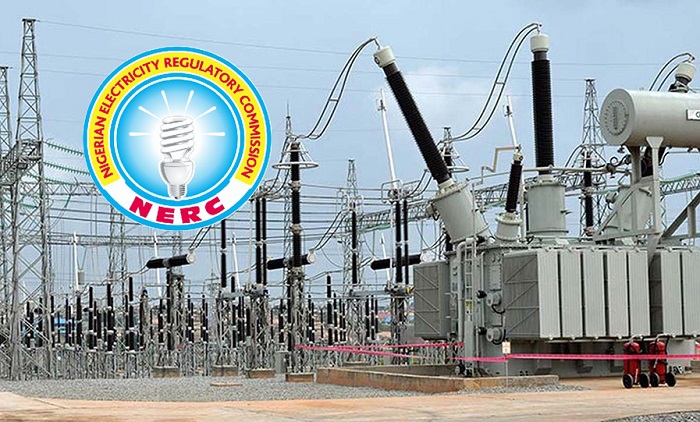
A directive meant to get more transformers into communities has instead exposed the biggest fault line in Nigeria’s power sector since the Electricity Act 2023.
On July 1, 2026, Order No. NERC/2026/062 came into effect. It tells the 12 distribution companies to set aside most of their surplus operating revenue for network investment and market debt, and to get NERC’s approval before spending a kobo. NERC frames it as enforcement. The DisCos and state regulators see it as overreach. And in between are millions of Nigerians who just want the lights to stay on.
The dispute has moved far beyond feeders and wires. It is now about money, law, and the unfinished business of decentralising Nigeria’s electricity market.
The case NERC is making
NERC is targeting “earned non-administrative operating expenditure” — what is left after DisCos cover salaries, billing and running costs. The formula is rigid. Debt-free DisCos must put 70% of that surplus into dedicated CapEx accounts. Indebted DisCos must allocate 50% to debt, 35% to CapEx, and keep 15% for operations. Nothing moves without NERC sign-off.
The regulator’s argument is hard to fault on intent. Under MYTO 2024, tariff revenue is meant to fund maintenance, expansion and reliability. Yet for years, networks have decayed while communities self-fund transformer repairs. With DisCos collecting ₦2.16 trillion in 2025 and ₦597.56 billion in Q1 2026 at 78.95% collection efficiency, NERC says some utilities now have surplus and should deploy it. From a consumer standpoint, forcing that money into wires instead of overheads makes sense.
But intent is not the same as design. And the design here is where the trouble starts.
Why the pushback is so strong
No DisCo has spoken on record. ANED’s Sunday Oduntan declined comment. Yet the message from the sector is consistent: this is regulatory overreach into private business.
The core objection is governance. By dictating revenue splits and requiring federal approval for spending, NERC is inserting itself into the financial management of companies it does not own. Energy consultant Odion Omonfoman calls it “a clear intrusion” and warns it will spook lenders. Banks are already cautious about DisCos because of collection risk and tariff shortfalls. Add another layer of federal control over cash flow and credit gets even tighter.
State regulators are pushing back on legal grounds. The Forum of Commissioners of Power and Energy argues the 2023 Act transferred commercial oversight of in-state markets to State Electricity Regulatory Commissions. They cite Section 230(6): once that transfer happens, NERC “shall have no further regulatory responsibility whatsoever.” They also lean on Item 14 of the Concurrent Legislative List and Section 2(2)(a). At a recent Abuja workshop, FOCPEN said the transfer “is, in places, not being honoured in practice.”
In other words, this is not just about 70% or 35%. It is about whether the 2023 devolution was real, or just a paper transfer.
The uncomfortable middle
Even experts who agree with NERC’s goal question the method. Dr. Muda Yusuf of CPPE says a guideline to encourage infrastructure spend is reasonable, but prescribing the exact allocation is excessive. His point cuts to the real issue: liquidity. Tariffs remain below cost-reflective levels, so many DisCos do not collect enough to fund serious capex in the first place. Forcing a split of money that isn’t there solves nothing.
Others note NERC already has enforcement tools under MYTO. It can disallow unrecovered capex from future tariffs, downgrade poorly performing feeders to lower bands and cut allowable revenue, or impose penalties. Those tools are slower and more bureaucratic, but they preserve commercial autonomy. Order 062 bypasses them entirely in favor of direct control.
That raises a critical question: is NERC solving an investment problem, or is it compensating for weak enforcement of existing rules?
What this really tests
The 2023 Electricity Act was supposed to clarify roles and attract private capital by devolving power. This dispute is the first real test of that bargain.
NERC cites Section 34(1), which gives it power to ensure efficient resource use and sufficient investment. States cite devolution clauses that give them the same power within their borders. Both can read the law and find support.
A seven-member committee has now been set up with the Ministry of Power, NERC, SERCs, the Office of the Special Adviser on Power, the Senate Committee and BPE to find a way forward. Its job is not just to decide on Order 062. It will set the precedent for how federal and state regulation coexist.
A critical view: right problem, wrong instrument
NERC is correct that underinvestment is killing service delivery. But using a command-and-control order on private companies undermines the very investment climate the sector needs.
First, it increases regulatory risk. Investors in infrastructure want predictable rules, not rules that let a regulator approve every major spend. That raises the cost of capital at a time DisCos need it most.
Second, it papers over the tariff problem. You cannot force capex from revenues that do not cover costs. Until tariffs reflect the true cost of supply and collection improves, any percentage split is arithmetic without cash.
Third, it weakens the 2023 reforms. If states cannot regulate commerce in their own markets, why devolve at all? And if NERC must micromanage to ensure performance, what does that say about the capacity of SERCs and the design of MYTO?
The better path would be to strengthen existing MYTO enforcement, link tariff reviews to verified capex delivery, and give states the tools and capacity to hold DisCos accountable locally. That preserves autonomy while still protecting consumers.
What happens next
For consumers, the trade-off is immediate. More forced CapEx could mean fewer outages. Less flexibility for DisCos could mean slower response times and tighter working capital.
For investors, the signal is clear: Nigeria’s power sector still does not know where federal authority ends and state authority begins. That uncertainty is expensive.
Order 062 may survive, be amended, or be thrown out. But the committee’s decision will do more than that. It will define whether Nigeria’s decentralised electricity market is actually decentralised, or whether Abuja still holds the final say over every naira.
NERC says the money must go to wires. The DisCos say let us run our business. The states say this is now our job.
Until those three positions are reconciled, Nigeria will have more revenue in the power sector than ever before, and still no agreement on who gets to decide how it is spent.