In Osun, the civil service has stopped being the engine of governance and become its brake, its shield, and its ballot box, and the damage from that role runs deeper than any single administration. For over a decade, the bureaucracy has leveraged its control over implementation and its position as the state’s largest wage-dependent bloc to dictate who governs, what gets done, and which questions are never asked. The result is not stability but stagnation, where FAAC determines the climate and the civil service decides whether the governor sinks or swims, while the public interest is sacrificed to the payroll.
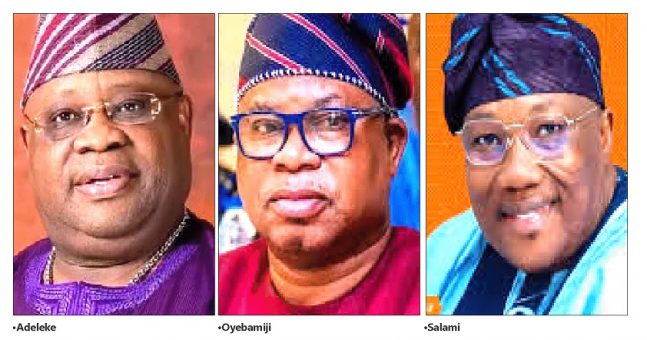
The damage starts with the capture of the political cycle itself. When FAAC is high, the civil service becomes an implementer, cooperates with the executive, and allows the governor to be hailed as visionary. When FAAC is low, it transforms into a pressure group that withdraws labor, halts service delivery, and frames survival as the only legitimate objective. Aregbesola’s second term collapsed not only because oil revenue fell but because the bureaucracy, after years of entitlement built during the boom, refused to absorb the shock of adjustment. Oyetola survived politically precisely because he chose not to challenge that entitlement, opting for full salaries and zero reform instead of risking confrontation. Adeleke now benefits from the flood season, and the same bureaucracy that ground Oyetola’s agenda to a halt is cheering his projects, not because governance has improved but because the money has returned. This cyclical dependence means Osun has not had three different governments. It has had one bureaucracy reacting to three different FAAC regimes, and every election becomes a referendum on allocation rather than on competence.
This power has entrenched populism as the only viable political currency, and that has corroded accountability at every level. Roads and flyovers are prioritized because they are visible, fast, and impossible to ignore on election day, while IGR reform, procurement transparency, and institutional strengthening are abandoned because they produce no immediate political dividend and threaten the payroll. The civil service reinforces this by making “full salaries” the non-negotiable baseline of governance, a contract that leaves no fiscal space for audits, digitization, or downsizing. In that environment, questioning contract awards or delayed financial disclosures is dismissed as opposition propaganda, while allegations of nepotism and family-dominated appointments are waved away with photos of ongoing projects. The bureaucracy, once traumatized by half-salary, now protects the status quo at the expense of due process, effectively trading long-term institutional health for short-term wage security.
The most damaging consequence is the normalization of a spoils system where tenure and contracts depend on political alignment rather than merit. The mass sack of workers and monarchs through Executive Orders at the start of Adeleke’s tenure sent a clear signal that jobs end with the ballot, politicizing survival and embedding fear within the service. Family appointments, opaque mining renegotiations, and palliative distribution routed through party structures followed, and the civil service’s silence has been complicit. By failing to insist on merit and transparency, it has allowed the state to function less like a public institution and more like a family compound, where loyalty is rewarded and scrutiny is punished. Performance without transparency has become acceptable, and spending without rules has been rebranded as delivery.
The broader damage is that Osun’s development has been held hostage to this arrangement. IGR remains below 25% of the budget, meaning the state is still a sub-office of Abuja rather than an economic entity, and no governor is forced to build a sustainable revenue base because the civil service will not support reforms that disrupt its immediate interests. Until IGR replaces FAAC as the benchmark of performance, every governor will remain a tenant in a house funded by Abuja, and the civil service will remain the landlord who decides who stays and who leaves. In this setup, the bureaucracy is not a neutral guardian of public interest. It is an active kingmaker that has chosen populism over policy, transaction over transformation, and payroll over progress. The cost is a state where elections are decided by the size of Abuja’s cheque and governance is reduced to managing the next wage bill, while the structural problems that keep Osun dependent continue to grow in the shadows.