Prof. Taiwo Oyedele: Can Nigeria’s Tax Reformer Fix an Economy That Grows on Paper But Hurts in Real Life?

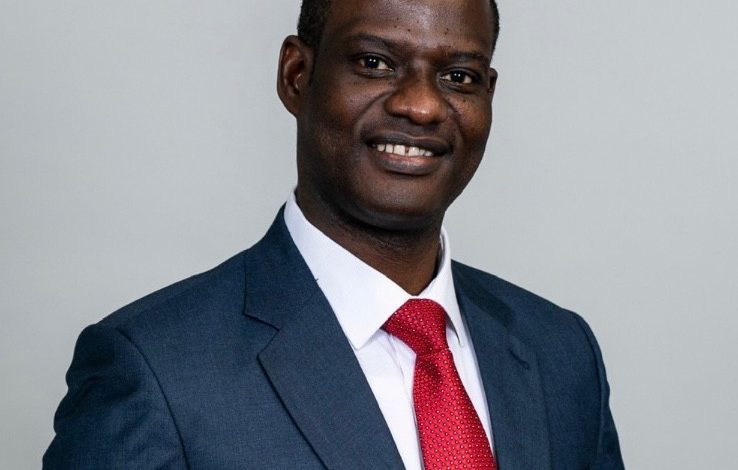
On April 21, 2026, President Bola Tinubu promoted Prof. Taiwo Oyedele from Minister of State for Finance to substantive Minister of Finance and Coordinating Minister of the Economy. The rise was fast, even by Abuja standards. He had spent 32 months as Chairman of the Presidential Committee on Fiscal Policy and Tax Reforms, where he shepherded four major tax bills through the National Assembly in May 2025. He spent just 36 days as Minister of State before getting the top job. Now he walks into the most important economic office in the country at the moment when Nigerians are asking one question above all others: if the numbers are improving, why does life still feel so hard?
That question defines the economy Oyedele inherits. Over the last two years the Tinubu administration, through Wale Edun at Finance and Yemi Cardoso at the CBN, chose shock therapy. Fuel subsidies were removed. The multiple exchange rates were collapsed into one. Interest rates were raised aggressively to fight inflation that had peaked at 34.19% in June 2023. The CBN cleared FX backlogs, stopped quasi-fiscal lending, and went back to speaking in the language of targets and credibility. On paper the results are there. Inflation eased to 28.9% by February 2024. GDP growth averaged 3.4% in 2023 and hit 3.84% in the fourth quarter. Foreign reserves climbed to $34.19 billion. The ratio of revenue used to service debt dropped from 97% to 68%. The balance of payments recorded a $6.83 billion surplus in 2024. In June 2026 oil production reached 1.735 million barrels per day, 104% of Nigeria’s OPEC quota and a 74-month high. The government says it has saved $20 billion from subsidy removal and that investors are returning because there is finally one rate and one message.
But the real economy has not caught up. Manufacturing grew by just 1.49% in the first quarter of 2024 and slumped to a three-year low of 2.2% in mid-2023. Agriculture slowed from 1.88% in 2022 to 1.13% in 2023. Overall industrial output fell by 13.24% in 2023. Factories complain of energy costs, logistics nightmares, and interest rates above 25% that make expansion impossible. Banks and telecoms are thriving, but they are the exception. For most households the story is different. Food prices remain high, jobs are scarce, and poverty is deepening. With over 133 million Nigerians still below the poverty line and Nigeria stuck around 163rd out of 191 countries on the UNDP Human Development Index, the gap between statistics and lived experience has become the central political problem. Growth is happening, but it is not transmitting.
To understand why, you have to look at the last ten years. The Emefiele era at the CBN from 2014 to 2023 was built on intervention. Multiple FX windows, Anchor Borrowers, CRR debits, and direct lending to agriculture and manufacturing. The logic was to keep credit flowing when banks would not and to protect output during oil shocks and COVID. It got money to farms and SMEs, but it also created arbitrage, blurred the line between monetary and fiscal policy, and left inflation high while the policy rate lost meaning. Since September 2023, Cardoso reversed course. FX was unified, rates went up, OMO and CRR were tightened, and the CBN stepped back from direct lending. The beauty of this orthodoxy is discipline. There is clarity, portfolio inflows have returned, and expectations are anchored. The cost is that credit to the real sector has tightened at the same time government is cutting spending. Like in many countries that tried this, policy hits financial markets first and households last. Without a buffer, tight money risks slowing jobs and growth before inflation falls to single digits.
Wale Edun complemented this at the Ministry of Finance with demand management and promises of supply-side reforms. Subsidy removal, exchange unification, cash transfers of 75,000 naira to 15 million households, and plans to use PPPs for infrastructure. The IMF and World Bank have backed the direction with financing. Critics, however, argue the model prioritizes macro stability and foreign investors over jobs and purchasing power. Both sides have a point. Nigeria needed to stop the bleeding, but stopping the bleeding is not the same as healing the patient.
This is where Oyedele’s profile matters. He is not a career banker. He is a tax expert. For nearly three years he led the conversation on how to make Nigeria’s fiscal system work, and the four tax reform bills passed under him are meant to broaden the base, reduce distortions, and cut the government’s reliance on borrowing. Nigeria’s tax-to-GDP ratio of about 8% is among the lowest in the world, so if implemented well, those reforms can create fiscal space without new debt. He also spent 32 months explaining complex policy to business, labor, and the public, a skill that will be critical when every new measure comes with immediate pain. As Coordinating Minister, he now sits at the junction of fiscal and monetary policy, the place where Nigeria has struggled most to align.
But tax reform alone will not fix transmission. Four walls are blocking the way. The first is cost of production. Manufacturers are crushed by diesel, poor power, and logistics. High interest rates mean no one can borrow to modernize. The second is weak transmission channels. Nigeria does not yet have the macroprudential tools or deep interbank markets that allow a central bank to manage volatility without constantly raising rates. Credit does not flow from the CBN to banks to SMEs in any reliable way. The third is inflation pass-through. Because we still import so much food, fuel, and raw materials, every naira depreciation and every import duty shows up directly in market prices. The fourth is governance. Estimates suggest corruption and poor coordination could cost Nigeria up to 37% of GDP by 2030. Tax revenues are low not just because the base is narrow, but because collection and spending are leaky. Collecting more money will not help if it disappears or is spent late.
Turning this around will require Oyedele to do what neither pure intervention nor pure orthodoxy has done. He will need to layer fiscal innovation onto monetary discipline. That means using revenue from the new tax laws to fund targeted support for energy, agriculture, and manufacturing, not just to balance the books. It means working with the CBN to build instruments that can manage capital flows without shocking interest rates every quarter. It means forcing infrastructure projects out of the budget and into the ground, on time and with transparency, so people can see where subsidy savings are going. And it means measuring success not by GDP or reserves, but by food prices, power hours, and jobs. The IMF already warns that inflation could spike to 37% in 2026 and that the current account surplus will narrow. Debt service is still projected at $5.2 billion in 2025. The window to show that reform leads to relief is short.
Prof. Taiwo Oyedele is a technocrat being asked to solve a political economy problem. His strength is that he understands the fiscal foundation Nigeria has neglected for years. His test is whether he can convert that understanding into outcomes people feel. Nigeria does not need to choose between the interventionist model of the last decade and the orthodox model of the last two years. It needs both, plus institutions that connect them to the real economy. That was the lesson from the central bankers who were celebrated in 2013, and it remains the task here in 2026.
The economy has been stabilized on paper. The naira has a rate, inflation is trending down, oil is pumping again. Now the harder work begins. If Oyedele can turn policy clarity into cheaper transport, working factories, and wages that buy more than they did last month, he will prove that reform can deliver for the masses. If he cannot, his tenure will join the long list of Nigerian economic plans that read well in reports and poorly in the market. The numbers are moving. Nigerians are waiting to see if their lives will move with them.