
The Expectations
The race for Osun’s governorship is shaping up to be memorable, and if history is a guide, Osun voters will ensure it lives up to that billing. The campaign razzmatazz and polished rhetoric that often sway electorates elsewhere are unlikely to move them this time. Glib promises and disingenuous claims will fall flat against a population that has watched potential outpace performance for too long. As August 15 approaches, registration numbers are climbing not from enthusiasm for pageantry, but from frustration. Voters want jobs that match their education, visible infrastructure that matches the state’s cultural and agricultural endowment, and a leader who is unmistakably in command.
The above view may not be farfetched . Osun sits on heavy but under-performing potential: fertile land, skilled farmers, strategic location, cultural assets, and a youthful population that remain trapped by weak infrastructure, job scarcity, and decades of governance gaps. Turning that paradox into shared prosperity will require more than promises. It demands a leader with the wherewithal and intellectual depth to convert assets into output, and the political capability to unseat the incumbent governor. A look into the potentials, the challenges , the wherewithals and the capability of each candidate in the race for the Osun State Government House confirmed the views above .
The Potentials
The above resolution is well grounded with facts and figures . They recognize the humongous strengths Osun holds. Osun sits on more than it currently shows for — its fertile land, solid mineral deposits, and a population with a strong education base give it a foundation that few states can match, while its central location makes it a natural link for trade and movement across the South West. From its human capital and tourism brand to its strategic location ; they are equally aware of the weaknesses: FAAC dependency, decayed infrastructure, and a stalled industrial base.
The Challenges
The challenge has been that limited revenue and infrastructure gaps keep those advantages from translating into jobs and growth, so opportunities like agro-processing, digital services, and alignment with federal programs often pass the state by. If those gaps aren’t addressed, insecurity and economic shocks will continue to eat into whatever progress is made. But used well, the same constraints can force smarter partnerships and innovation, turning Osun’s weaknesses into the pressure point for building industries that keep value and money within the state.This time, the ballot is being treated as an instrument of correction, not celebration.
What’s wrong with it is that policy has historically been downstream of allocation–FAAC inflows, debt service deductions, and political sharing — have historically dictated policy, with state decisions reacting to how money arrives and is distributed rather than policy determining how resources should be allocated.-. In the past, debt service consumed up to 91% of FAAC in a quarter, leaving little for capital projects, while infrastructure deficits, agricultural dependence without processing, and high vulnerability — over 52% of the population classified as vulnerable— kept growth sluggish. Even now, recurrent spending still dominates the budget.
With the above picture , the economic engine of the State of the Living Spring is under-performing .What needs to be done is to shift from passive allocation dependence to active leverage. A state changes its strategic position not by wishing away its constraints, but by redesigning how those constraints interact with its assets and the outside world. It starts with foresight — seeing where opportunities in agro-processing, digital services, or regional trade will be in five years, not just next quarter
Leadership for the State Potential Optimization
The only leader who can truly unlock Osun’s potential and make the most of where the state stands today is one who can see ahead, design the steps to get there, push beyond what seems possible, and pull in outside resources to make it happen. Without that combination of foresight to imagine the future, architecture to connect today’s actions to it, stretch to force innovation under constraint, and leverage to multiply limited means through partnerships, Osun will keep settling for slow progress instead of turning its strengths into real results. It isn’t about the popularity, it’s strategic capability — the ability to close the gap between what the state produces and the allocation it needs to keep running. In Osun’s contest for the governorship seat this August, the candidate who displays that capability will stand apart from the crowd.
Sequel to the above issues raised , the battle line is clear, when the current Osun’s politics is interpreted , without any noise, one pattern emerges: elections here are expected to be decided by the gap between what the state produces and what Abuja allocates. Whoever closes that gap, or at least manages it with competence, owns the argument.
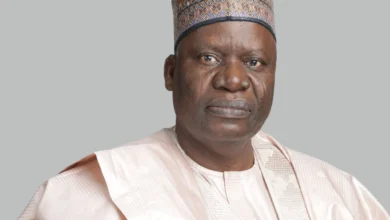
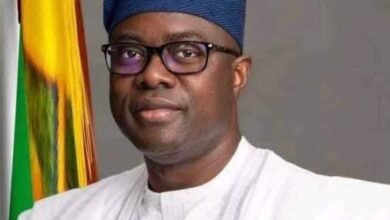
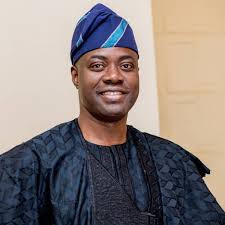
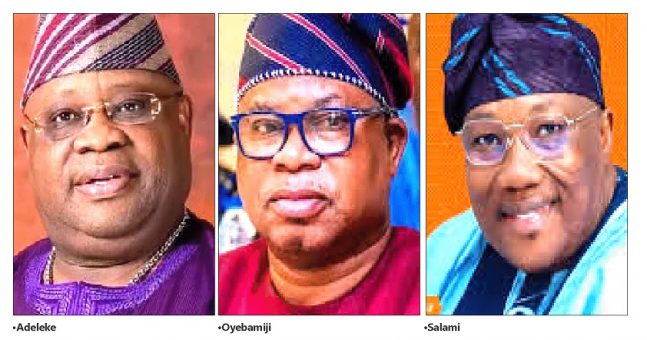
By that standard, 2026 is a three-way race. It’s a contest be among Demola Adeleke , a governor who survives on federal inflows, Najeem Salaam, a candidate with intellectual depth and experience but with the bridge to power or franchise doubted by the electorates who fear its anti federal disposition , and AMBO, the only one whose agenda , according to him , is to change the equation with the backing from Abuja as an additional advantage .
Demola Adeleke’s Record and the Limits of a FAAC-Fueled Term
Beyond the ongoing populism, Demola Adeleke is allegedly the least for the job when optimising Osun potential is the question. . Four years in, Adeleke has relied on a FAAC revenue boom and visible projects but has not shifted Osun from dependency to productivity, with gaps in institutional depth, due process, and long-term planning despite having the fiscal space to prioritize merit and execution. Najeem Salaam and AMBO present an alternative focused on earning rather than sharing. Salaam brings legislative grounding as a former Speaker with hands-on command of budgets, negotiation, and policy mechanics. AMBO brings technocratic expertise in finance, capital structuring, and investment advisory. Both have mapped approaches to stretch scarce resources, attract private capital, and apply planning to education, enterprise, and mineral value chains. Closing Osun’s production-allocation gap will demand reading MTEFs, renegotiating debt, and designing bankable projects that draw federal and private funds. Against rivals leaning on mobilization, Salaam and AMBO offer the policy literacy and stakeholder skill to make architecture and leverage operational, framing 2026 as a choice between continuity and building economic sovereignty.
Osun heads to the polls this August, and one question cuts through the music and the rallies: Has Governor Ademola Adeleke earned another four years? His supporters don’t hesitate. They drive you to a new road in Ilesa, remind you that alert tones now hit civil servants’ phones before month-end, and say the air feels calmer than it did four years ago. After the trauma of “half salary” and unpaid arrears, that calm feels like progress. In Nigerian politics, relief wins elections. But relief is not reform, and in Osun, the difference between the two has always been decided by one thing: the monthly check from Abuja called FAAC. When that check is fat, the state builds and pays. When it is thin, the state stalls and owes. The real question, then, is whether Adeleke has broken that cycle or simply ridden its best wave.
The ongoing campaign that he performed better than his predecessors is a ruse. The last three governors did not operate on the same playing field, and FAAC proves it. From 2011 to 2014, oil prices soared and Osun collected about ₦4bn to ₦5bn every month, which Governor Aregbesola turned into roads, schools, an airport, and the Opon Imo tablet project. Then oil crashed. By 2016, FAAC had collapsed to ₦1.8bn to ₦2.5bn a month while debt payments swallowed nearly half of it, and that was when half-salary began. The rule was set: boom times build, bust times break. Governor Oyetola inherited that bust. FAAC sat between ₦2.5bn and ₦3.8bn, dipped to ₦1.9bn during Covid, and roughly ₦1.2bn vanished monthly into debt service. His job was triage. He paid full salaries, avoided mass layoffs, and froze mega-projects. He managed a lean season. FAAC gave him stability, not space. Adeleke stepped into the opposite. Subsidy removal and FX reform doubled allocations to states. Osun’s FAAC jumped from around ₦3.5bn in 2022 to between ₦6bn and ₦8bn by 2024 and 2025, while debt took a smaller share. For the first time since 2014, a governor had real headroom.
That swing in allocation, not ideology, explains the gap between Adeleke, Oyetola, and Aregbesola. When Abuja’s check is fat, Osun spends and builds. When it thins, Osun slows down. Adeleke’s campaign bets that voters won’t ask the next question: What happens if FAAC drops? Can he deliver the same results without Tinubu’s fiscal boom? His team offers no plan for that scenario. The message is simple: pay salaries from FAAC, use the balance for a few visible projects, then celebrate. It works as optics. It fails as a strategy for the next decade. If Osun wants to move from dependence to productivity, the next governor must deliver four things this administration has not shown.
First is foresight — a 10-year industrial and agro-processing plan that positions Osun for where food chains, tech services, and West African trade will be in 2030, not just next quarter. Second is architecture — designing tax systems, export pipelines, and institutions that outlive elections, because projects end but strong systems keep paying. Third is stretch — refusing to relax because FAAC arrived, and instead demanding real performance from civil servants and real job creation from the private sector, not just contracts. Comfort kills growth. Fourth is leverage — using data, relationships, and policy to attract private capital and federal support without mortgaging the state’s future. Other states are doing it. Osun can too.
On those four tests, Adeleke’s record is thin. There is no public 10-year industrial plan. IGR still looks tiny next to the FAAC windfall. Farmers sell raw produce instead of processed goods. The Omoluabi Free Trade Zone and DCTS opportunities remain largely on paper. In practice, policy still follows allocation; it does not drive it.
Beyond that structural gap, other liabilities shadow his second-term bid. Too many strategic offices sit within his family orbit — Works with the governor, Budget and Planning, Federal Affairs, local government administration, Government House Affairs, and even ceremonial roles for two “First Ladies.”
His team argues that loyalty and competence are not crimes. But public service runs on merit and distance. When appointments read like a family tree, people start to believe the state is being run as a family estate. The problem deepens with procurement. Big “Infra Plan” contracts went out without open bidding. Budget performance reports arrive late despite record inflows. Mining licenses get renegotiated while whispers of insider benefit spread. Early in his term, Executive Orders sacked workers and traditional rulers. Legal or not, the message to the civil service was clear: jobs can end at the ballot box. Palliatives routed through party structures turned relief into a loyalty test.
The government’s defense never changes: critics are playing politics, so look at the flyovers and paid salaries. But a new bridge does not explain a hidden contract. Paying wages does not justify why one family holds so many offices. In a boom, transparency should be easier, not rarer. In Osun today, it is not. The phrase “Ede factor” has become shorthand for how power is shared, and in politics, that kind of talk becomes legacy. No one denies Adeleke steadied the state. He paid salaries and spent when the money came.
But the 2026 election will not be won on calm and cement alone. Osun’s core problems — low productivity, weak value chains, and total dependence on Abuja — remain untouched. Solving them demands a governor who can plan ahead, build systems that last, demand more, and pull in real investment. That requires a depth of technical and administrative skill Adeleke has not displayed in three years. You cannot give what you do not have. So the campaign will keep selling roads and salaries. That may hold if FAAC stays high. If it drops, the state will slow again and the blame will shift to Abuja. “Imole” promised light. Four years later, it feels more like a glare — bright enough to distract, not enough to guide. Until Osun gets a plan that survives the end of the monthly allocation, the state will keep running in circles.
NAJEEM SALAAM’s Strengths And His Baggage
As Osun’s 2026 governorship race heats up, ADC’s Rt. Hon. Dr. Najeem Folasayo Salaam is casting his bid as a corrective mission, not a power grab. Leaning on his record as former Speaker of the Osun House of Assembly, Salaam frames the contest as restoration over rhetoric. His pitch targets grassroots pain points he says past administrations worsened: prompt salary payments and respect for labour deals for workers, revamped schools and motivated teachers to restore Osun’s education standing, expanded healthcare access for rural and urban poor, and real youth empowerment through skills, entrepreneurship, and jobs. He ties these pledges to his legislative experience, arguing that empowered local governments, not appendages of control, are the true engines of development.
ADC is selling itself as the alternative to Osun’s entrenched parties. Salaam is betting on voter fatigue with “politics as usual,” promising a social contract rooted in transparency, accountability, and compassion. “Osun deserves leadership that feels the pain of the people and has the courage to act rightly,” he insists. His calm, service-first tone resonates with professionals, youths, and community leaders. But the test is whether institutional knowledge can deliver better living standards after 2026.
That’s where the contradiction bites. Salaam is widely seen as intellectually deep, yet Osun 2026 is not a seminar. Intellect without electability and federal leverage is a stranded asset. His campaign leans heavily on the structure, finance, and national alignment of his godfather, Rauf Aregbesola. But in a state where approvals, project funding, and market access depend on Abuja, Salaam faces a structural bind: Aregbesola is openly working to unseat the president, yet a Governor Salaam would need that same president’s cooperation to govern. Good ideas without a path to federal leverage stay on paper.
The legacy problem is sharper. The 2015–2018 half-salary crisis, delayed wages, and economic hardship under Aregbesola still shape voter memory. Civil servants, teachers, and pensioners who endured months of partial payments remain skeptical of his political bloc. That stigma follows any candidate he sponsors.
Finance compounds the challenge. Osun elections are won in 30 LGAs through structure, grassroots mobilization, and sustained logistics. A limited war chest means limited reach. Without resources to match incumbency spending and rival networks, visibility risks being trapped in urban centers and social media while the real battle is fought in wards and polling units with cash, vehicles, and organization.
Salaam’s promise of stewardship is clear. But in Osun’s political economy, restoration demands more than ideas. It demands federal alignment, financial muscle, and a break from the ghosts of half salaries. Without them, the corrective mission stalls before it starts.
AMBO:His Joker ,His Edge
All things being equal, AMBO is set to exploit the twin weaknesses of the incumbent and Najeem Salaam: Adeleke’s delivery gap and Najeem’s Aregbesola baggage. Asiwaju Munirudeen Bola Oyebamiji’s PROSPER framework is less a campaign pamphlet than a governance pact. Seven interlocking pillars confront Osun’s core deficits: an underused agricultural base, poverty and salary arrears, broken trust, youth joblessness, insecurity, crumbling infrastructure, and underfunded schools and hospitals. The shift is from diagnosis to design. Agriculture is tied to agro-clusters, processing, and export. Poverty relief is linked to prompt wages, worker dignity, and reviving Dagbolu Dry Port and Ido-Osun Airport as logistics-job engines. Governance rests on citizen-friendly budgets, open procurement, and real-time feedback. Every pillar carries first-100-day and 12-month milestones, reflecting AMBO’s execution record at NIWA and OSICOL.
PROSPER’s edge is insisting that growth be local and visible. SMEs, youth, and women are anchored in industrial parks, a restructured Investment Promotion Agency, and a revitalized Free Trade Zone. Security goes beyond policing to smart surveillance, Amotekun integration, and social protection. Infrastructure hits every LGA with roads, power, water, broadband, and modern land admin. Culture and tourism like Erin-Ijesha and Osun-Osogbo are repositioned as revenue drivers. Education and health combine upgrades with teacher recruitment, apprenticeships, and universal health coverage. The sequence is deliberate: restore trust through transparency, unlock productivity through agriculture and industry, convert both into jobs and dignity. If voters want to close the gap between Abuja allocation and IGR, and want a governor with federal access, AMBO’s path looks clearer.
Supporters say AMBO passes four tests that actually decide if a governor can unlock Osun. First, strategic foresight. He reads beyond monthly FAAC to anticipate shifts in agric markets, youth migration, and federal policy, positioning Osun to act before windows close. He sees fertile land, a cocoa belt, and a young population that can drive processing and small industry with market access and formalization, not just Abuja handouts. Second, he refuses to manage within limits. He pushes agro-processing, solid minerals, and digital services to build home-grown value chains. Ambitious targets create pressure to cut waste, find smarter partnerships, and unlock idle assets, turning constraint into jobs and income.
Third is leverage. AMBO knows Osun cannot win alone. His skill is pulling more from less by plugging the state into federal programs, private capital, and regional markets so funds and projects actually land and get built. Investors and trade are treated as multipliers, not distant hopes. That turns limited resources into roads, industries, and jobs. Fourth, opportunity management. He runs governance and growth in parallel. While schools, hospitals, and roads operate, he builds skills, partnerships, and systems to scale agriculture, processing, and services. Competence-building and a clear investment-ready picture pull civil servants, private players, and communities toward one goal.
AMBO isn’t hanging a 10-year dream in the air. He’s building the bridge from today to that future: skills to train now, partnerships to lock now, sectors to open now. That way Osun is ready when opportunity comes. In practice, this means aligning MDAs, investors, and traditional structures so projects don’t die in Abuja or collapse from poor coordination. The bet is simple. If Osun chooses IGR expansion, export-linked agriculture, and business-cost-cutting infrastructure, plus federal alignment that works, AMBO’s edge over an incumbent with delivery questions and a challenger tied to half-salary ghosts becomes decisive.
Another edge AMBO has over the other contenders is perception of capacity without historical baggage. Adeleke owns the burden of incumbency. Najeem owns the shadow of Aregbesola’s austerity. AMBO owns neither. He campaigns on a record of institutional reform and infrastructure delivery that predates the current cycle of blame, allowing him to argue that he can negotiate with the federal center without apology and reform the state bureaucracy without nostalgia. Voters who remember 2015 to 2018 do not just remember half salaries. They remember how long it took for relief to arrive because the state had no leverage in Abuja and no revenue engine at home. AMBO’s pitch directly answers that memory: expand IGR through export-linked agriculture, cut the cost of doing business with power, broadband, and land reform, and make security and education inputs into economic output. It is not just a plan to govern Osun. It is a plan to make Osun less governed by its constraints.