
In May 29, 2023, Nigeria had to choose between managing decline and architecting a future. The years before had shown the limits of governing by subsidy and catch-up spending. Oil revenue barely kept pace with debt service, youth migration became the fastest export, and too many federal programs patched symptoms while underlying systems decayed. But that was not the option needed by Nigeria. The federation was in dire need of a different species of leader — one armed with strategic foresight to see the destination, architecture to map the journey, and stretch plus leverage to fuel it. For that moment, Nigeria did not need another performer backed by narrow interests. It needed an intellectual and business-minded builder.
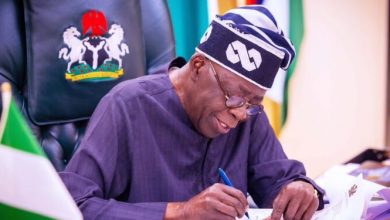
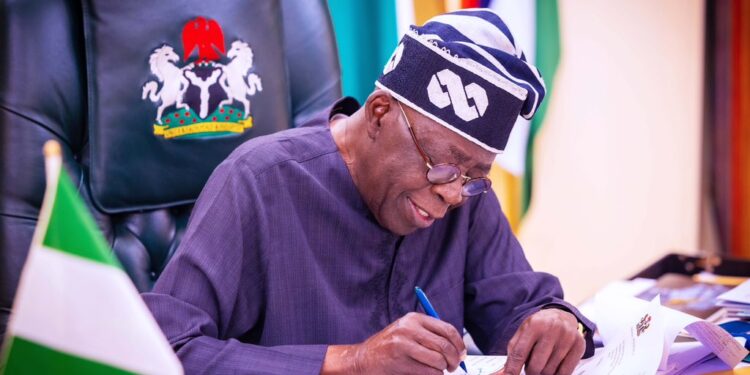
President Bola Ahmed Tinubu represents the latter , a builder of a nation and author of an economy competing for the future. . To make an economy to be competing for the future is not for dilettantes, not for the merely intellectually curious, but for those not content to follow, who desire to rewrite the rules of the game, unafraid of orthodoxy, more inclined to build than to cut, those concerned with making the difference than making career, and those absolutely committed to staking out the future first — and that is the lane President Tinubu has chosen. He is not a dilettante sampling policy.
.By removing subsidies, unifying exchange rates, he signaled he’s rewriting the rules, not trimming them, and he’s willing to own both the pain and the architecture of what comes next. Orthodoxy says wait for consensus. He is building instead. Career says avoid risk. He is staking the economy on hard reforms, betting that future elections will be won on delivery, not nostalgia, and that the future belongs to those who show up first and build.
Undaunted Despite His Critics Vituperations
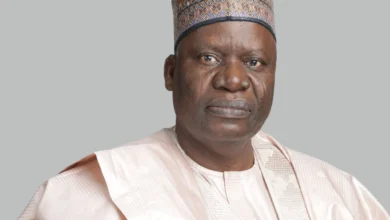
President Tinubu‘s last week meeting with the Renewed Hope Ambassadors was less a ceremonial visit and more a blueprint session. He assembled governors, former governors, defectors, and party leaders under one charge: turn reform into lived proof. By making Uba Sani deputy director-general of the group, he erased the line between government and campaign. Delivery and politics are now the same job. The message was clear. Reforms are permanent, participation is mandatory, and opposition noise won’t stop him.
His most revealing line was ownership. “I took over from myself. The late Buhari was me.” That’s a gamble, because it ties him to eight years of hardship while claiming credit for continuity. But it’s also strategy. He wants future elections fought on how well his reforms work, not whether to reverse them.
Masari’s question did the same work: will anyone campaign to restore subsidies or multiple exchange rates? It traps rivals into defending Tinubu’s choices by default. The call to take the message to markets, schools, and faith groups shows he knows Abuja press releases don’t move numbers at the polling unit.
Hope Uzodinma confirmed it — structures down to wards, enumeration at polling units, data harvested during enrolment. That’s a ground game disguised as civic education. So the real architecture is the room itself. APC governors beside PDP defectors like Oborevwori and Okowa, with Anyim Pius Anyim in attendance, signals that post-2023 realignment is still active.
The intent is unchanged. Merge policy with a political army, then make that army responsible for showing roads, bridges, and numbers. “Jigi-Bola, eyeglasses” was the folksy dare: if you can’t see the results, we’ll help you. Still, the direction is set.
Changing The Rule Of Game
No doubt , Tinubu has changed the rule of the game by his foresight. A revolution begins when a leader refuses to govern inside the cage of next year’s budget. Tinubu reads three converging forces — gas-to-power industrialization, digital public infrastructure, and Africa’s single market — and declares Nigeria’s 2040 destination: West Africa’s hub for industrial scale, exported digital services, and agricultural value chains. That is not a slogan; it is a risk filter. Every ministry, state, and Public-Private Partnership is now judged by one question: “Does this move us to 2040?” For civil servants, foresight replaces routine with relevance. For investors, it replaces policy zigzags with 10-year regulatory clarity. For development partners, it replaces fragmented workshops with a federation that already knows where the world is going. Predecessors managed the present with subsidies and waivers. Foresight architects tomorrow with systems. Nigeria’s crisis of unemployment and low productivity will not be solved by rhetoric on a podium; it will be solved by a leader who saw the podium collapsing and built a new one.
. Strategic Architecture: The Map of the Future, Drawn First
Foresight without architecture is a TED talk. Tinubu translates 2040 into five load-bearing structures that make every other reform possible: remove petrol subsidy and unify FX to end arbitrage in 60 days; recapitalize banks and clear CBN ways-and-means to restore monetary credibility; digitize revenue and ports to raise non-oil IGR; launch student loans + consumer credit to unlock human capital; power 100 industrial clusters and agro-processing zones while anchoring Lagos–Calabar and Badagry–Sokoto trade corridors. That is architecture — sequencing, not scattering. It gives permanent secretaries clarity on the five hills to take, DFIs bankability on where capital will concentrate, and citizens a scorecard they can track without a consultant. Incremental governance lists 200 projects to please 200 groups. Architecture picks the highways that make all other roads usable. Nigeria cannot compound with ribbon-cutting. It compounds with systems.
President Tinubu’s 2040 horizon isn’t a distant campaign slogan; it’s the clock his administration is actually setting Nigeria’s economy to. By tying Project Native 2040, a trillion-dollar space roadmap, and a 20 trillion naira Infrastructure Development Fund to the same date, he’s forcing every ministry to answer one question: does this policy make us competitive in 2040 or not. The move is strategic, not sentimental. Diversification away from oil, indigenous manufacturing through DICON, and digital capacity in space and agriculture are all being benchmarked against Qatar, not yesterday’s Nigeria. That reveals the real bet. He’s choosing the pen over the sword — laws, budgets, and roadmaps instead of quick populist fixes — because he wants infrastructure and industry to do what subsidies never could: lock the country into growth that outlives his tenure. Calling it “patriotic duty” and “collective responsibility” is how he drafts the country into that future before rivals can rewrite the terms. Short sentence: 2040 is the deadline he’s governing by.
.Stretch: Creating the Fuel, Not Cutting the Dream
A federation that shrinks its ambition to fit its monthly FAAC is a federation that has surrendered. Tinubu practices stretch — expanding means to meet the mission. He stretches Nigeria’s balance sheet by securitizing idle assets, expanding the tax net with data, and using infrastructure concessions tied to specific corridors. He stretches the revenue base with automation at Customs, NPA, and FIRS to formalize activity without harassing enterprise. He stretches talent by pulling private-sector technocrats into delivery units and returning diaspora into 24-month service fellowships. For local contractors, stretch means more work because the pie grows. For multilaterals, stretch means co-investment where the federal government has real skin in the game. The previous model rationed scarcity through subsidies. Stretch manufactures abundance. That is the fuel for the journey to 2040, and it requires a business mind that understands capital formation — not a performer who understands optics.
Leverage: Multiplying Every Naira, Hour, and Officer
Stretch sets the target; leverage closes the gap without waste. Tinubu deploys three kinds of leverage the country feels. Competence leverage: delivery units pairing career directors with private-sector secondees so reforms ship and skills stay. Resource leverage: every federal naira must hit a capability milestone — 5,000MW gas-to-power added, port evacuation at 48 hours, primary healthcare centres revamped per LGA — not another hotel workshop. Emotional leverage: the discovery thesis of “Nigeria as Africa’s Industrial and Tech Services Engine” and the destiny of “A country our children won’t have to leave to succeed.” To unions, leverage means training that raises wages. To investors, it means faster cycle times. To communities, it means projects that connect to a larger story. Leverage is how you make 1 become 10. It is how you revolutionize instead of iterate.
The Verdict: Builder Over Performer, System Over Subsidy
Dreams without steps are just talk. . Architecture without stretch is incrementalism. Stretch without leverage is debt. Years of incrementalism funded by debt, with ceremonies standing in for systems, left Nigeria with structural breaks: a revenue model that taxed poverty instead of creating wealth, an education system that graduated for yesterday’s jobs, and infrastructure that moved goods slowly and ideas not at all. Those are not problems you perform away from. They are problems you engineer out of existence.
Sequel to this reality, Nigeria did not need another caretaker backed by interests whose returns depended on the state staying weak. It needed an intellectual and business-minded leader who sees the federation as a platform to be architected, not a stage to be performed on. President Bola Ahmed Tinubu brings the foresight to name the destination, the architecture to map it, and the stretch plus leverage to fuel the journey. That is the difference between managing decline and starting a deliberate revolution.