

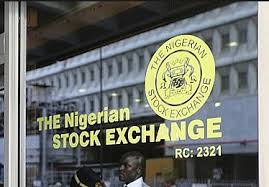
The Nigerian Exchange delivered its harshest reminder yet that rallies built on liquidity and sentiment can unwind fast. On Wednesday, June 24, 2026, the market recorded its largest single-day loss of the year, with the NGX All-Share Index plunging 2.35% to 235,074.54 points. The day’s selloff erased N3.64 trillion in market value, dragging year-to-date returns down to 51.06% from a recent high that had looked unassailable.
What Broke the Market
This was not a selective pullback. It was broad, decisive, and top-heavy. Profit-taking hammered the very names that carried the index through its 2025-2026 run: BUACEMENT -10.00%, DANGCEM -10.00%, GEREGU -10.00%. CUSTODIAN -9.97%, TIP -3.45%, OANDO -3.00%, ZENITHBANK -2.88%, WEMABANK -2.76%, NB -0.95%, DANGSUGAR -0.91%, UBA -0.50%, and 27 others. Market breadth collapsed, with 38 decliners swamping 17 gainers.
The structure of the fall matters. When the index heavyweights hit limit down on the same day, it signals institutional de-risking, not retail panic. Investors locked in gains after a 51% YTD climb, and the weight of that exit overwhelmed the few bids left. GEREGU’s drop below its 52-week low to N917.40 from N1,019.30 captures the mood: even “defensive” power assets weren’t spared. Meanwhile SKYAVN bucked the trend, trading above its 52-week high at N171.20, a reminder that selective stories still attract capital even on red days.
The Proshare Memorandum Indexes confirmed the damage. The market cap-weighted index fell 4.44% to 1,358.93 points, while the total return float-adjusted index lost 1.98% to 947.01 points. Volume fell 13.60% to 488.08m units, but value still printed N20.93bn across 46,239 deals. FIRSTHOLDCO led volume with 57.39m units, 11.76% of the day’s trade, while GEREGU topped value at N3.67bn, 17.55% of turnover. Big names moved, and they moved down.
The Disconnect: Equities Bleed, BDC Rate Firms
In a curious divergence, the parallel-market BDC rate appreciated 0.36% to N1,400/US$1 from N1,405/US$1, even as equities bled. The official NFEM rate weakened 0.68% to N1,380.08/US$1 from N1,370.64/US$1. The FX market is telling a stabilisation story. The equity market just told a valuation story.
That split is the core of Nigeria’s reform midpoint. Macro stabilisation is real — reserves are at $51bn, the naira has converged, inflation has eased from its peak, and S&P upgraded the sovereign to B in May. Transmission to asset markets is proving lumpy. A 51% YTD run left the NGX priced for perfection. When profit-taking started, there was no valuation cushion in the bellwethers.
Unlisted vs Listed: A Tale of Two Risk Appetites
While the NGX nursed losses, the NASD OTC unlisted market closed up 1.18% to 4,289.36 points, with volume at 2.67m units valued at N82.90m across 19 deals and two gainers. The OTC space, less liquid and less index-driven, avoided the institutional unwind. It suggests risk appetite hasn’t vanished; it’s just rotating away from crowded large caps to pockets where pricing is less stretched or less visible.
Commodities and Global Context Add Pressure
The selloff didn’t happen in isolation. Global commodities softened as supply fears eased post US-Iran truce. Brent fell 3.83% to US$74.13 and WTI 3.57% to US$70.60, their lowest since before the Iran war, as stranded tankers exited the Strait of Hormuz. Gold and silver dropped 2.85% and 5.24% respectively. For an oil-linked market like Nigeria, weaker crude undercuts the earnings outlook for energy names and fiscal projections tied to $70+ oil. That narrative fed into OANDO -3.00% and broader risk-off.
Meanwhile, global equities were green, with the Dow Jones Ind. Avg. leading at 52,138.14. The NGX’s drop was therefore local, not imported — a repricing of Nigeria-specific risk and gains, not contagion.
Interpretation: Stabilisation Holds, Transmission Stutters
- This is a valuation reset, not a crisis signal. A 51% YTD return invites profit-taking. The -2.35% ASI move and -4.44% cap-weighted drop reflect concentration risk in index heavyweights. When BUACEMENT, DANGCEM, and GEREGU all hit -10%, the index has nowhere to hide.
- Liquidity is not conviction. Volume fell 13.6% on the down day. The selloff was orderly, not panic-driven. FIRSTHOLDCO, CHAMS, and ACCESSCORP still saw active interest. But buyers stepped back from paying yesterday’s prices for today’s earnings outlook.
- FX stability isn’t equity stability. BDC appreciation to N1,400/US$1 shows the currency leg of reform is holding. Equities are now asking the harder question: can stabilisation cut business costs, unlock credit, and lift earnings? With MPR at 26.5% and energy/logistics costs high, the answer isn’t yes yet for many firms.
- The reform midpoint is visible in markets. Adedipe’s point that stabilisation is real but trickle-down must deepen is playing out in real time. Reserves, FX convergence, and sovereign upgrades are macro wins. The NGX’s largest one-day loss of 2026 is the micro verdict: transmission to corporate value and household wallets remains incomplete.
- Rotation risk is real. NASD’s gain and SKYAVN’s 52-week high show capital is still searching for growth. But it’s becoming selective. Stocks trading below 52-week lows, like GEREGU, will need more than macro headlines to recover. Earnings, governance, and cost pass-through capacity will sort winners from losers in H2 2026.
Outlook: The Test After the Top
The NGX just showed how fast a 51% YTD market can reprice when heavyweights wobble. The next phase won’t be driven by FX liberalisation headlines or subsidy removal. It will be driven by Q2 2026 earnings, credit growth to the real sector, and whether stabilisation lowers the cost of doing business.
If reserves stay firm, the naira holds N1,370-N1,400, and inflation continues easing, patient capital will return. If crude stays near US$70 and rates stay at 26.5%, the bar for equity valuations just got higher.
June 24 was not a breakdown. It was a reminder. Reform midpoint means the easy gains from macro correction are banked. The hard gains from transmission — to profits, jobs, and valuations — are still to be earned. The market has repriced that reality in one session. The next sessions will test whether it was an overreaction or a reset.