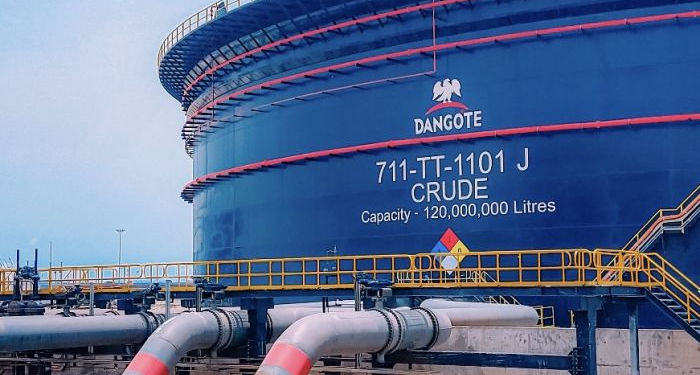
On 23 June 2026, the Securities and Exchange Commission (SEC Nigeria) drew a hard line. No application for a public offer of shares in Dangote Petroleum Refinery & Petrochemicals FZE had been filed or approved, yet marketing was already live. The Commission ordered a halt, directed capital market operators to pull all promotional material, and gave a 24-hour deadline to stop collecting funds and refund subscribers under the Investments and Securities Act 2025.
The notice rested on a settled principle. Investor appetite is not a substitute for due process. An offer is valid only after the Commission has cleared the application and approved the prospectus. Before that point, it carries no regulatory backing.
Yet within 48 hours, the story had already escaped the regulator’s perimeter. On Thursday, 25 June 2026, a widely shared Bloomberg post on X celebrated a frenzy around a reported US$40 billion Dangote Refinery offering. A Bloomberg feature went further, reporting that the listing now draws tycoons, students, and first-time investors, including a security guard who reportedly borrowed US$150 from his grandmother to chase an allocation.
Reporting genuine investor interest is legitimate journalism. The problem is framing and regulatory context. To present an unapproved offer as already underway, and to dramatise a vulnerable earner taking on debt to participate, normalises the very conduct the Commission just halted. Cross-border media reach outruns a national regulator. A directive that binds Nigerian operators does not bind a global newsroom, and a story travels faster than a public notice. A respected international brand should weigh the welfare implications of its framing and respect the laws of the markets it covers.
Three Governance Gaps Widened After the Notice
- Amplification without anchoring
The Bloomberg coverage kept the hype alive after the SEC’s cease-and-desist. No prospectus has been filed. No audited financials are before the market. Valuations of US$40 billion to US$50 billion are therefore unanchored. Enthusiasm cannot price what disclosure has not yet revealed. When global platforms frame an unregistered offer as a fait accompli, they create the exact retail risk the SEC sought to prevent: citizens borrowing to buy what does not yet legally exist. - Enforcement without a closing report
The Commission set a 24-hour deadline. Yet the market has not seen a subsequent report on what was done. Were the offending materials taken down? Were funds refunded? Which operators were involved? What sanctions, if any, followed? A cease-and-desist without a visible account of enforcement weakens deterrence. Investors are left to infer that a firm instruction may carry soft consequences. Regulatory credibility is built not only on issuing directives but on demonstrably and timely reporting the actions taken under them. - A gatekeeper that became a cheerleader
In the weeks before the notice, the Nigerian Exchange and its leadership publicly promoted the same offering, presenting it as a continental opportunity, convening other African exchanges around it, and citing investor demand said to exceed US$2 billion alongside indicative pricing. All for a transaction the Commission has since confirmed was never filed or approved. Under the Investments and Securities Act 2025, no securities may be offered to the public without registration of the offer and an approved prospectus, and the marketing or solicitation of unregistered securities is prohibited. The Exchange is a registered securities exchange and a self-regulatory organisation, bound by the Act, the Commission’s rules, and its own Rulebook to ensure that neither it nor its dealing members promote or facilitate an offer that has not been cleared. That the Exchange is also a co-reviewer of the offering’s novel naira-subscription and dollar-dividend structure makes promotion ahead of approval harder to reconcile. A gatekeeper cannot also be a cheerleader for an unregistered transaction.
The Asset Is Not the Issue. The Sequencing Is
None of this detracts from the refinery’s potential. It is a strategic national asset. A future Dangote Refinery listing, properly registered and cleared, could be a landmark for the Nigerian market and for African capital formation. The objection is to the sequencing and unapproved solicitation, not to the company or to the prospect of a historic offering.
The point is precisely that potential is not a prospectus. No registered offer document and no audited financials have been placed before analysts. The absence of vetted disclosure is itself the strongest argument for allowing due process to run its course.
What the Test Looks Like Now
The test falls to the Commission under Dr Emomotimi Agama. It should clarify the facts, report to the market on the actions taken under its own notice, and enforce the directive consistently across all channels that carry the solicitation — including the Exchange itself and the foreign platforms that amplify it.
Markets are built on confidence, and confidence is built on process. Process protects people. It protects the security guard borrowing US$150 from his grandmother. It protects the tycoon and the student. It protects the Exchange from becoming a billboard for risk it cannot regulate.
Investor appetite is real. The refinery is real. But until there is a filed application, an approved prospectus, and audited numbers, the offer is not. Global coverage cannot outrun that fact without outrunning investor protection itself.