NGX Sheds N13 Trillion in June as Investors Hunt for Real Bargain

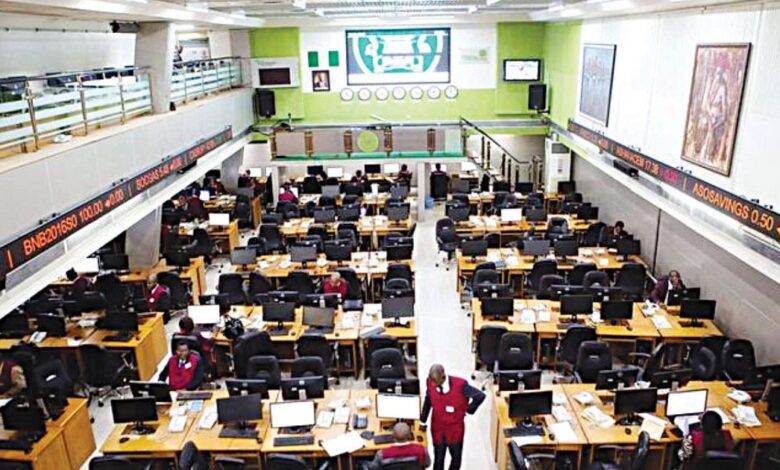
LAGOS — Nigerian equities investors endured a bruising June, with the NGX wiping out more than N13 trillion in market value in a single month. The selloff was broad, dragging down most listed stocks and leaving portfolios deep in the red.
For investors now sifting through the wreckage, the question is no longer “what fell?” Almost everything did. The real task is telling a genuine opportunity from a warning sign.
Market convention defines a 10% drop from a recent peak as a correction and a 20% decline as a bear market. Once losses approach 40%, analysts often describe conditions as crisis-level, though a true “crash” is judged by speed as much as depth. For much of June, the NGX traded between correction and bear-market territory, the kind of climate where the line between a bargain and a falling knife matters most.
In broad selloffs, strong businesses and struggling ones get dumped together. The market doesn’t stop to separate them. That job falls to investors, and price alone is a poor guide. A stock trading at a discount can mean the market overreacted, or that something is fundamentally wrong.
At Nairametrics, analysts use a three-part screen before calling any beaten-down name worth a second look. First, has the price actually fallen, and by how much? The filter starts with stocks trading at least 15% below their 52-week high, meaning 85% of that peak or lower. Anything trading at 90% or 95% of its high hasn’t pulled back enough to matter. The rule is deliberate: a stock must show a real, meaningful retreat before it gets attention. This step flags room between current price and recent peak, not the reason for the gap.
Take Okomu Oil and Zenith Bank this year. Both ended roughly 20% below their 52-week highs. On the surface, identical cases. But context changes the picture. Okomu Oil’s slide followed a strong run, with the business still posting an 80% return on equity. The discount looked more like a pause than a red flag. Zenith Bank’s fall left it trading below book value, a different signal. Both clear step one, but neither story ends there.
Second, is the stock cheap, or does it just look cheap? This is where most retail investors stumble. A fallen price doesn’t equal value. A N10 stock can be expensive; a N2,000 stock can be cheap. What counts is price relative to earnings. The price-to-earnings ratio asks a simple question: if the company kept earning at its current rate, how many years would it take to earn back what you paid? A P/E of 5 means five years; a P/E of 40 means forty.
Jaiz Bank shows the trap. It traded at the biggest discount in the banking sector, 52% of its 52-week high, and looked cheap next to peers. But investors were paying over N11 for every N1 of earnings, more than twice the sector average. At that rate, it would take over 11 years to recover the investment, versus six years for the sector. The price drop created an entry point, but not value. In fact, it was more expensive than most banking stocks.
The PEG ratio adds another layer, weighing the P/E against earnings growth. A low P/E with strong growth is a different story from a low P/E with flat or shrinking earnings. Wema Bank illustrates the difference. Its P/E of 3.7 sits below the sector average and below Jaiz Bank’s. But its PEG ratio is just 0.05, reflecting the highest earnings growth in the sector. Unlike Jaiz, where a low price hid an expensive stock, Wema’s low multiple is backed by a business growing fast enough to justify it. Wema trades at about 75% of its 52-week high, versus Jaiz’s 52%, yet earnings multiples suggest Wema is the cheaper stock.
Third, is there a specific catalyst in the next six months? This is the simplest question and the easiest to skip. It asks for a real, nameable event, not a hope that the market “comes to its senses.” Heading into the second half of the year, several are on the calendar. The FTSE Russell review of Nigeria’s market status will influence foreign passive flows. The shift to T+1 settlement changes how quickly trades clear and how comfortable offshore investors are with Nigerian names. The CBN’s HoldCo structure requirements sparked the banking selloff that hit GTCO and FirstHoldCo, a policy overhang rather than company-specific trouble. NAICOM’s recapitalisation deadline for insurers is forcing consolidation and repricing across that sector. And the federal government’s heavy borrowing has lifted fixed-income yields, with T-bills at 17.34%, raising the bar for equities to compete for capital.
A stock can be cheap and healthy yet still be a poor pick if nothing on the horizon can close the valuation gap. It could stay cheap for years. Zenith Bank trading below book value at a low multiple is interesting on its own, but Q2 results due within weeks give the market a concrete moment to reassess. A stock with no boardroom shake-up, no policy shift, and no sector story behind its discount is the one to treat with caution, no matter how cheap it looks.
Each of the three questions catches a different mistake. Skip the first, and you buy without knowing what’s moved. Skip the second, and you confuse a small dip with a bargain or a real decline with opportunity. Skip the third, and you risk holding a stock that’s cheap for good reason and stays that way.
A name that clears all three isn’t guaranteed to win. Nothing in the market is. But the case for it isn’t built on headlines or hope. It rests on a real gap between the market’s price and the business’s worth, with a reason for that gap to close within a defined timeframe.